








THE family of a Californian teenager who died in hospital waiting for a liver transplant is to sue her insurance company after it initially refused to pay for the operation and only relented hours before her death.

In a case highlighting the controversies surrounding the insurance-based healthcare system in the US, the parents of 17-year-old Nataline Sarkisyan were at first told there was no cover for the operation despite doctors at the University of Californi
a Los Angeles (UCLA) medical centre deciding that she needed the transplant.
A letter had been sent to insurer Cigna on 11 December but the firm said the treatment was "experimental" and was thus not covered by the family's policy.
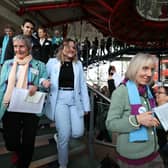
The decision triggered a week of protests outside the company office in Glendale, California, with nurses joining friends and family. Hundreds of callers jammed the company's switchboard demanding it take action.
On Thursday, Cigna changed its mind, saying it would pay for the operation after all. But hours later Nataline, who was in a coma, was pronounced dead.
"She passed away and the insurance (company) is responsible for this," said her mother, Hilda. "Only God can tell me what's going to happen to my daughter, not Cigna."
The family said that they were planning to take legal action over Nataline's death.
For Nataline's family, this was the final act of a three-year ordeal which began when she was diagnosed with leukaemia at age 14. After two years of treatment, the cancer went into remission but came back this summer. Her brother was found to be suitable as a bone-marrow donor and Nataline had a successful transplant last month.
But she then developed rare complications, shutting down key organs and sending her into a coma. Doctors said a liver transplant offered the only chance of saving her life, but then came news of Cigna's refusal to pay.
After the company's U-turn, protesters initially celebrated the success of their campaign. "An engaged public can make a difference and achieve results," said Rose Ann DeMoro, executive director of the California Nurses Association. "Cigna had to back down in the face of a mobilised network of patient advocates."
The insurance company insisted it acted within the terms of the policy, saying it made an exception on compassionate grounds. Before Nataline's death, Cigna said: "Our hearts go out to Nataline and her family as they endure this terrible ordeal. Cigna has decided to make an exception in this rare and unusual case and we will provide coverage."
The US healthcare system is private and accessible only through insurance premiums. Forty-five million Americans have no insurance, entitling them only to treatment for serious accidents and very limited medical care. Without insurance cover, a hospital is legally obliged to treat someone only for life-threatening illnesses.
But it is not just the poor who are suffering. The middle classes are also feeling the squeeze. Insurance premiums are skyrocketing, partly because of ever-rising insurance cover needed by doctors.
An average American family now pays £6,000 a year for health cover, far more than they would pay if the US had a system comparable to those in other developed countries.
CLEAR DIVIDE BETWEEN PARTIES EVER since Michael Moore's controversial film Sicko crashed into American cinemas last summer, health care has become a leading issue in the presidential election campaign. Unlike Iraq and the economy, where policy solutions tend to be vague, on health there is a sharp divide between Democrats and Republicans.
Democratic candidates Hillary Clinton, John Edwards and Barak Obama have all criticised the huge profits made by hospitals and insurance companies. They have stopped short of calling for a universal health care, but all want the burden shifted from insurance schemes to government funding.
Republicans insist the free market must remain in charge, but even here candidates are advocating tougher government action. Republican front-runner Rudy Giuliani wants changes to the way the market is configured to bring costs down.
The full article contains 677 words and appears in The Scotsman newspaper.