


















Help Sitemap Home Skip Navigation Contact Us Disability Statement


Saturday, 17th May 2008

Evening News / Sony Centre Reverse Auction

Premium Article !

Your account has been frozen. For your available options click the below button.

Options

Premium Article !

To read this article in full you must have registered and have a Premium Content Subscription with the The Scotsman site.

Subscribe

Registered Article !

To read this article in full you must be registered with the site.

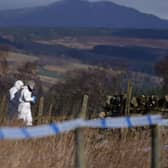
Mass graves containing over 100 decomposed corpses uncovered by Iraqi forces


Click on thumbnail to view image

Published Date: 28 April 2008
IRAQI security forces have found more than 100 bodies in two mass graves, it emerged yesterday.
Fifty bodies were found in one grave in central Iraq yesterday, a military source in the area said, and another team discovered more than 50 bodies in a grave south of Baghdad on 17 April.

The grave found yesterday was in an orchard in the vill
age of al-Guba, 50 miles north of Baghdad, in the Diyala province.

The area has seen frequent fighting between American troops and Sunni insurgents led by al-Qaeda in Iraq. Residents say the area was a former stronghold of al-Qaeda.

The militants have regrouped there after being driven out of other parts of the country.

Most of the bodies had their hands bound and gunshot wounds in the head. Some had decomposed.

Major-General Qassim Moussawi, a senior security spokesman in Baghdad, said police and Iraqi military had uncovered 51 bodies in a grave on 17 April in Mahmudiya, 20 miles south of Baghdad.

"We received information from some citizens that there are bodies in the al-Askari neighbourhood in Mahmudiya. We searched the neighbourhood and found the bodies," he said.

He added that security forces had taken them to the morgue of a local hospital and some families had already identified the victims as their relatives.

Mass graves are found often in Iraq, many a result of sectarian violence that peaked in 2006 and the first half of 2007 and killed tens of thousands. Some also date back to Saddam Hussein's regime.

Last month security forces found a mass grave containing about 100 decomposed bodies.

Iraqi and American officials said it was not clear who was responsible, but the grave, discovered in Khalis, north of Baghdad, may date back to sometime before the 2003 US-led invasion.

At the time, Iraqi army officer Major-General Abdel Karim said the victims were beyond recognition.

"We can't identify them," he said. "There are just bones in there. At the moment we have left the remains in the grave."

In February, a grave with about 50 bodies was found near Samarra, also north of Baghdad, during a hunt for al-Qaeda militants.

Meanwhile a group of Iraqis from across the sectarian and ethnic divide agreed a set of principles at a meeting in Finland yesterday aimed at fostering national reconciliation.

The conference on healing divided societies brought together Shi'ite and Sunni Arabs as well as Kurds with the goal of ending violence in Iraq, the Crisis Management Initiative (CMI) said.

CMI is a non-governmental organisation headed by former Finnish President Martti Ahtisaari, who has been active in talks involving divided communities in Kosovo and the Indonesian province of Aceh since his presidency ended.

The participants – who included several prominent Iraqi politicians – will meet again within the next three months in Baghdad.


The full article contains 484 words and appears in The Scotsman newspaper.
Page 1 of 1

  • Last Updated: 28 April 2008 12:02 AM
  • Source: The Scotsman
  • Location: Edinburgh
  • Related Topics: Iraq


Featured Advertising


Sister Newspapers:
Press Complaints Commission

This website and its associated newspaper adheres to the Press Complaints Commission’s Code of Practice. If you have a complaint about editorial content which relates to inaccuracy or intrusion, then contact the Editor by clicking here.

If you remain dissatisfied with the response provided then you can contact the PCC by clicking here.