














IT'S a sleepy middle European kingdom where locals drink 110-proof plum brandy for breakfast and use a wheat-backed currency pegged to the dollar.
The Kingdom of Wallachia is nestled in the north-east corner of the Czech Republic, 230 miles from Prague. It was founded in 1997 by an itinerant photographer, Tomas Harabis, its current foreign minister, but what many first-time visitors fail to
realise is that it was an elaborate practical joke.
The ruse quickly captured the imagination of Czechs, long drawn to black humour and parody, and Wallachia, which also happens to be a real place, became one of the country's biggest tourist attractions. But its success has now led to a real-life battle over who owns the kingdom, which generates hundreds of thousands of euros in revenue each year.


The kingdom has the requisites of authentic statehood, including a currency called the jurovalsar; consulates in the Arctic Circle and Togo; a Royal Wallachian Navy, consisting of 40 wooden canoes; a bright yellow Communist-era limousine for use by visiting dignitaries; and a burgundy passport, covered with a picture of the pagan god Radegast, which Harabis says he has used to cross the border from Canada to Alaska.
"The Kingdom of Wallachia is a parody of Czech identity because nothing is holy for Czechs," Harabis, 37, the son of a former communist schoolteacher, explained recently. "Our history and reality are marked by depression, invasion and occupation, while fiction and fantasy let you do and be whatever you want."
The political dispute stretches back to Harabis's decision in 1997 to crown Bolek Polivka, a classically trained clown and famous Czech actor, as king of Wallachia. At the time, Polivka seemed an ideal choice: he had already crowned himself Boleslav I the Gracious Forever on his popular television show.
He then became the face of the kingdom, signing its passports and attracting thousands of visitors. A formal coronation in the Wallachian town of Vsetin in 2000 was televised nationally and attended by 5,000 guests. Soldiers in traditional pointy shepherd hats fired cannons as the king inspected his subjects from atop a horse.
But in 2001 a fight for control of the kingdom erupted. Harabis charged that Polivka had begun to open Wallachian consulates without his permission and had demanded one million Czech crowns – about £31,000 – to remain king.
Harabis responded by issuing an edict saying Polivka had been deposed, eventually installing a local construction worker, Vladimir Zhanel, as the new monarch, Vladimir II.
Polivka did not take the coup lying down. In 2002 he went to court over who owned the kingdom's trademark, with the case becoming front-page news across the country.
Finally, at the end of last year, a Czech court ruled that Polivka had no right to profit from any association with the kingdom.
Harabis said: "The whole thing was meant to be a joke, but Polivka began to believe that he really was a king. "
Polivka was still not finished, saying that even if he was officially ousted as monarch, 23 of 28 municipalities across the kingdom still regarded him as the rightful king.
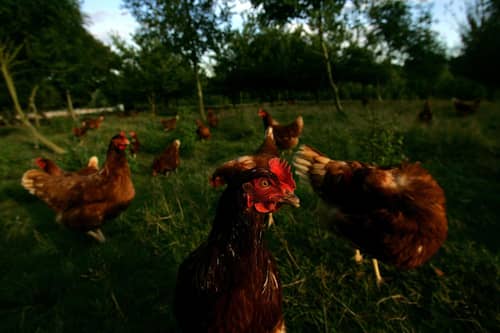
"There is an air force loyal to me, a royal guard; we even have a Trabant tank division," he said. In fact, the Wallachian Royal Air Force consists of five Cessnas emblazoned with a Wallachian crest: an emaciated chicken falling through the sky.
The real Wallachia was settled over many centuries by migrating Romanian shepherds called Vlachs. Its most famous native son is psychoanalyst Sigmund Freud, born in the 19th century when the area was part of the Austro-Hungarian empire.
Harabis spent a year doing research in a local museum to delineate his kingdom's borders and traditions. There are popular Wallachian sayings – "Never take advice from fools, and never stroke a dog from its tail to its head" – and a Wallachian dialect. Wallachians also claim to have invented hockey, proudly noting the similarity in size between a hockey puck and the droppings of Wallachian sheep.
The kingdom reflects a distinct Czech attraction to the absurd, developed as a national defence mechanism during centuries of foreign rule and decades of communism.
One national hero is Jara Cimrman, who Czechs boast was the first man to have reached the North Pole and the inventor of yoghurt and the internet. Cimrman was, in fact, invented by two journalists for a radio programme broadcast in 1966.
Most residents do not take themselves that seriously. "The Kingdom of Wallachia is a joke," said Petr Jerabek, 25, the owner of a local pub, before downing his sixth shot of slivovitz that day. "It is just a good way to make some money."
The full article contains 791 words and appears in Scotland On Sunday newspaper.