












ONLY days after five of their number were killed in French and American hostage rescues, Somali pirates brazenly hijacked four more ships in the Gulf of Aden yesterday.

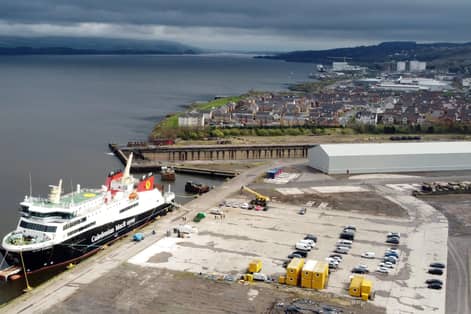
Nato spokeswoman Shona Lowe said the Sea Horse, a Lebanese-owned cargo ship, was captured yesterday. A few hours earlier, the Greek-owned Irene EM was seized in a rare attack at night.
Somali pirates also hijacked two Egyptian fishing boats
in the Gulf of Aden off Somalia's northern coast, which maritime officials said had 36 crew.
Another gang fired automatic rifles and rocket-propelled grenades at the Liberian-flagged 21,887-tonne Safmarine Asia but the vessel escaped.
Nato Lieutenant Commander Alexandre Fernandes said the Portuguese warship Corte-Real had received a pre-dawn distress call from the Irene EM, which carries the flag of St Vincent and the Grenadines, in the Gulf of Aden.
"There was only three minutes between the alarm and the hijack," Lt Cmdr Fernandes said. "They attacked at night, which was very unusual. They were using the moonlight as it's quite bright."
The Greek merchant marine ministry said the Irene EM's 22 crew were Filipinos. The East African Seafarers' Assistance Programme, which tracks piracy, said they were all unharmed.
The bulk carrier was sailing from Jordan to India.
Hours later, Nato officials on the Corte-Real said a second ship, the Sea Horse, had also been seized about 77 nautical miles off Somalia.
Nato officials said a Canadian warship had sent a helicopter to scout out what was happening on the Irene EM.
"There are hostages so now we will shadow and monitor the situation," Lt Cmdr Fernandes said.
The Gulf of Aden, which links the Suez Canal and the Red Sea to the Indian Ocean, is one of the world's busiest and most vital shipping lanes, crossed by more than 20,000 ships each year.
Warships from nearly a dozen countries have patrolled it and nearby Indian Ocean waters for months. They have halted many attacks on ships this year, but say the area is so vast they cannot stop all hijackings.
The latest seizures come after US navy snipers rescued Captain Richard Phillips, master of the US ship Maersk Alabama, on Sunday by killing three young pirates who had held him captive in a drifting lifeboat for five days.
Two more pirates died on Friday when French commandos stormed a yacht that had been seized. A French hostage was also killed.
The United States is considering new options to fight piracy, including posting navy gunships along the Somali coast and launching a campaign to disable pirate "mother ships," according to Pentagon officials.
"Piracy is far more complex than any naval patrol," said Madison University analyst Peter Pham. "It will require more than just the application of force to uproot piracy from the soil of Somalia."
Some US military strategists believe it may ultimately be necessary to attack the pirates' base in Somalia, much as the British did two centuries ago. But few have the appetite for a land operation in Somalia, where an American military foray in the early 1990s ended in humiliation. And the cost in civilian casualties would probably be extremely high, some warn.
Larry Johnson, a former CIA agent and state department counter-terrorism specialist, said: "That would be nuts. These people are not organised into any military force – they are intermingled with women and children. You're talking about wiping out villages."
Some fear the bloody assaults by Washington and Paris to free their hostages may raise the risk of future bloodshed. The pirates have promised revenge on US and French citizens.
They have generally treated captives well in the hope of big ransoms. Many poor and unemployed young Somalis see the gangs as a dazzling alternative to their hard lives.
Last year, the gunmen grabbed headlines with the world's largest sea hijack – a Saudi Arabian supertanker carrying crude oil worth $100 million of crude oil – and the seizure of a Ukrainian ship with a huge military cargo including 33 Soviet-era tanks.
They still hold about 260 other hostages, including nearly 100 Filipinos, on 17 captured ships.
The full article contains 697 words and appears in The Scotsman newspaper.