







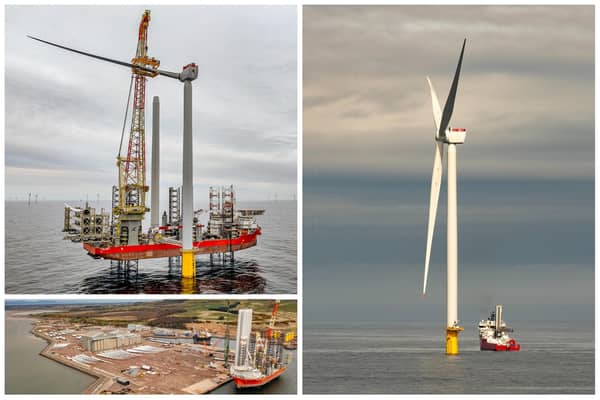






HOUSEHOLDS are facing large rises in their electricity bills in the coming decade because of the "dash" for renewables, according to an influential House of Lords report.

Consumers across Britain face an extra £80 a year on their energy bills as a result of the Government's commitment to source 15% of the UK's power from renewables by 2020. In Scotland, the target is higher, with ministers pledging to source 50% of th
e country's electricity from renewables by that year.
The House of Lords Economic Affairs Committee said it was "sceptical" that the UK Government's 20% target could be met by 2020 and warned that the plans could lead to an over-reliance on "intermittent sources" such as wind.
Other sources of energy would be required to back up wind as a result, the committee warned, meaning that the costs of electricity production would rise to £6.8bn a year – or £80 a year more on annual fuel bills.
The report – entitled the Economics of Renewables Energy – comes amid a growing row between UK and Scottish ministers over energy generation. It comes with the EU demanding that all member states boost the amount of energy they source from renewables sources over the coming decade. Scottish ministers have ruled out the use of nuclear energy, insisting that Scotland can rely on wind, wave and carbon capture storage.
The House of Lords committee has now warned that even the UK Government's less ambitious plans are a cause of concern.
It declared that the full costs of wind power "remained significantly higher" than coal, gas or nuclear energy. It also warned that wind power "cannot be relied upon to meet peak demand".
It backed carbon capture and storage – where carbon emissions from coal powered stations are pumped underground to ensure they do not escape into the atmosphere.
Lord Vallance, the committee's chairman, said: "We are concerned that the dash to meet the EU's 2020 targets may draw attention and investment away from cheaper and more reliable low carbon electricity generation.
"Current policies would take the UK into uncharted territory, with a dependence on intermittent supply unprecedented elsewhere in Europe. To guard against power shortages, wind turbines would need to be backed up with conventional generation. Together with the requirement to replace almost a quarter of the UK's older generating capacity by 2020, this represents a massive investment programme. Whether it is achievable in the time available is open to doubt."
The full article contains 417 words and appears in Scotland On Sunday newspaper.