












DIVERS reunited a war hero with his priceless medals yesterday after he feared they were lost forever at the bottom of the Thames.

Second World War veteran Charles Brown, 93, was taking part in a Dunkirk veterans river cruise near Teddington last weekend when his medals fell from his breast pocket and into the water as he climbed into a boat.
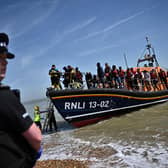
The RNLI heard about Brown's lo
ss and volunteered to recover the irreplaceable treasure – which included an OBE, awarded for his many years as a treasurer for a Dunkirk veterans association – and also his Dunkirk and Normandy campaign medals.
Brown jumped straight into a taxi from his care home in Woking when he heard that his medals had been recovered.
"I do get a bit emotional because these medals meant so much to me," he said. "I wasn't a celebrity, a pop singer or a cricketer; these medals were what I was proud of.
"I'm not going to be celebrating with cream cakes or anything like that. Just having the medals back is enough for me."
Malcolm Miatt, lifeboat operations manager at Teddington RNLI, organised the dive led by RNLI's helmsman and experienced scuba diver Jean-Pierre Trenque.
Miatt said: "It was a fingertip search on a grid pattern. I wasn't sure that we'd find the medals because they been down there all week and visibility from the silt was bad due to all the heavy rain recently.
"However, our divers found them almost immediately, there was no drama.
"The medals are a bit muddy and dirty and we'd like to get them cleaned up. The old guy is a hero and truly deserved to get his medals back. The RNLI is delighted to have cheered him up."
Brown, originally from Southwark, south London, joined the army in 1939 as a volunteer. He fought a rear guard defence at Dunkirk and was one of the last off the beach during the evacuation.
The Association of Dunkirk Little Ships, of which Brown is a member, hosts regular cruises reuniting the boats and their captains who took part in the daring evacuation of more than 300,000 allied troops from the Dunkirk beaches in 1940.
The smaller vessels, many of them pleasure boats still sailing today, were vital for landing on the beaches where larger naval ships could not land.
The full article contains 396 words and appears in Scotland On Sunday newspaper.