









FIRST it directed the driver off the wrong exit at a roundabout, then sent him in circles round Glasgow and finally announced his car was halfway up a mountain near Fort William.

A navigational challenge from Land's End to John O'Groats appears to show that drivers should bin their satnavs and go back to maps and road signs – or just simply ask for directions.
A motorist relying on the electronic gadget was soundly beaten
in a road race to test which method was best.
The race was won by a team relying on road signs and locals' advice, followed by another using road maps. The satnav-guided car came last.
The 989-mile experiment, which involved finding 12 locations en route, was organised by Reader's Digest magazine.
The satnav-guided car finished one-and-a-half hours behind the map car – driven by women – which itself came in half an hour behind the winning signs-and-directions-led vehicle – driven by men.
Their route involved difficult-to-find places such as the Drunken Duck Inn in the Lake District and Bonawe Quarry near Oban.
The satnav team were hampered by the gadget alerting them to non-existent roundabouts and exits and directing them into "no entry" streets and along slow country lane "short cuts" rather than motorways. Simon Hemelryk, the satnav car driver, said its pronouncements became especially bizarre as they drove through Scotland.
He said: "In Glasgow, it made frequent attempts to make us turn right down streets where cars weren't actually allowed.
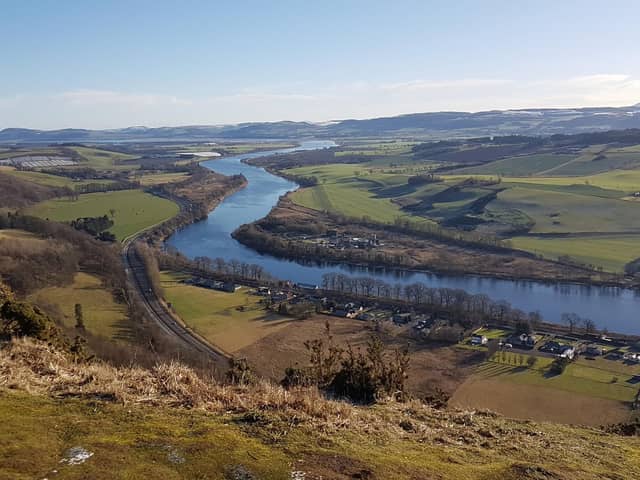
"Then it got very confused in the Highlands and couldn't tell which was mountain and which was road. On the A82 south of Fort William and north of Loch Ness, it would tell us we were halfway up the mountain we could see on our left."
Motoring groups warned drivers against over-reliance on such devices. Luke Bosdet, a spokesman for the AA, said: "Residents know where the snags and bottlenecks are, and in that respect there is no substitute for local knowledge.
"However, satnavs are more likely to stop drivers overshooting their next turn and have to go back round again. Theoretically, a combination of the two would be best. Unfortunately, many drivers become slaves to their satnavs – turning sharp right on to railway lines, rivers and, in one instance, a toilet on a German building site."
Sheila Rainger, the deputy director of the Royal Automobile Club Foundation, said: "Wise motorists plan ahead, using whichever method suits them best. Local knowledge is invaluable but not always available. A good satnav or map is like having a knowledgeable local in the car with you.
"Satnavs do make mistakes, but at least they will never say 'I wouldn't start from here', while maps don't need batteries."
Sarah Sands, the editor-in-chief of Reader's Digest, said: "It goes to show that when you're trying to find remote locations in the Lake District or navigate busy city centres, you're better off relying on the people who live there, rather than a line on a piece of paper or a computer."