













Help Sitemap Home Skip Navigation Contact Us Disability Statement


Wednesday, 14th May 2008

Evening News / Sony Centre Reverse Auction

Premium Article !

Your account has been frozen. For your available options click the below button.

Options

Premium Article !

To read this article in full you must have registered and have a Premium Content Subscription with the The Scotsman site.

Subscribe

Registered Article !

To read this article in full you must be registered with the site.

Humble mould could be the key to cleaning nuclear test zones


Click on thumbnail to view image

Published Date: 06 May 2008
FUNGI could be the answer to cleaning up war zones and nuclear testing sites, according to research published this week by Scottish scientists.
Experts at Dundee University say fungi – related to the blue streaks in some cheeses – have the ability to clear away radioactive waste.

Their study – which appears in the journal Current Biology– shows the organisms can transform depleted urani
um, the radioactive metal used in nuclear weapons, into a stable mineral. Locked into mineral form, the depleted uranium would be stopped from spreading to animals, plants and water supplies.

Scientists think the process could not only be used to clean up soils in war-ravaged areas such as Iraq, but also closer to home in nuclear testing sites.

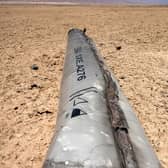
Thousands of depleted uranium rounds have been fired into the Solway Firth over the past two decades from the Dundrennan range in Kirkcudbrightshire.

Professor Geoffrey Gadd, the head of the Division of Molecular and Environmental Biology at the College of Life Sciences in Dundee, said: "You could have a situation where you could encourage these organisms to grow, by adding manure. It could be as simple as that if you wanted to encourage this fungal growth.

He added: "Fungal-based approaches should not be neglected in our attempts to deal with metal-polluted soils."

The process takes place as fungi grow on the surface of the depleted uranium and transform the metal into minerals.

Environment and biological factors work together, as moisture from the environment corrodes the metals and encourages the fungi's growth.

Prof Gadd said that the fungal-produced minerals are capable of long-term uranium retention.


The full article contains 278 words and appears in The Scotsman newspaper.
Page 1 of 1

  • Last Updated: 05 May 2008 9:51 PM
  • Source: The Scotsman
  • Location: Edinburgh
 
1

Kipling,

06/05/2008 15:44:50
I can see an updated version of the 'Day of the Triffids' emerging from this. The logistics of the task will be interesting.


Comment on this Story


In order to post comments you must Register or Sign In


Sister Newspapers:
Press Complaints Commission

This website and its associated newspaper adheres to the Press Complaints Commission’s Code of Practice. If you have a complaint about editorial content which relates to inaccuracy or intrusion, then contact the Editor by clicking here.

If you remain dissatisfied with the response provided then you can contact the PCC by clicking here.