












Help Sitemap Home Skip Navigation Contact Us Disability Statement


Monday, 8th September 2008

Premium Article !

Your account has been frozen. For your available options click the below button.

Options

Premium Article !

To read this article in full you must have registered and have a Premium Content Subscription with the The Scotsman site.

Subscribe

Registered Article !

To read this article in full you must be registered with the site.

Cemetery looting robs archaeologists of DNA link to past


Click on thumbnail to view image

Published Date: 26 January 2008
FEW of us realise we carry around in our bodies the seeds of our most distant past. But recent developments in science indicate that the analysis of the DNA of living people can shine a light on the earliest history of the human race.
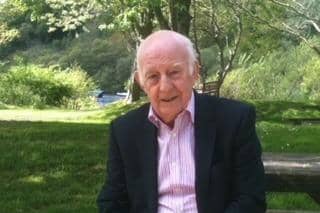
Professor Colin Renfrew, a leading archaeologist, will describe how advances in molecular genetics in the past ten years have improved our understanding of human origins in a lecture in Edinburgh on Monday, part of celebrations of the Society of Anti
quities of London's tercentenary.

Lord Renfrew has been described as having "an almost unequalled influence in the world of western archaeology". A former Disney Professor of Archaeology at Cambridge University, his recent books include Figuring It Out: What Are We? Where Do We Come From? and Prehistory: The Making of the Human Mind.

"Very often, the further back you go, the murkier things become," he says. "But with recent developments in molecular genetics, we've got a very clear idea of the outlines of the very beginning of the human story."

By analysing the mitochondrial DNA, for example, which is passed unbroken down the female line, it is possible to map human origins going back thousands of years.

Lord Renfrew says: "I like to say that our past is within us. If you take samples of blood, saliva or even a bit of hair from living people, and do the molecular genetics, you can see how similar and different they are in genetic terms. The techniques allow us to see what mutations must have occurred in the past to produce this diversity.

"It's possible, by using appropriate techniques, to plot a sort of tree, whereby you trace the ancestry of all the different people you're looking at back to some ancestral figure. That figure is somewhere in Africa, hundreds of thousands of years ago."

A greater puzzle is why, after Homo sapiens dispersed from Africa about 60,000 years ago, pockets of human culture developed in different ways at different rates. Urban civilisations developed independently in six or seven locations, thousands of years apart, with no contact between the different groups, from Sumerian culture in 4,000BC, to West African in AD1,000.

"It's one of the great unanswered problems of the human story," Lord Renfrew says. "Why did societies working independently in different parts of the world come up with civilisations, including cities, which are in some ways quite similar?

"For a long time, archaeologists assumed there was a diffusion of cultures from one area to another. There was even a theory that everything emerged from ancient Egypt, and wise people from there went over the world and built their pyramids in Mesoamerica. But as we get a much better understanding of the archaeological record, it is clear that there wasn't sailing over great distances until the time of the Conquistadores and early colonists, although the Polynesians did make some amazing voyages in their canoes."

He says there is much to be learned from studying the differences between the societies that sprang up in Egypt, the Middle East, the Indus, China and Central and South America. To get to grips with this, he argues, we must engage with what he calls "cognitive archaeology".

"We obviously can't get access to what people were thinking, but we can look at how they were thinking. We can look at questions such as: did they have town planning? Did they have measurement systems? Did they have a fully fledged religion, with temples and gods and priests?"

He says understanding these developments will augment our understanding of who we are and how we live today.

"It has the potential for telling us what it is to be human, what humans have been able to do and haven't been able to do. Our own life today is profoundly governed by these events of a few thousand years ago. So, if you want to know what you're doing here today, that is a key part of the answer."

However, he is worried that important information about our past is being lost daily because of an upsurge in the looting of archaeological sites and illegal trading in antiquities.

"It's a colossal problem. It's destroying the record of the past. It's got much worse over the past 30 years, so the opportunity of getting really good data about the past is being very substantially damaged or reduced."

Looting has increased, he says, largely because of the "rapacious" demands of collectors in the West. Ancient sites are excavated clandestinely and their contents removed, so the chance for archaeologists to study and document them is lost for ever.

"For example, we get a lot of information from cemeteries. But if a looter has gone in and dug up half the graves, you've not going to get that information about the entire community. Now there are very few ancient cemeteries that continue undisturbed."

He criticises museums and collectors in the United States, Japan and Russia for buying antiquities from "dodgy dealers" without checking their provenance.

"They are completely thwarting the good ambition of better understanding the human past. They are actually financing the looting.,They know the antiquities they are buying are likely to be looted."

He says the massive upsurge in illegal looting of ancient sites since the war in Iraq is of greater concern even than the looting of Iraqi museums.

"The illicit digging has produced vast quantities of material. Iraqi and Sumerian archaeology has suffered an enormous setback. Museums in the West are paying good money for looted antiquities. They ought to be ashamed of themselves."

• Professor Colin Renfrew's lecture, "The Dawn of Civilisation", is at the Royal Museum of Scotland on Monday at 6pm.


The full article contains 959 words and appears in The Scotsman newspaper.
Page 1 of 1

 
1

Neil,

Glasgow 26/01/2008 12:26:14
"Disney Professor of Archaeology at Cambridge University"

I'm sorry m'lud I couldn't resist it & I am sure he has heard all the jokes before.

I doubt the assertion that prior to the conquistadors (& polynesians) people didn't travel & cultures couldn't diffuse. There exist a number of early maps which show that people in Korea & Europe had a decent idea of where each other's countries were. We know Rome traded with south India & Carthage circumnavigated Africa & traded with south America. I think an awful lot more movement went on that didn't get written down.
2

Neil,

Glasgow 26/01/2008 16:30:07
"Traded" with Africa seems to be a considerable overstatement by me but some European & African artifacts in south America from before Columbus do exist.
3

Kipling,

26/01/2008 22:55:18
Given the terrain they had to move over and live in, the lack of powered transport, the lack of a ready library of practical knowledge in a permanent form, our ancestors -- as few as they might have been -- were amazing people to have accomplished what they did and where they went. The idea of how to make bread, or spin and weave or make silk. The past seems to be littered with geniuses.
4

Kipling,

26/01/2008 22:59:10
What they might have done, of course, is watch animals a lot more closely than we do for the source of many inventions. In that way similar constructions springing up in different continents is not so difficult to imagine.


Comment on this Story


In order to post comments you must Register or Sign In


Featured Advertising


Sister Newspapers:
Press Complaints Commission

This website and its associated newspaper adheres to the Press Complaints Commission’s Code of Practice. If you have a complaint about editorial content which relates to inaccuracy or intrusion, then contact the Editor by clicking here.

If you remain dissatisfied with the response provided then you can contact the PCC by clicking here.