










Help Sitemap Home Skip Navigation Contact Us Disability Statement


Objectors win the day in latest wind farm battle

Click on thumbnail to view image

Published Date: 13 February 2008
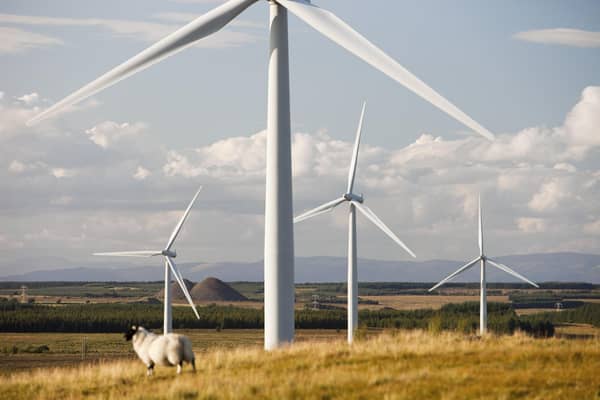
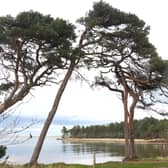
A CONTROVERSIAL plan to build a wind farm on a sensitive habitat near the Pentland Hills was thrown out by councillors yesterday.
Energy company E.ON UK wanted to build 18 turbines on a raised bog at Auchencorth Moss near Penicuik, but the scheme attracted about 2,400 objections and opposition from groups including the Scottish Wildlife Trust, Friends of the Pentlands and the B
utterfly Conservation Society.

Naturalist David Bellamy described the plan as "an act of international vandalism" of a habitat which he said was as important as tropical rainforest in terms of nature conservation.

The decision by Midlothian Council's planning committee came as the developers behind another controversial wind-farm proposal – to build 181 turbines on Lewis at a cost of about £500 million – met government officials yesterday in the hope of rescuing the controversial plan. The Scottish Government has indicated that it is "minded to refuse" the proposal.

Meanwhile, Midlothian Council leader Derek Milligan, who chaired the planning committee meeting during consideration of the Auchencorth application, said: "We have tried to balance the undoubted need for more renewable energy sources against the serious detrimental impact that the development would have had on the local environment."

An E.ON spokesman said they were "considering our options" when asked whether they would appeal. "We're obviously very disappointed with the outcome. We think it is an excellent scheme," he said.


Page 1 of 1

 
1

KampungHighlander,

Jakarta 13/02/2008 03:34:11
I think that decisions like this illustate why local councils need to be taken out of the loop when it comes to planning renewable energy. What is needed are a set of clear guidelines and a centralized planning authority. Companies will be detered from trying to get projects approved when they have to spend large sums on preparing their proposals and then have to go through a local council lottery.
2

Pilrig.,

Livingston 13/02/2008 06:27:06
Do you know anything about the area where the windfarm was to have been sited ?

Auchencorth Moss is a moorland sited between the Pentland and Moorfoot Hills, quite a lovely area. To have built windfarms here would have been nothing short of vandalism.
3

calum,

13/02/2008 06:30:17
A local council displaying good sense? Almost as rare as the habitat they're protecting. Sound decision and one in the eye for the renewable, profit before people, power-mad bullies.
4

Unimpressed one,

13/02/2008 08:06:52
An E.ON spokesman said they were "considering our options" when asked whether they would appeal. "We're obviously very disappointed with the outcome. We think it is an excellent scheme," he said.

I bet you do pal, with a cash generator like this:

"LAVISH subsidies and high electricity prices have turned Britain’s onshore wind farms into an extraordinary moneyspinner, with a single turbine capable of generating £500,000 of pure profit per year.

According to new industry figures, a typical 2 megawatt (2MW) turbine can now generate power worth £200,000 on the wholesale markets - plus another £300,000 of subsidy from taxpayers.

Since such turbines cost around £2m to build and last for 20 or more years, it means they can pay for themselves in just 4-5 years and then produce nothing but profit."
5

Homer,

13/02/2008 10:07:01
"... plus another £300,000 of subsidy from taxpayers."

A technical point, but taxpayers don't pay the subsidy - electricity bill payers do, through the Renewables Obligation. The RO doesn't take into account ability to pay, and doesn't appear on your power bill - in other words it's a regressive stealth tax.

I'm a fan of renewables, but the RO sucks.

I'm also a fan of local democracy. If the developers can't convince the local council that this development is a good idea then so be it.
6

Isonomia,

Lenzie 13/02/2008 10:13:56
With global temperatures having declined since 2001 one really has to question whether there is now sufficient evidence disproving the theory of manmade global warming to halt all further windfarm development.
7

Isonomia,

Lenzie 13/02/2008 10:23:51
Did you know that Scotland was set a higher tax (RO) target for renewables so that Scottish consumers were not allowed to benefit from the 8% of electricity produced by hydro. That is, Scotland was set an 18% renewable target because it was "unfair" that we wouldn't have paid anything on our electricity bills whilst English consumers were only set a 10% target.

If the target was set fairly, the truth is that so far we have not needed a single wind industrial park to achieve our renewable target, or to put it another way, Scottish consumers could have seen a reduction in electricity bills because of our excess renewable production.
8

Isonomia,

Lenzie 13/02/2008 10:26:58
If Alex Salmon really wants to do something useful he should ask Westminster for a rebate of the £millions of Renewable Obligation tax which was quite unfairly stolen from Scottish consumers!
9

Homer,

13/02/2008 10:55:24
Insomnia #8: The burden of the RO is spread equally across all UK electricity consumers (at least in theory - the cost falls on electricity suppliers and it's up to them how they recover it).

Just because we generate more renewable power in Scotland doesn't mean that our bills are higher than English bills. In effect, our wind farms are subsidised by English bill payers. This supports jobs in the Scottish renewables industry (about 2000, if you believe industry figures), though much of the subsidy is pocketed by developers and their backers.

Large Scottish hydro plants don't benefit from the RO because they were already profitable without it. If they had benefited, do you really think we'd have seen the effect in our bills? No - the cash would have gone straight into the pockets of Scottish Hydro Electric and their shareholders.

We have a higher renewables target because we have more resource, but our target is not enshrined in the RO. It was a political target set by the previous Holyrood administration and has recently been bumped up by the SNP - do you think they'd do this if it involved shovelling taxes down to Westminster?
10

AL the Devil,

13/02/2008 11:07:31
I find it very interesting that we are constantly making reference to Big Business Big Profit. What I find interesting is that very few people have taken into account that the Local Planning Laws appear not to be applied consisently across all council areas. I agree that it would have been terrible to destroy such a wonderful area but the answer is for central govenment to publish what is a decent criteria for these types of constructions not leave it to the lottery. There is no democracy within Local Authority as they are politically driven.

Something I also find interesting is that people appear to dislike the idea of renewables or is it more a case of NIMBY!!!!

The bottom line is that due to the large amount of Coal Fired Power Stations having to close by 2015, there will be a massive shortfall of generated electricity versus how much demand is unless we come up with a way to match the shortfall. One thing I would point out is that Scotland is likely to have more windfarms by the likes of Scottish Power as they thier only Coal Fired Power Stations are due to close in 2015 so this issue is going to rear its ugly head for many years to come.
11

GrahamH,

Edinburgh 13/02/2008 11:19:38
181 inefficent turbines at £500M. Let's get rid of the scaremongering, appreciate that nucleur technology continues to progress as has improved forward planning for spent fuel storage and use this real opportunity to rid ourselves of blotting landscapes over Scotland and generate adequate carbon friendly power.
12

Isonomia,

Lenzie 13/02/2008 12:00:35
#homer, I was at the meeting where the windfarm developers were asked to "think of a number" for the Renewables obligation. Now the truth is that in 2000 Scotland had met its target because of the amount of hydro and there was no need for Scots consumers to pay a penny toward meeting their target (afterall devolution supposedly gave renewable policy to Scotland, so there clearly was a separate regime ... it would be different if renewables had been reserved to westminster!)

What should have happened is that windmills should have been erected in Scotland, and the electricity sold through the grid to English power companies. That way, Scottish consumers would probably have seen a reduction in bills as Scottish electricity producers may money by helping England to meet its renewable energy target.

BUT NO! THe numpty Scots politicians were fooled by the shrewd English into redefining large Hydro as not being renewable.

In effect England has stolen millions, and soon it will be billions of pounds from Scottish consumers by preventing Scots from benefitting from our already high level of renewable production.

Alex Salmon SHOULD DEMAND A REFUND!
13

Isonomia,

Lenzie 13/02/2008 12:16:22
Reading my comments, let me explain more. The renewables obligation is a target for electicity producers which says "if you don't help produce this percentage of renewables, you have to pay a big some of money".

The target was set in 2000 so that the UK would achieve 10% renewables by 2010 increasing each year by 1%. Scotland had about 8% of its renewables from large hydro, so Scotland met its renewable target from 2000-2008 without any need for additional windpower, so there has been absolutely no reason for Scottish electiricty consumers to pay to "help meet their target".

However, there was absolutely no reason why the Scottish Renewables legislation should not have encouraged Scottish windfarm developers to put up wind farms and sell their renewable power to English electricity companies so that they would avoid having to pay.

That way, you still have Scottish wind helping the whole UK to reach its renewable target, but whereas the present RO fraudulently gets Scots to pay for it, if Scotland hadn't been run by poodle Labour Politicians, Scots wind farms would be paid for by higher bills for English consumers .... because it was English consumers that were not meeting their UK wide renewable energy target NOT THE SCOTS WHO ACTUALLY PAID!
14

fred bloggs,

Edinburgh 13/02/2008 13:03:26
Insomnia posting propaganda as usual. Consumers and tax payers are not involved in the ROC process.

The ROCS are bought by power companies to compensate for their not generating enough renewable power. Some of these companies may be Scottish, English or foreign. The electicity produced is pooled by the grid and its geographical source irrelevant.
15

AL the Devil,

13/02/2008 13:33:25
Insomnia opens a can of worms when making reference to the English not meeting thier obligations. As the end consumer is the one who is paying for this obligation via thier Electricty bill then it must follow that for every unit of power they use, it must then be worked out where this unit of electricity was generated from.

My example is a person living in Devon who has Scottish & Southern as thier electricity supplier. So it must follow that Scottish & Southern must then apportion a certain about of thier annual generation for this customer. If for argument sakes say 10% of this customer electricity has been purchased from a Scottish & Southern Hydro Electric station, you then have a scenario where an English resident is actually paying for Electricity produced from a Renewable source that is in essence that English RO percentage. With this there is also the flip side that there could be a Scottish resident who has a Supplier based in England that only has 5% renewable electricity.

It is a very big can of worms that can only fuel the divide between the Scottish & English. You have used a Nationalistic Blanket Statement to try & win an arguement, when the issue is how we build renewable sources that balance the need for security of supply without damaging the environment and wildlife. A very diffult & challenging future.

16

Queen D,

Glagow 13/02/2008 13:47:35
Could someone explain to me why we have followed win power to the almost exclusion of hydro?
Surely with our wet we country hydro is better and in my opinion prettier.
When I first saw the turbines I thought them interesting, as there were very few.
My opinion changec when I saw many .
I don't want this beautiful place covered by these white giants.
17

Homer,

13/02/2008 16:07:03
Al, it's even more complicated than that, since ROCs can be (and are) traded separately from the underlying electricity. In your example, SSE could have bought their ROCs from another supplier, who might have bought them from someone else ...

The RO transfers cash from English consumers to Scottish generators, and vice versa. Since Scotland has proportionally more RO-accredited generation than England, the net result is a nominal cash flow north of the border, though I've argued above that Scottish electricity consumers don't see much of the benefit.

In any case, I agree - it's confusing. One of my complaints about the RO is that it is complicated and lacks transparency, so it's no suprise that confusion abounds.

Insomnia, I'm afraid I don't follow your argument, though it sounds to me like one of us misunderstands how the RO works. Amongst other things, I get paid to explain the RO to people (this being the web, you'll have to take my word for it). Since it appears that in this case that I've failed, I'm off to seek alternative employment ...
18

New Town Resident,

13/02/2008 16:59:18
-20 Homer. Horray - someone who knows what they are talking (or rather blogging) about!

Mr. Salmond appears to say Scotland will eventually be self sufficient in power based on mainly on renewables - i.e. no exports to England when the Scottish nukes close down. Does this means that Scottish consumers will then have to pay for all the ROCs that back these Scottish renewables? If so what will happen to Scottish power bills do you think?
19

New Town Resident,

13/02/2008 17:12:50
-16. Fred Bloggs. Surely the fact that power companies pay for the ROCs is not really relevant. They then pass this cost onto the consumer - one of the main reasons for the steep rise in everybody's power bill North and South of the Border. Thus, however you argue it, surely 90% of the cost of GB ROCs must be paid for by the English consumer because they consume 90% of GB power.

- 19 Queen D- Hydro doesn't get ROCs because they are actually economic so don't need a subsidy. The reason we don't build more is because we have run out of suitable sites for new ones.

My view is that rather than subsidising wind farms to destroy our landscape and line the pockets of developers, the same money would have a much bigger impact on CO2 if we spent it on insullation for the fuel poor. Also if CO2 turns out not such a problem after all (plenty of scientists now think that you know), then we would then have something to show for our money. Unfortunately too many Lib Dem/Green/EU directive loving politicos would have to eat a bit of humble pie to allow sense to prevail.
20

Homer,

13/02/2008 18:08:25
#21 For all you know, I might just be a spotty teenager - I'll leave it to you to judge whether or not I know my stuff.

Under the current RO, the cost of additional renewables should be spread equally across all GB electricity consumers. So our bills will go up to pay for it, but so will English and Welsh bills by an equal amount.

By 2010, the National Audit Office estimate that the RO will be adding about 10% to our electricity bills. Under existing targets, it should be about double that by 2020 (though who knows what the price of power will be by then). Also, existing targets might have to be increased significantly for the UK to get close to meeting it's EU commitments.
http://www.nao.org.uk/pn/04-05/0405210.htm

It might be less than recent price hikes (which are mostly due to changes in the price of fossil fuel), but 10% on our bills is a heck of a lot of money. I'm not against renewables, but I'm not a fan of the RO, because I think it's an inefficient way to fund renewable generation.

For more on the failings of the RO see the links below.
http://www.ft.com/cms/s/0/67ea4ce6-d355-11dc-b861-0000779fd2ac.html
http://www.ft.com/cms/s/0/d68df278-d293-11dc-8636-0000779fd2ac.html

21

Colin, Glasgow,

13/02/2008 19:17:34
I think the NAO are saying the ROC will add 5% to our electricity once the proportion of renewables reaches 10%, intended for 2010. Presumably if Scotland became independent, but still retained a similar ROC scheme, our electricity prices would rise by more because the proportion of "our" (Scottish) renewables is higher.

Homer, what would you suggest as an alternative to the Renewables Obligation? The FT seems to be suggesting a system that would favour less viable renewables - but if wind is the cheapest and most viable, why favour anything else?

I can see problems with the existing ROC scheme though. It acts as an incentive up to a point, but if the amount of renewable generation ever actually reached the obligation target, the value of ROCs would presumably plummet to zero. So the ROC also acts as an inhibitor after a certain point.
22

Saoghal Beag,

13/02/2008 19:54:06
ROCS is an identifiable and accountable scheme, however the discussions do not take into account the subsidies offered to the nuclear industry, WE do not pay for storage of waste, transfer of waste, or site security through our power bills, but we do through our taxes. Then there was the bale out afforded BE along with various other underhand subsidies offered that industry.

The argument about rocs is fine but it is not an argument against wind, it must be recognised that most power generation options are afforded direct or indirect subsidies, not one of the technologies stands on its own feet.
23

Colin, Glasgow,

13/02/2008 20:20:10
Saoghal Beag, commercial nuclear operators generally pay for their security, waste, and decommissioning costs, and they do pass this on to the consumer through the price of electricity. The taxpayer only pays for waste costs and decommissioning of nuclear plant that was owned by the taxpayer and run for the benefit of the taxpayer.

It is very true that all energy sources are subsidised to some extent though. Fossil fuel is subsidised because it does not have to pay for the full effects of its pollution. The health and environmental effects of using coal-fired electricity can amount to as much per kWh as the cost of the ROC for wind. But the healthcare cost of coal pollution is picked up by society at large, rather than by consumers of electricity.
24

Isonomia,

Lenzie 13/02/2008 23:58:53
OK, I'll have another go explaining how ROCs unfairly take money from Scottish consumers.

Firstly, ROCs are a cost on electricty suppliers which they pass straight on to consumers as higher bills, and ROCs transfer this money to (selected) renewable electricty producers. Put simply it is a way to get electricity consumers to fund a certain percentage of renewable energy production.

The UK decided to set a target for renewables so that by 2010 10% of electricity would come from renewables. If this target had been fairly allocated the target in Scotland would have been that 10% of all electricity consumed should be supplied by renewables and similar 10% in England.

Now the fact that 8% of Scottish electricity was already supplied by hydro meant that if things had been fair, Scotland would only need another 2% of its electricty to come from wind.

However, Scottish renewable policy wasn’t decided by or for Scottish consumers, it was decided by the Scottish Renewables forum (the wind developers lobby association) for the wind developers who obviously didn’t want to see a fair allocation of the renewables target which would mean Scotland only needing to pay for another 2% of its electricity from renewables.

So, instead the Scottish Renewables Forum rigged the legislation to ignore the fact we already produced large amounts of hydro. By saying “you can’t count hydro as renewables”, they forced Scottish consumers to pay for 10% more renewables which means that by 2010, Scotland will produce 18% of electricity from renewables whilst England only produces 10%.

And … if Scotland produces the equivalent of 18% of electricity consumed from renewables, and England 10%, surely you might ask, “the UK must be producing more than 10% overall” …. Well not all electricty produced gets to the consumers, around 10% gets lost in the transmission network. That is to say, in order that you supply to the customer 10% of electricity consumed from renewables, you need to p
25

Isonomia,

Lenzie 14/02/2008 00:00:19
(snip) …. Well not all electricty produced gets to the consumers, around 10% gets lost in the transmission network. That is to say, in order that you supply to the customer 10% of electricity consumed from renewables, you need to produce 10% more … so effectively Scottish consumers are paying the cost of the transmission losses of English renewables, if it was fairly allocated, English consumers would actually have an 11% target!

But of course, the target did not start at 10%, it increased by 1% a year, so it was 8% by 2008, so there has not been any need for any renewables in Scotland, and there has been no need for Scottish electricity consumers to pay anything to meet their fair share of renewables.

AND IF ALEX SALMOND HAD ANY INTEGRITY HE WOULD DEMAND A REFUND OF THIS MONEY WHICH I BELIEVE WAS IMMORALLY IF NOT ILLEGALLY TAKEN FROM SCOTTISH CONSUMERS
26

Homer,

14/02/2008 09:08:09
#24 You're quite right, that was a typo - the NAO say the cost of the RO will add 5% to bills by 2010, not 10%.

As to a replacement for the RO, fixed tariffs work well in the rest of Europe, as do tax credits in the US. Ofgem explore some alternatives in the document below:
http://tinyurl.com/28pnt4

I wouldn't like to commit myself to any one option just yet, but there's plenty of experience across the world at supporting renewable energy. I think an open consultation on different support options would throw up some interesting ideas.

Instead, BERR recently consulted on awarding a different number of ROCs to different technologies (the document above is Ofgem's response).
http://www.dti.gov.uk/consultations/page39586.html

Under this model, the RO gives more support to more expensive technologies (and less support to cheaper ones). As if the RO wasn't complicated enough! (They also deal with the "cliff edge" collapse in ROC prices that you mention.)

The public have to pay for this, but have enough trouble understanding the RO as it is. Like the ROCs, confusion is going to multiply. Even if it works well in theory (and I'm far from convinced it will), the public won't happily pay for something they don't understand. This makes the policy unstable - what popular support there is for the RO could quickly evaporate.

I fear the RO will become a future textbook example of bad regulation. There must be a better way than this.
27

Homer,

14/02/2008 09:17:28
#27,28 Why do you assume that a "fair" target means 10% in England and 10% in Scotland?

Why not go further - Edinburgh has about 10% of Scotland's population, so should we generate 1% of Scotland's power from renewables within the city boundary? Should each of us have a turbine or PV on our roof generating 10% of our power?
28

Homer,

14/02/2008 14:28:10
Insomniac, let me put it another way.

The RO ignores the border between Scotland and England, just as it ignores the border between Yorkshire and Lancashire. There's a single UK ROC market and every UK bill payer pays equally towards it, whether they're based Balloch or Bangor. This cash is split between generators in proportion to their output, no matter where they are sited.

I'm glossing over a few complexities, but that's pretty close to how the RO currently works in practice. Consumers pay the same amount for the RO, no matter where in the UK they live. Generators get the same amount of ROC support for each MWh, no matter where in the UK they are sited. What could be fairer than that?

Scotland has 8.4% of the UK's population, so let's assume Scottish consumers (households and businesses) pay about 8.4% of the cost of the RO. In 2006, Scottish sites generated 26.3% of all UK ROCs, so they received about 26.3% of the support. Scottish generators get far more out of the RO than Scottish bill payers put in.

You can argue (as I have above) about the overall benefit to Scottish consumers, but there's no doubt that the RO leads to inward investment in Scotland. Alex Salmond knows this, otherwise he'd tear up the agreement in a second.

You can say what you like about Salmond, but he knows about finance and he's not shy in fighting Scotland's corner. Insomniac, do you really believe that he'd stick with the RO if it wasn't to Scotland's advantage?


Comment on this Story


In order to post comments you must Register or Sign In


Featured Advertising


Sister Newspapers:
Press Complaints Commission

This website and its associated newspaper adheres to the Press Complaints Commission’s Code of Practice. If you have a complaint about editorial content which relates to inaccuracy or intrusion, then contact the Editor by clicking here.

If you remain dissatisfied with the response provided then you can contact the PCC by clicking here.