












Help Sitemap Home Skip Navigation Contact Us Disability Statement


Tuesday, 2nd December 2008

Haggis Hunt is now on!

Premium Article !

Your account has been frozen. For your available options click the below button.

Options

Premium Article !

To read this article in full you must have registered and have a Premium Content Subscription with the Scotland On Sunday site.

Subscribe

Registered Article !

To read this article in full you must be registered with the site.

Power struggle: demand for oil is rising far quicker than production


Click on thumbnail to view image

Published Date: 01 June 2008
With oil prices hitting a new high, the National Grid faltering and the
Treasury in retreat on fuel tax, the politics of energy touches us all.
Richard Bath provides the essential guide to the issue of the moment
Oil supply: whose hand on the tap?

Rising prices at the petrol pumps are a direct result of a lack of oil supply. When there's not enough to go around, the sellers can name their price. The result is that oil prices have almost doubled, rising from less than $70 a barrel this time last year to around $130 a barrel today.

Any idea that we can simply turn on the taps is wide of the mark. Most of the world's oil-producing countries are working at full, or very near to full, capacity. According to US government figures, the only countries that can easily produce more oil in the short term is the group of 13 major oil-producing nations called the Organisation of Petroleum Exporting Countries (Opec), most of which are based in the Middle East, but which also includes Venezuela, Nigeria and Indonesia.

The US estimates that Opec is pumping 33.1 million barrels of oil a day and has 2.2 million barrels of unused capacity. Of that, 1.78 million are said to be in Saudi Arabia, by far the world's biggest oil producer, but there are grave doubts as to how much of that capacity really exists. The country is run by its ultra-conservative royal family, the House of Saud headed by King Abdullah, pictured above, which is notoriously secretive about the oil on which its power depends. It has good political and economic reasons to exaggerate its reserves. Even if the Saudis possess the oil reserves they claim, why would they want to loose them on the world and in the process bring down the price of oil – the finite commodity that underpins their entire economy? Efforts by the West to persuade them are unlikely to succeed.

After the Yom Kippur war in 1973, Opec deliberately held the West to ransom by restricting supply in protest at its support for Israel, sparking a four-fold rise in prices. There is no suggestion that a similar process is under way.

The truth is that the demand in the world for oil is rising far quicker than production, which has been sluggish for the past few years. Despite predictions of a steady growth in production, the world now produces almost exactly the same amount of oil as it did in 2005.

With 50% of the world's oil now used up, production isn't getting any easier. As the cost of steel and raw materials have risen, so has the cost of extracting oil – by 6% in the past six months and by 100% since 2000. With governments in the former USSR and Middle East difficult to deal with, and fears that all easily extractable oil has been tapped (although an almost limitless amount of oil can be extracted from bitumen, shale and even coal through elaborate processing, which costs $70 a barrel) and we've reached some intangible geological barrier, prices will not fall dramatically any time soon.

With China and India's consumption rising by 7.5% and 5.5% a year respectively, their fuel consumption is expected to rise by 60% by 2020. State subsidies from China, India and the Middle East of $50bn a year keep prices low and do little to encourage frugality.

As for speculators pushing up oil prices, it's a red-herring, albeit a handy one for politicians seeking someone to blame.

The inescapable conclusion is that oil prices will remain high forever. The only long-term solution is to find alternative methods of energy and fuel.

The fragile grid: keeping the lights on

Almost half a million homes were plunged into darkness last week when major power stations at Longannet in Fife and Sizewell in Suffolk failed almost simultaneously. It was a freak occurrence, but one that led to questions over the reliability of the National Grid.

The coincidental "tripping" of Sizewell B and Longannet 1 within 20 minutes of each other was a significant problem, but the causes were relatively minor: ScottishPower says Longannet tripped due to a "minor technical fault", while British Energy blames "faulty instrument reading" for Sizewell B.

However, even with such a double failure, no homes should have been left without electricity. The National Grid is supposed to operate with a 20% margin of error, which would have allowed it to call for new capacity immediately, but with the two power stations going down, the demand for electricity exceeded the Grid's ability to supply it.

Faced with a possible system overload, which would have closed down the whole system and meant the whole of Britain was left without electricity, the National Grid instead closed down several local stations.

The Grid was operating with too little margin for error because we haven't been building power stations fast enough to cope with growing demand.

"Demand continues to grow and I don't see new generation (of power stations] being added fast enough to make up for that," said Bill Coley, the chief executive of British Energy. "It is really important that we move ahead with getting new generation in place with all deliberate speed."

There are, however, question marks over the financing of future power stations by the private sector, with British Energy recently reporting a 32% drop in profits to £538m.

Pump action: Filling the Treasury coffers

THE global rise in the price of fuel may be hurting motorists, but for the UK Government it is a financial bonanza.

Not only is the Treasury pocketing more tax because of rocketing prices at the petrol pumps, but increased prices for North Sea oil – Britain is the world's 12th biggest oil producer – mean hugely increased levels of tax revenue.

The British Chamber of Commerce claims that the rise in oil prices means the Treasury has taken £820m more than forecast in North Sea oil taxes since the Budget in March.

If oil prices stay at their current level, tax revenues from North Sea oil would jump from an estimated £10bn (based on $84 per barrel) to £16bn (at the current price of $128 per barrel).

In addition, high prices at the pump have netted extra VAT income of £115m for the Government in the past two months alone. If petrol prices remain at their present level, Chancellor Alistair Darling will net an extra £700m this year. Taken together, the Treasury has £6.7bn of taxes it didn't budget for, leading to calls to scrap the scheduled 2p rise in fuel tax.

Darling is likely to scrap this tax hike in the autumn, leaving £550m in motorists' pockets. However, it would still leave the average family spending £106 a month on fuel (of which £64 goes to the Government), the most in Europe.

The increased tax take has led to the SNP to call for a fuel regulator and an oil fund, such as the Norwegian one established in 1967, which operates like the largest national pension fund in Europe.

Neither call will be heeded by the Government, although it is looking at targeted grants to low income families to raise 2.5 million people out of the fuel poverty caused by rising prices.

Atomic Britain: the nuclear option

THE image of nuclear power has undergone a transformation. With the price of fossil fuels such as oil, gas and coal rising to astronomical levels amid concerns over fuel security and against a backdrop of Britain's commitment to reducing the CO2 emissions that cause global warming, nuclear power has never seemed more palatable.

Nuclear power provides 22% of our electricity and the Government's chief scientific adviser wants that to rise to 35%. Prime Minister Gordon Brown last week called for a "more ambitious approach" to nuclear power. Italy committed itself to a nuclear programme last month and several other European nations are thinking of doing likewise.

However, despite the development of new, 'cleaner' nuclear power, there are still huge problems with the nuclear option: the cost of decommissioning, for one. The most recent estimate by the Nuclear Decommissioning Authority puts the cost of decommissioning its 19 plants over the next 100 years at £61bn. It also costs £12bn to run those plants: Friends of the Earth says running Sellafield costs £3bn, the equivalent of £100 per taxpayer per year.

There are also environmental questions over the effectiveness of nuclear power at reducing reliance on fossil fuels. Government figures say Britain's nuclear power has been responsible for a cut in gas imports of just 7%, and only a 4% reduction in carbon dioxide emissions.

French company EDF says it has plans to construct four nuclear plants in Britain, and E.On is also interested, but where they will be sited in the face of huge public resistance is still unknown. Scotland is unlikely to get one. Although energy policy is not devolved, the SNP is fiercely anti-nuclear.

First Minister Alex Salmond has said there is "no chance" of more nuclear power stations being built north of the border, arguing that the country's abundant wind and coastline mean Scottish needs can be met through renewable energy.

Renewables: On the crest of a wave

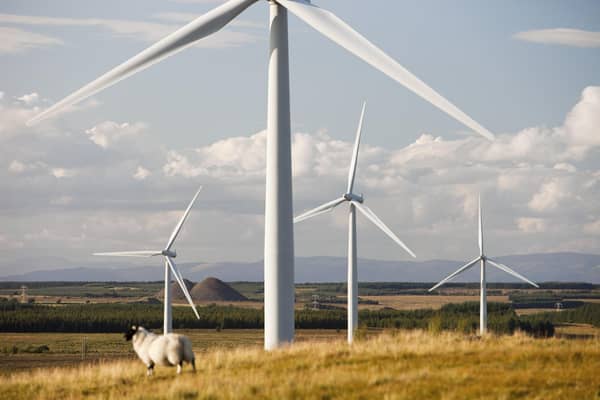
First Minister Alex Salmond wants Scotland to become the Saudi Arabia of renewables, and the country certainly has the geography and weather – with plenty of tide and wind – to make that aim a reality.

However, the shelving of the flagship Lewis wind-farm project in April amid protests from the RSPB, archaeologists and local campaigners seriously dented Scotland's green credentials and raised doubts about Holyrood's commitment to alternative energy.

Britain is committed to meeting a renewables target of 15% of electricity generation by 2020. This seems highly unlikely, but SNP ministers believe Scotland is on track to meet its target of 40% by the same date, thanks partly to hydro power, which currently accounts for 8% of Scotland's electricity generation. The proportion of Britain's energy produced from renewables currently stands at 2%, compared to 12% in Scotland, 9% in Germany and 40% in Sweden.

Cost is a growing problem. Vestas, the world's largest manufacturer of wind turbines, says the rising cost of raw materials has seen turbine prices rise 30% in the past five years. Many manufacturers, including Shell, which recently pulled out of the London Array wind-farm project, now claim there is not enough margin to make the production of wind turbines financially attractive. Offshore wind farms are environmentally popular but twice as expensive.

Green campaigners say there is also a lack of political will. In America, the off-grid movement is generating significant amounts of power, but in April the UK Government resisted calls from rebel Labour MPs to introduce an amendment to the Energy Bill that would have made the use of private solar panels and wind turbines more cost-effective.

The UK also lags behind other countries on solar power – Germany has 200 times as much solar capacity. Friends of the Earth has condemned the UK Government's "woeful" record on renewables.

Attention is moving away from wind turbines and towards tidal power, with a number of Scottish firms making the running. OpenHydro's pioneering tidal device, which started operating last week, is the first scheme to produce electricity for the National Grid from the tides – a completely predictable source that is the fastest-growing renewable technology.

(Additional reporting: Simon Mundy)

The full article contains 1924 words and appears in Scotland On Sunday newspaper.
Page 1 of 1

  • Last Updated: 03 June 2008 10:36 AM
  • Source: Scotland On Sunday
  • Location: Scotland
 
1

Andrew BOD,

Aberdeen/shire 01/06/2008 01:47:40
"The increased tax take has led to the SNP to call for a fuel regulator and an oil fund, such as the Norwegian one established in 1967, which operates like the largest national pension fund in Europe".

And such as the ones run by non-independent states Alaska and Alberta. Doesn't sound too much to ask.

LET'S FORGET THE SNP FOR ONE MINUTE AND DO WHAT'S BEST FOR THE PEOPLE OF SCOTLAND WITHIN THE UK.

The oilfields predominantly surround the state/country of Scotland within the Union that is called the United Kingdom of Great Britain and Northern Ireland.

YES SCOTTISH LABOUR, SCOTTISH LIB DEMS, AND SCOTTISH CONSERVATIVES. IT'S TIME FOR YOU TO STAND UP FOR THE FUTURE OF THE SCOTTISH PEOPLE...

SUPPORT AN OIL FUND.

2

Fayneant,

NZ 01/06/2008 07:39:52
A surprisingly niaive article from the Scotsman - the price of oil is being driven up by the weak dollar and the understanding within the oil producing countries and economists alike that the USA does not need $1 a gallon gasoline to survive.

Governments of oil producing countries and OPEC (who are no longer in control of the price of oil) will continue to look on as oil companies and State owned entities milk the good times.

3

The Strategist,

01/06/2008 09:39:38
OpenHydro is an Irish company in which the Canadians have a substantial shareholding. Scotland has no tidal power technology and won't have because the private sector won't invest.

Scotland needs to wake up and recognise that its financial institutions are fundamentally useless.
4

John (Again),

Buiry St Edmunds 01/06/2008 10:47:33
The contribution of nuclear generation to the UK's electricity was last at 22% in 2003, since when it has declined (due to failing steam pipes and disintegrating graphite moderator blocks in the AGR fleet) to 15.1% in 2007, with BE supplying just 13.7%.

Hopefully Gordon Brown's meeting with the nuclear sector next week will come to terms with the realities of declining supplies of uranium and swingeing rises in the cost of civil construction and material costs due to oil price inflation and accept that nuclear has no sustainability.

The other factor affecting fuel supplies is the rise in internal demand for oil and gas in the supplier countries. For example in 2006, Saudi oil production fell 2.3%, while its internal consumption rose 6%, with a fall in net exports of 4%. In Russia domestic gas consumption is rising faster than its production with a cross-over in 2020 if the plots is extrapolated, when the valve to the West will be finally closed.

The "flat" global crude oil production over the last three years was maintained by the contribution of the non-conventional oils from tarsands, while conventional oil passed its Hubbert peak in 2005.

The SNP has got it right - Scotland will have to pull in its energy belt and live within its renewable means!

5

Neil,

Glasgow 01/06/2008 14:14:13
One country that can increase supply is the USA. There are several fields there which the "environmentalist" movement stops them exploiting. It may be argued that that is the right thing to do but it cannot then be honestly argued by them that the shortage is either inevitable or anybody else's fault.
6

Mr. Lachie Todd,

Edinburgh 01/06/2008 14:17:03
I seem to prefer the shrewd opinion of multi-billionaire, global financier, and philanthropist George Soros on this matter: "The price has this parabolic shape, which is characteristic of bubbles"!


Comment on this Story


In order to post comments you must Register or Sign In


Sister Newspapers:
Press Complaints Commission

This website and its associated newspaper adheres to the Press Complaints Commission’s Code of Practice. If you have a complaint about editorial content which relates to inaccuracy or intrusion, then contact the Editor by clicking here.

If you remain dissatisfied with the response provided then you can contact the PCC by clicking here.