










PRESIDENT Theodore Roosevelt summed up his approach to foreign policy as "speak softly but carry a big stick". In recent years, a later Republican in the White House, George Bush, has preferred a different approach. Mr Bush, now on his "farewell" tour of Europe before the US elections in November, has been taking the opportunity to conduct diplomacy with Iran through the proverbial megaphone.

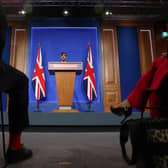
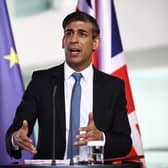
Yesterday, he and Gordon Brown used a joint press conference to "warn" Tehran to back down on enriching uranium or face international sanctions. Mr Brown underscored the warning by threatening Tehran with a freeze on Iranian assets in the EU – thoug
h the Iranian regime reported it had already withdrawn $75 billion from Europe over the weekend.
It is beyond question that the Iranians are playing diplomatic cat and mouse over uranium enrichment. They have broken the rules of the Nuclear Non-Proliferation Treaty to which they are a signatory; have hidden their atomic research from UN inspection; and now are under Security Council sanctions to make them obey international law. No-one doubts that the Iranian regime wants nuclear weapons, though it is less clear if they have an active programme to produce them. But clearly, Tehran wants to keep everyone guessing in order to exert pressure on the West.
In these circumstances, there is little to be gained from threatening the Tehran regime in public. Every time President Bush (with Gordon Brown in tow) makes bellicose remarks, or threatens reprisals, it allows the fundamentalist regime to pretend it is defending Iran from the West; while at the same time undercutting the opposition in Iran which wants rid of the theocracy.
Besides, Iran has been under an economic blockade by the United States since 1979 with little to show for it other than the fact that Iranian oil and gas fields are desperate for fresh capital investment. As a result, the underperformance of the Iranian petro-leum industry is adding to the high global price of oil and pushing the Iranians towards nuclear electricity generation.
It could be, in the long run, that the fundamentalist regime in Tehran will need to be confronted militarily. There are already signs that Egypt and Saudi Arabia are funding Sunni militia to take on Hezbollah, the Iranian proxy in Lebanon. But the less drastic solution for now is to use world opinion against Tehran and pressure them into obeying the Non-Proliferation Treaty. The carrot would be the dropping of economic sanctions.
Tehran needs to be squeezed gently between intelligent sanctions and greater global integration. Yet the more America and Britain try to humiliate the regime in public, the less likely Tehran is to respond positively. Which suggests that President Bush's farewell tour is more an exercise in political vanity than sound diplomacy; and that Gordon Brown's double act with Mr Bush is ill-judged.
The full article contains 483 words and appears in The Scotsman newspaper.