





Help Sitemap Home Skip Navigation Contact Us Disability Statement

The hunt is On.
Sponsored by
Can you track down Scotland's wildest beastie?
 
 
Friday, 5th December 2008

Premium Article !

Your account has been frozen. For your available options click the below button.

Options

Premium Article !

To read this article in full you must have registered and have a Premium Content Subscription with the The Scotsman site.

Subscribe

Registered Article !

To read this article in full you must be registered with the site.

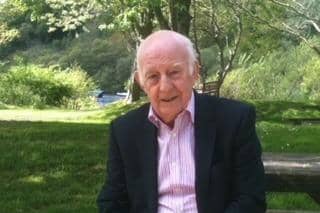
Stewart Lees - Artist and teacher


Click on thumbnail to view image

Published Date: 08 October 2008
Born: 15 January, 1926, in Auchertool, Fife. Died: 1 August 2008, in Edinburgh, aged 82.
THE artist Stewart Lees described himself as "a landscape painter, essentially". Called up at the end of the Second World War, he trained to be a glider pilot and saw active service in the Army Air Corps. This youthful experience of seeing the land f

rom a dizzying height continued to exhilarate and feed his imagination during the course of his painting career and his most characteristic paintings were his semi-abstract landscapes observed or imagined from far above.

When he painted his native Fife, as Lees did again and again, there seemed always to be glimpses of water, distant or close by, and it was especially the distant glimpses that remained as an abiding recollection.

He also travelled further afield, his journeys taking him throughout Europe and as far as India and Uzbekistan, for as well as landscapes he loved ruined cities and the sensation of being amidst Middle Eastern architecture. He wrote of how he had found his inspiration for his 1994 picture In the Citadel, Bukhara: "A group of tourists would come by with their guide, and after they left the place would suddenly go quiet, and I felt the wind, the light and the emptiness of the place."

Then, late in his career, he became fascinated by the way in which the sea animated a landscape, and he began to find inspiration for his colourful and strongly textured pictures among the cliffs and beaches of the northern coast of France.

Lees was born in the village of Auchertool in Fife and brought up in Buckhaven, where he attended the local high school. His father managed a private railway on the Wemyss estate which took coal down to the port of Methil.

In 1947, after his war service, he started at the Edinburgh College of Art, choosing, because of an interest in the relationship of art to architecture, to study in the school of design. His contemporaries included Elizabeth Blackadder and her husband, John Houston, who remained close friends. Among his teachers were Sir William Gillies and Leonard Rosoman, who was working on major commissions for the Festival of Britain and the Scottish Enterprise Exhibition.

After graduating from the Edinburgh College of Art in 1952 – where he had won the Alexander Grant travelling and post-graduate scholarships – he was an assistant art teacher at the Waid Academy as well as being a peripatetic art teacher within Fife. Then in 1960 Lees took a post at Nottingham College of Art, eventually becoming head of the foundation course. (The college has become a component part of Nottingham Trent University). He retired in 1984.

All the while, however, Lees managed to combine teaching with painting, and he exhibited widely, including shows in Scotland at the Traverse Gallery and Gallery Paton in Edinburgh, and the Loomshop Gallery in Fife; in England at the Bluecoat Gallery in Liverpool, the Leeds City Art Gallery and twice at the Upstairs Gallery at the Royal Academy (with Michael Rothenstein and Christopher Saunders); and in France at the Galerie Santa Maria Del Olivio in Beaulieu-sur-Mer.

Lees was elected to the Royal Institute of Oil Painters in 1987 and to the Royal Watercolour Society and the Royal Scottish Society of Painters in Watercolour five years later.

In 1968 he was granted an Arts Council scholarship sabbatical year and in 1991 he was a Cornellision Prize winner.

Lees's work can be found in many public collections including those of Glenrothes New Town, Liverpool Education Committee, Fife County Council, the universities of Glasgow and Nottingham, the Nuffield Foundation, the Imperial Tobacco company, Sheffield City Art Gallery, the Leverhulme Foundation, the Scottish Arts Council, Esso, the Cavendish Medical Centre and Amoco.

The American merchant bank AT Kearney held a major collection of his work at its office in Berkeley Square in London. His work is also held in private collections all over the world.

Lees wrote of his paintings: "My work is based on two basic principles, frontality and texture. Frontality means looking directly at the facades of buildings or removing the facade to create a corridor of space, and I almost always use a single point of perspective. I believe the architectural nature of my art derives from my earlier interest in murals, stained glass and mosaics, all of which relate to their architectural setting and space."

He confessed, however, that, much as he loved stained glass, and despite professional training, he had produced very little stained glass apart from a window at Grantham Hospital. Lees said this was because he liked to be in control of his work, and with stained glass there were inevitably too many other people involved.

And it was true that many people found Lees's somewhat robust personality – reflected in the boldness of his art – difficult to work with. He also loved playing the part of an artist, wearing a black fedora or a velvet jacket and bow tie at dinner parties where he enjoyed expounding his views. "I strongly believe that the most wonderful thing about painting is to surprise yourself," he said. He was a very extrovert figure.

His wife, Ruth, whom he had met at Buckhaven High School, died in 2005. They had two daughters. In declining health from Alzheimer's disease, Lees returned to Scotland and died in Edinburgh.


The full article contains 899 words and appears in The Scotsman newspaper.
Page 1 of 1

  • Last Updated: 07 October 2008 10:47 PM
  • Source: The Scotsman
  • Location: Edinburgh


Sister Newspapers:
Press Complaints Commission

This website and its associated newspaper adheres to the Press Complaints Commission’s Code of Practice. If you have a complaint about editorial content which relates to inaccuracy or intrusion, then contact the Editor by clicking here.

If you remain dissatisfied with the response provided then you can contact the PCC by clicking here.