
Help Sitemap Home Skip Navigation Contact Us Disability Statement


Friday, 9th May 2008

Premium Article !

Your account has been frozen. For your available options click the below button.
Options

Premium Article !

To read this article in full you must have registered and have a Premium Content Subscription with the The Scotsman site.

Subscribe

Registered Article !

To read this article in full you must be registered with the site.

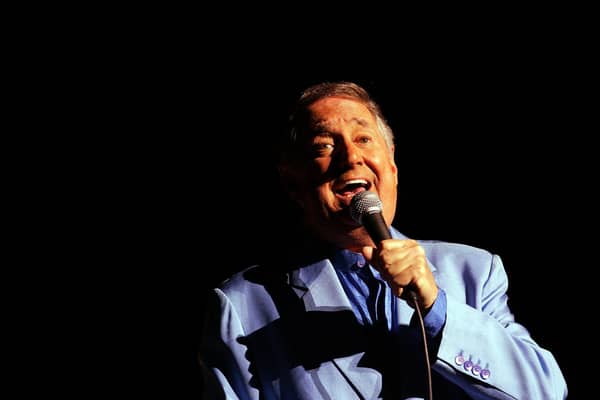
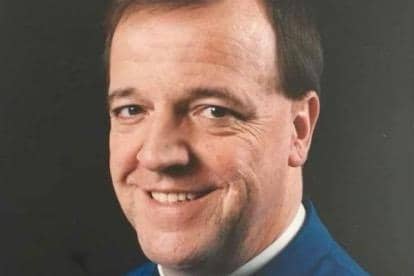
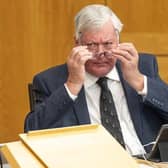
Professor David Wright


Click on thumbnail to view image

Published Date: 22 February 2008
Historian and theologian
Born: 2 October, 1937, in Hayes, Kent.

Died: 19 February, 2008, in Edinburgh, aged 70.


PROFESSOR David Wright of New College, Edinburgh, was a distinguished evangelical church historian and theologian in the Church of Sco
tland. An elder of the Kirk, he played a major role in debates in the Church of Scotland about sexuality and about baptism. He was an internationally recognised expert on the thought of the early fathers of the Church and the theology of the Reformation.

Born in 1937, Wright took a first in history and theology at Cambridge University, and was a research student in Lincoln College, Oxford, from 1961-4, when he was appointed lecturer in ecclesiastical history at New College, University of Edinburgh. He served here until his retirement in 2003, when he was appointed an honorary fellow. At New College, in 1964, he joined the lively group of young church historians around Professor Alec Cheyne, generally known as "the Cheyne Gang".

Unlike most of the others, Wright was conservative theologically, but he worked amicably and productively with colleagues who were radical or liberal, and together the Cheyne Gang transformed the study of Church history, particularly in Scotland.

Wright specialised in patristic and Reformation theology, and he published extensively on the fathers of the early Church, especially Augustine, and on the magisterial figures of the European Reformation – Calvin, John Knox and Peter Martyr, for example. He also wrote on contemporary ethical issues facing the Church, particularly questions of sexuality, where he took up a thoroughly conservative position.

He engaged vigorously in a continuing debate in the Church of Scotland about infant baptism, culminating in his book What has Infant Baptism Done to Baptism? An Enquiry at the End of Christendom (2005). But in some ways his greatest academic contribution was as an editor, particularly of Reformation and patristic texts, and of reference works such as the notable Dictionary of Scottish Church History and Theology (1993).

His scholarship was internationally recognised, and he lectured all over the world. He attracted to Edinburgh an impressive range of research students, particularly from the United States, who wished to work with him.

Wright was awarded the degree of doctor of divinity by Edinburgh University in 1997, and in 1999 he was appointed to an Edinburgh University personal chair in patristic and reformed Christianity. He served with great success in various areas of university life, where his leadership was greatly appreciated – as dean of the faculty of divinity, as convener of the university library committee, and as a member of the DLitt committee and the university court, for example.

Wright was equally involved in the life of the Church of Scotland, where he was frequently the spokesman for the conservative wing. A faithful elder of the Kirk, and a member of Holyrood Abbey Parish Church, he served for a year as moderator of the presbytery of Edinburgh, the first elder to serve in this position.

He was a member of many church committees. In the Church and the university, Wright had the rare gift of sustaining warm and attentive friendships with those with whom he disagreed.

For the last four years of his life he was the thoughtful and caring chairman of the Lothians and Borders prostate cancer support group, which provides support and encouragement to cancer sufferers.

He was supported wonderfully throughout his final illness by his wife, Anne-Marie, their daughter, Jenny, and son, Andrew.


The full article contains 574 words and appears in The Scotsman newspaper.
Page 1 of 1

  • Last Updated: 21 February 2008 7:30 PM
  • Source: The Scotsman
  • Location: Edinburgh
  • Related Topics: Obituaries


Sister Newspapers:
Press Complaints Commission

This website and its associated newspaper adheres to the Press Complaints Commission’s Code of Practice. If you have a complaint about editorial content which relates to inaccuracy or intrusion, then contact the Editor by clicking here.

If you remain dissatisfied with the response provided then you can contact the PCC by clicking here.