












Help Sitemap Home Skip Navigation Contact Us Disability Statement

The hunt is On.

Sponsored by
Can you track down Scotland's wildest beastie?
 
 
Friday, 5th December 2008

Premium Article !

Your account has been frozen. For your available options click the below button.

Options

Premium Article !

To read this article in full you must have registered and have a Premium Content Subscription with the The Scotsman site.

Subscribe

Registered Article !

To read this article in full you must be registered with the site.

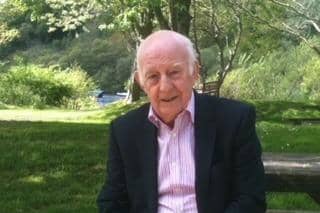
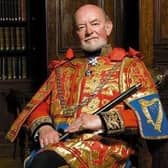
Lord Elliott: Judge who presided over Scottish land issues


Click on thumbnail to view image

Published Date: 21 August 2008
Born: 6 September, 1922, in London. Died: 9 August, 2008, in Edinburgh, aged 85.
AS A young Scots Guards officer, Walter Archibald Elliott fought in the north Africa campaign, was captured by the Germans during the Salerno invasion but escaped to fight in north-west Europe, where he was wounded. Yet he survived to become one of S
cotland's most highly respected law lords, best-known for his leadership of the Scottish Land Court and the Lands Tribunal of Scotland until his retirement on 31 December, 1992.

As president of the Edinburgh-based Lands Tribunal for almost 20 years from 1971, "Archie" Elliott presided in disputes over land or property throughout the country, including a public inquiry into the Edinburgh ring road controversy. As chairman of the separate Lands Court from 1978, taking over from Lord Birsay, he dealt with cases specifically covering issues relating to agriculture or crofters' rights, mainly disputes between landlords and tenants.

Although the Land Court and the Lands Tribunal share the same Edinburgh offices, Elliott's dual roles allowed him to do something dearest to his heart – travel the highlands, lowlands and islands of his beloved Scotland to meet and listen to his countrymen.

It was Elliott's appointment as chairman of the Scottish Lands Court, with a status equivalent to a court of session judge, that allowed him to use the Scots judicial title of Lord. He also stood, unsuccessfully, as a Conservative MP three times between the late 1950s and 1970, once in Dunfermline and twice in Leith, losing narrowly to established Labour MP James Hoy (later Baron Hoy of Leith) in 1970, before refocusing on his first love – the law.

Walter Archibald Elliott was born in 1922 in London, where his father, Prof TR Elliott, was working as a physician at University College and was known as a pioneer in adrenalin research.

The family lived on Chelsea's famous Cheyne Walk by the Thames. Archie's mother was Martha McCosh Elliott, of the McCosh Lanarkshire Iron and Coal Company of Coatbridge, who had met his father while she served in the Voluntary Aid Detachment (VAD) in Europe during the First World War.

On return to Scotland, Elliot spent much of his youth in Broughton Place, a baronial mansion his parents had built above grouse moors north of the village of Broughton, Peebleshire, designed by the renowned architect Sir Basil Spence. It was there that his mother instilled in him a lifelong love of gardening.

He went back south to attend Eton school, then Trinity College, Cambridge, but had to abandon his degree when he joined up with the 2nd Battalion Scots Guards early in the war, becoming a staff captain on the front line.

More than half a century on, in 1996, based on the journal he had kept, he published the memoir Esprit de Corps: a Scots Guards Officer on Active Service, 1943-45. In it he describes, in prose worthy of any writer, the fighting in Tripoli, north Africa, the invasion of Salerno, Italy, three days after his 21st birthday, his capture there, his escape and his wounding during the push through France and northern Europe.

Of the battle for Tripoli harbour, he wrote: "When the scarlet tracers of the anti-aircraft guns had died away there would be silence again but for the grating of the crickets in the oleander trees and someone playing an accordion in the company lines. "

His description of the heavy fighting after the 9 September, 1943, Salerno landing brilliantly revealed the realities of how wars change men. He wrote: "An awful savagery now seemed to take hold of us as we rushed along the embankment shouting oaths and shooting at Germans who were lying there. I felt as if some wild animal had got me by the throat and I had to keep shouting and shooting or else my normal self would return, bringing fear along with it. There was even a savage pleasure in it."

After the war, Elliott completed his law degree at Cambridge before settling in Edinburgh and marrying local lass Susan Mackenzie Ross. They lived first in Duddingston and later, for the rest of his life, in the family home of Morton House, an 18th-century villa at Fairmilehead.

He was admitted to the Faculty of Advocates, the Scots' equivalent of barristers, in 1950 and "took silk" in 1963, when he was appointed Queen's Counsel, a barrister to the British Crown.

His experience in the Scots Guards led to another book, oft-cited by sociologists, entitled Us and Them: A Study of Group Consciousness (Aberdeen University Press, 1987), in which he put forward the theory that group identity existed mainly through opposition to a rival group. In the case of the army, that meant another regiment as much as the enemy, but Elliott expanded the idea to show that it also explained such phenomena as the rise of black group identity and the need for an opposition in politics.

Elliott was a member, and once president, of the Speculative Society, rooted in Edinburgh University and usually described as a "Scottish enlightenment society dedicated to public speaking and literary composition", though critics claim it holds undue influence over the Scottish judiciary. He was also a member of the Royal Company of Archers, Queen's Bodyguard for Scotland, and a member of the council of the National Trust for Scotland. He was awarded the Military Cross for his wartime actions.

In a memorial service eulogy at St Bride's, Edinburgh, on Tuesday, the Rt Hon Lord William Prosser said: "He was what is quite rare – an intellectual lawyer, truly interested in the principles underlying either a garbled statute or an apparently familiar rule. In addition, he minded deeply about fairness and what is right.

"And thirdly, he seemed not to know how to be rude or talk down to ordinary people. If ever a man lived his life within an enclosing – indeed all-embracing – spirit of decency, it was surely Archie Elliott."

He is survived by his wife, Susan, and their two sons.

PHIL DAVISON


The full article contains 1015 words and appears in The Scotsman newspaper.
Page 1 of 1

  • Last Updated: 20 August 2008 9:38 PM
  • Source: The Scotsman
  • Location: Edinburgh
 
1

gus1940,

Edinburgh 21/08/2008 09:33:03
Why does what purports to be Scotland's National Newspaper feel the need to tell its readers that an advocate is the Scottish equivalent of an English barrister. Dumbed down rag.
2

Just this....................,

Edinburgh 25/08/2008 17:18:23
Dear Gus1940,
I feel that the flavour of this kind obituary about my father is the most important thing. I am sure that my father would not mind in the slightest.
Regards Michael Elliott.


Comment on this Story


In order to post comments you must Register or Sign In


Sister Newspapers:
Press Complaints Commission

This website and its associated newspaper adheres to the Press Complaints Commission’s Code of Practice. If you have a complaint about editorial content which relates to inaccuracy or intrusion, then contact the Editor by clicking here.

If you remain dissatisfied with the response provided then you can contact the PCC by clicking here.