














Help Sitemap Home Skip Navigation Contact Us Disability Statement


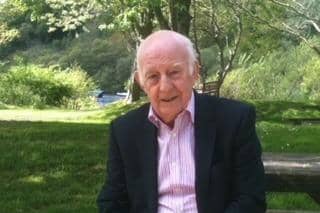
John A Eddy, solar astronomer

Click on thumbnail to view image

Published Date: 19 June 2009
Born: 25 March, 1931, in Pawnee City, Nebraska. Died: 10 June, 2009, in Tucson, aged 78.

JOHN A Eddy was a solar astronomer who studied the history of the sun and demonstrated that it is not a constant star with a regular cycle of behaviour but rather one that has periods of anomaly.

In 1976, Eddy published an article in the journal S
cience in which he confirmed the speculative and largely unknown observations of 19th-century astronomers that for seven decades, from 1645 to 1715, the surface of the sun was inordinately calm, with the magnetic storms that often roil it – as indicated by the presence of sunspots – peculiarly absent.

Eddy called the peaceful interlude the Maunder Minimum, after E W Maunder, an English scientist who, along with a German, Gustav Spörer, first noted the presumed anomaly in the 1890s.

His research consisted largely of digging into historical documents – including accounts of telescopic observations going back to Galileo; reports of the aurora borealis from centuries past; visual observations of sunspots recorded in Asia and historical descriptions of the appearance of the sun's corona during solar eclipses – all pointing with overwhelming coincidence, if not outright scientific proof, to the same conclusion.

But lastly, Eddy found confirmation of his findings in measurements of the concentration of the radioactive isotope carbon-14 found in tree rings, which is known to correlate with solar activity. The carbon-14 evidence also indicated earlier periods of solar quiescence, before the first telescopic observance of sunspots, including a period from 1450 to 1540, which Eddy called the Spörer Minimum.

The Science article was a striking repudiation of the generally held belief that solar activity is relatively consistent, with the number of sunspots rising and falling in an 11-year cycle, and it raised the possibility that irregularities in the behaviour of the sun could have an effect on Earth and its climate. Eddy pointed out, for instance, that both the Maunder Minimum and the Spörer Minimum coincided with the coldest intervals of the Little Ice Age, from 1450 to 1850.

"This behaviour is wholly unlike the modern behaviour of the sun which we have come to accept as normal, and the consequences for solar and terrestrial physics seem to me profound," Eddy wrote, and though the idea that the climate is in flux is still a matter of scientific debate 33 years later, satellite observations of the sun have determined that its irradiance is variable.

John Allen Eddy, known to all as Jack, was born in Pawnee City, in south-eastern Nebraska, where his father managed a cooperative farm store. It was a small town, but it happened to be the home of a senator who sponsored him for the United States Naval Academy. At Annapolis, he took a course in celestial navigation, which engendered his love of the sky.

After four years as a naval officer during and after the Korean War, he entered the graduate programme in astrogeophysics at the University of Colorado. He received his doctorate in 1962.

Eddy's historical research also led him to demonstrate that the wheel-like formation of stones and cairns on a Wyoming mountain top – known as the Bighorn Medicine Wheel – was a purposeful, sky-oriented arrangement of stones, a crude astronomical observatory crafted by Native American inhabitants of the Western plains.

He spent his later years advancing the study of the relationship between Earth and the sun, and he had just completed a book on the subject, The Sun, the Earth and Near-Earth Space: A Guide to the Sun-Earth System, which is to be published by the US National Aeronautics and Space Administration.

Eddy explained why he named his most famous discovery after a second-tier scientist who was not even the first to notice the hiccup in the sun's behaviour. Spörer's observations preceded Maunder's, but Spörer Minimum just didn't sing. "Maunder Minimum" with all those "m"s, he said, did.

"You know, the temptation was to think that it might someday be called the Eddy Minimum, that is, to call it nothing in the hope that someone else would do that," he said in an oral history interview for the American Institute of Physics, "but being from Nebraska, I could never do anything like that."

Eddy's first marriage ended in divorce. In addition to his wife, Barbara, whom he married in 1992, he is survived by a brother, a sister, four children and four grandchildren.


Page 1 of 1

  • Last Updated: 18 June 2009 9:30 PM
  • Source: The Scotsman
  • Location: Edinburgh
  • Related Topics: Obituaries


Comment on this Story


In order to post comments you must Register or Sign In


Sister Newspapers:
Press Complaints Commission

This website and its associated newspaper adheres to the Press Complaints Commission’s Code of Practice. If you have a complaint about editorial content which relates to inaccuracy or intrusion, then contact the Editor by clicking here.

If you remain dissatisfied with the response provided then you can contact the PCC by clicking here.