
Born: 2 December, 1939, in Paisley.
Died: 17 May, 2008, in Glasgow, aged 68.
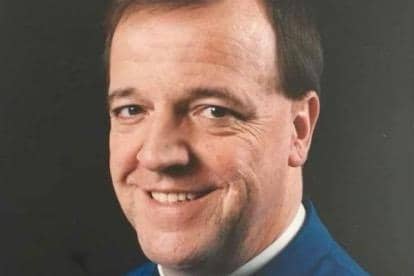
"I'M NOT some heretical priest. I'm just a man who thinks." So said the controversial but popular priest Father John Fitzsimmons, who
, in a prominent career, upset many in the Catholic Church in Scotland and Rome. But his sheer erudition – allied to remarkable linguistic abilities – ensured that Fitzsimmons was respected and loved throughout by parishioners. His ability as a wordsmith was publicly demonstrated when Pope John Paul II visited Scotland in 1982. It was Fitzsimmons who wrote his finely worded oration at Bellahouston Park, which called on all the Scottish churches to walk "hand in hand" with the Pope.
As if to demonstrate his individuality, Fitzsimmons was a parish priest and rector of the Scots College in Rome, introduced The Greetings Programme on BBC Radio Scotland and was often heard on "Thought For the Day" on Radio 4's Today programme. He introduced The Greetings Programme on a Sunday morning with flair and understanding.
BBC Scotland's head of programmes, Maggie Cunningham, said: "He was a big man with a big personality, erudite and compassionate, and anybody who met or worked with Father John would benefit from his life-enhancing qualities."
A special programme recorded by Fitzsimmons last year will be broadcast this Sunday on BBC Scotland.
John Fitzsimmons was brought up in Paisley and attended St Mary's Primary School. He continued his education at Blairs College before going to the Scots College in Rome, where he was marked out as a pupil of promise. He was ordained in Rome in 1963 and completed his studies in Jerusalem and Beirut.
His first appointment in Scotland was to teach at St Peter's College in Cardross and act as priest at St Mary's, Greenock. He was widely acknowledged for his academic and theological knowledge but made his mark as a compassionate priest. Fitzsimmons was a man of learning and erudition but respected for his humanity, humour and congenial manner.
In 1986, he returned to Rome as rector of the Scots College and immediately set about modernising the facilities (not least installing a swimming pool) and upgrading the teaching methods, including expanding the library and broadening the academic schedule. This brought Fitzsimmons into conflict with his superiors for the first time. His forthright views, not only on the teachings of the Church, but also his attacks on senior officials in Scotland, caused mounting anxiety and he was relieved of his position.
He was appointed priest at St John's Bosco, in Erskine. Rather than accepting the slight as a demotion, Fitzsimmons considered the appointment a challenge. Once again a parish priest, he was diligent and caring, but his choice of public statements was not always measured or temperate. He spoke out against what he considered the unbending edicts from Rome and was not afraid to criticise many of the Scottish bishops – including Cardinal Winning. His own bishop, John Mone, is believed to have tried to limit Fitzsimmons's public comments – without much success.
For his sheer ability as a theologian, Fitzsimmons should have become a bishop. When Bishop Macgill of Paisley died, it was assumed Fitzsimmons would be his successor. The clergy of the diocese were overwhelmingly in his favour, but his liberal views on matters such as contraception made such an appointment too contentious.
Fitzsimmons remained incurably outspoken to the end. Indeed, he was relieved of his post at Erskine and took up residence in a retirement home for the clergy in Gourock. In 2000, on BBC Radio Scotland's Frontline Scotland, Fitzsimmons joined in a lengthy debate about how the Catholic Church should adapt to contemporary society. He said the Church was "too black and white: too dogmatic. Real life just isn't like that."
Fitzsimmons was one of "the siren voices of liberalism" (according to the Catholic hierarchy in Scotland) but he was never afraid of such accusations. He displayed his compassion and understanding through many kindnesses to parishioners and friends and was certainly in touch with his congregation. Apart from being an avid Celtic supporter he was often seen in the casino or betting shop.
"Big Fitz" (a name by which he was widely known, though it was seldom used to his face) was a big man: formidable, friendly and a strong upholder of his faith. He could be gruff, but his broad smile and avuncular nature soon brushed that away. Fitzsimmons was indeed controversial, but he was respected for raising issues others chose to avoid. As Father Byers of Paisley commented on hearing of his death: "Father Fitzsimmons was a real character, well known and well loved. He could sometimes be a thorn in the side of the hierarchy – he had very strong views on the Church."