







Born: 16 April, 1964, in Skultuna, Sweden.

Died: 14 June, 2008, in Stockholm, aged 44.
THE Esbjörn Svensson trio, widely known as e.s.t., were much loved by Scottish fans and were due to retur
n to Edinburgh's Queen's Hall next month as part of the Jazz and Blues Festival. Instead, after composer and pianist Svensson's death on Saturday in a scuba-diving accident, the internationally-acclaimed, genre-defying band will continue to enthral their fans only through the dozen albums they recorded in 15 years.
Svensson's music was most easily labelled as jazz, but it overlapped classical, rock, pop, techno, funk, you name it, and the trio's concerts, often with light, sound and smoke displays behind them, were more akin to rock extravaganzas. Their albums climbed both the jazz and rock charts in Europe and they were one of the few European jazz groups to crack the US market, touring as support acts for stars such as the singer k.d. lang.
For the last couple of years, many jazz critics considered them the most influential jazz ensemble in Europe while others questioned whether it was, in fact, jazz at all. "If you have to call it something, I guess it's jazz," Svensson once said. "But it's not what jazz was."
The pianist liked to call his haunting, impressionistic compositions "stories and journeys, rather than tunes", moving them along from quiet interludes to spine-tingling sonic surges. He created unique sounds by putting paper or other materials over his piano strings while double bass player Dan Berglund used a pedal to create howling electronic riffs and drummer Magnus Oström completed the texture with an assortment of unconventional drumsticks, brushes or other items to give the desired sound and rhythm.
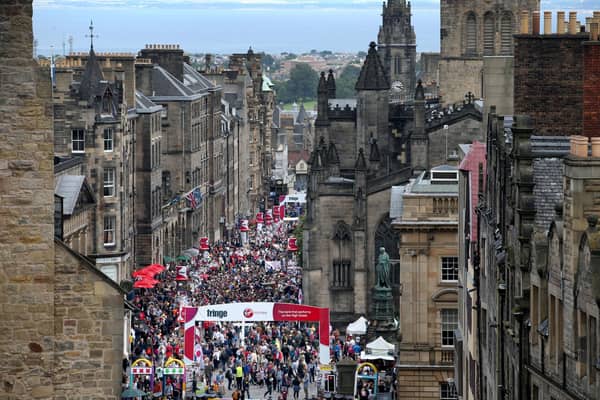
Even after their worldwide success and demand, Svensson loved coming to Scotland, playing anywhere from Henry's Jazz Cellar, The Hub or the Usher Hall in Edinburgh to the Fruitmarket in Glasgow or the Lemon Tree in Aberdeen. The trio were due to play Edinburgh's Queen's Hall on 27 July, after a gig later this month in Toronto, before moving on to Wales to perform at the Brecon Jazz Festival in Powys.
In their playing and offstage, e.s.t. were known for their loyalty to one another and their democracy. Although Svensson composed their pieces, he gave Berglund and Oström, his childhood friend and co-founder of the group, equal credit and encouraged them to improvise their own parts. "Individual expression has to be there," he once said, "but when we solo, we improvise together so it's more like a conversation between all three of us."
In Sweden, however, the well-built, handsome, shaven-headed pianist, although modest and happily married with two children, became something of a pin-up boy, almost on a par with his compatriot footballer Freddy Ljungberg, a rarity for a jazz musician.
Esbjörn Svensson was born in the village of Skultuna, near Västeras, in 1964 to a father who loved jazz and a mother who was an amateur classical pianist. He wanted to be a drummer, but since the piano was the only instrument in the house, he took to trying to emulate an earlier generation of stars, notably Little Richard and Jerry Lee Lewis.
Studying first at the Royal College of Music, then at the University of Stockholm, he became a fine classical pianist, influenced mostly by the baroque counterpoint of J S Bach and the playing of Glenn Gould, but leaned towards rock and jazz after hooking up with his old friend Oström and jamming together with various bands.
In the early 1990s, they recruited Berglund to complete a trio, influenced most notably by Keith Jarrett and Chick Corea, and e.s.t. released their first album, When Everyone Has Gone, in 1993. It led to Svensson being named Swedish Jazz Musician of the Year.
The trio had their first big success in 1996 with their stunning album e.s.t. Trio Plays Monk, giving funky arrangements and rhythms to the works of the great pianist/composer Thelonious. The album From Gagarin's Point of View in 1997, featuring Berglund's innovative, penetrating bass riffs on the track Dodge the Dodo, consolidated their popularity but it was a memorable performance at the 1999 Montreux Jazz Festival that brought them to the attention of the world.
Their subsequent album Good Morning Susie Soho took off and opened the door to the US and the rest of the world.
Albums such as A Strange Place for Snow (2002) and Seven Days of Falling (2003) appeared on both the jazz and rock charts in continental Europe, giving Svensson the idea of playing rock venues and adding the visual back-up to blend with their sound. The Snow album became the highly-acclaimed soundtrack for the 2002 French film Dans ma Peau (In my Skin) directed by Marina de Van.
Esbjörn Svensson is survived by his wife, Eva, and sons, Noah and Ruben.
The full article contains 839 words and appears in The Scotsman newspaper.