








Help Sitemap Home Skip Navigation Contact Us Disability Statement

The hunt is On.

Sponsored by
Can you track down Scotland's wildest beastie?
 
 
Friday, 5th December 2008

Premium Article !

Your account has been frozen. For your available options click the below button.

Options

Premium Article !

To read this article in full you must have registered and have a Premium Content Subscription with the The Scotsman site.

Subscribe

Registered Article !

To read this article in full you must be registered with the site.

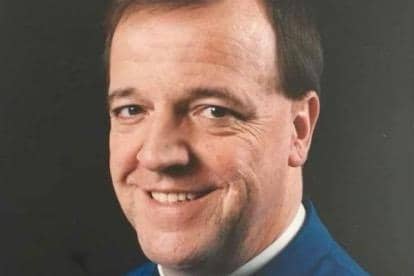
Christopher Fyfe


Click on thumbnail to view image

Published Date: 17 September 2008
Pioneer of African history
Born: 9 November, 1920.

Died: 26 August, 2008, in London, aged 87.


CHRISTOPHER Fyfe was a pioneer in the field of African history and is considered the father of Sierra Leone studies. He was also an active force in the Edin
burgh arts scene and a passionate defender of the heritage of the Old Town. While instinctively averse to authority, he contributed enormously to countless collaborative ventures, winning the admiration of those who shared his passions.

He was born in England to a family of Scottish ancestry. His father was principal of Queen's University (Ontario) and subsequently of Aberdeen University. His own studies at Oxford were interrupted by the war. He saw little active service and was proud of the fact that he never rose above the rank of gunner. Thereafter, he completed his degree and took up a post at a secondary school in Dusseldorf.

His life took a sudden diversion when his brother-in-law invited him to organise the Sierra Leonean archives. Fyfe, who served as government archivist from 1950-52, was wont to say he was not much of an archivist – although others beg to differ – and that his fascination lay in the contents.

On his return to London, he spent a further ten years conducting research, leading to the publication of his History of Sierra Leone in 1962. This 852-page text, which has never been superseded, was modelled on Ulysses. It was written as a single block of text, and when the publisher insisted on chapters, Fyfe merely inserted breaks with numbers attached. His determination, to the point of stubbornness, won him this battle and countless others.


Following posts at Bristol and Belfast, Fyfe was appointed to a lectureship at the University of Edinburgh in 1962, where the Centre of African Studies was founded. He was promoted to reader in 1964, a position he retained until retirement in 1991.

He rebuffed an attempt to promote him to a chair, on the basis that it was more important to create jobs for younger scholars than to forge gongs for older ones. Fortuitously, this enabled him to work to the age of 70 on the old academic contract – another small victory he relished.

Fyfe was regarded with a mixture of awe and affection by students. In classic style, he scheduled his African history classes for 9am to weed out the slackers, and he demanded nothing less than absolute commitment from those who enrolled.

He served as editor of the Journal of African History and was always on top of the latest trends in historical research, regularly revising his lectures accordingly. He published a further book, on James Africanus Horton, the first African graduate of the University, and other work on contemporary sources for the upper Guinea coast.

Fyfe's shorter history for schools left an indelible imprint on cohorts of Sierra Leonean children. Although he hated adulation, his generous engagement with younger Sierra Leonean researchers only added to the Fyfe legend. Many of his associates rose to become key figures in the intellectual establishment in Freetown and, later, in exile. They appreciated the enormous effort that went into appraising their work, and most were grateful for the honest critiques they received.

In the 1970s, when the African scene in Edinburgh was vibrant, the "wee Fyfe" was a central figure. His bohemian parties in St Mary's Street were, as one colleague put it, "worthy of record by a latter-day Cockburn".

Fyfe was a thoroughly cultured man. He played a supporting role in the early days of the Traverse Theatre. But it is perhaps his active service on behalf of the Old Town Association for which he will be remembered outside academia. If not for the constant campaigning of Fyfe and his co-refuseniks, a motorway would have been driven through the Old Town.

In later years he had the pleasure of appearing on a television programme with Griff Rhys-Jones in which the fate of Glasgow was contrasted with that of Edinburgh. The survival of Edinburgh's architectural heritage is due in no small part to Fyfe's doggedness, principle and fleetness of foot.

Such was his investment in Edinburgh that many were surprised when he moved to London on retirement. But his love of the city was exceeded only by that of his family, the Mabeys. Although he returned each year for the annual conferences, he maintained he had made the right decision in returning to the family home, where he had written his history.

From Blackheath, he renewed his forays into the British Library until physical frailty made this impossible. But to the end he remained in constant correspondence with long-standing friends and eager young researchers. His death was received with expressions of sorrow from all quarters, but most of all by Sierra Leoneans, who took him as one of their own.


The full article contains 811 words and appears in The Scotsman newspaper.
Page 1 of 1

  • Last Updated: 16 September 2008 6:52 PM
  • Source: The Scotsman
  • Location: Edinburgh
  • Related Topics: Obituaries


Sister Newspapers:
Press Complaints Commission

This website and its associated newspaper adheres to the Press Complaints Commission’s Code of Practice. If you have a complaint about editorial content which relates to inaccuracy or intrusion, then contact the Editor by clicking here.

If you remain dissatisfied with the response provided then you can contact the PCC by clicking here.