













Help Sitemap Home Skip Navigation Contact Us Disability Statement


Friday, 9th May 2008

Premium Article !

Your account has been frozen. For your available options click the below button.

Options

Premium Article !

To read this article in full you must have registered and have a Premium Content Subscription with the The Scotsman site.

Subscribe

Registered Article !

To read this article in full you must be registered with the site.

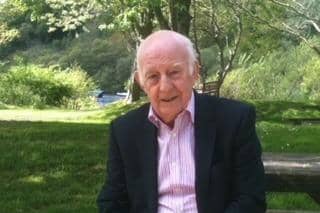
Archie Hind


Click on thumbnail to view image

Author of seminal Glasgow novel The Dear Green Place
Born: 3 June, 1928, in Glasgow.
Died: 21 February, 2008, in Glasgow, aged 79.

ARCHIE Hind wrote only one complete novel, The Dear Green Place, published in 1966. But it was seen as a breakthrough in Scottish literature, defining the struggle of
a would-be artist against the backdrop of harsh and violent working-class life in post-war Glasgow. It won four major awards, has been listed as one of the best 100 Scottish novels of all time and is due to be reprinted in April, along with the incomplete manuscript of his only other attempt at a novel, Fur Sadie.

The success of The Dear Green Place, a reference to the Gaelic for the city of his birth, life and, recently, his death, turned Hind almost overnight from an unknown former trolley-bus driver and slaughterhouse worker into a writer fêted throughout the UK, winner of the 1966 Guardian Prize for First Novel among others.

It raised public expectations so high, however, that for the next 40 years, Hind retreated into virtual oblivion unable to emulate his first work, or perhaps subconsciously aware that this might prove impossible.

He did, however, publish some exemplary journalistic articles and wrote several plays and theatrical revues, notably for the Citizen's Theatre, Glasgow, while earning a living as a copytaker on newspapers in Aberdeen and Edinburgh.

His four decades of literary oblivion were about to end in two weeks' time, when he was due to appear with famous writers from around the world at the Aye Write! literary festival in Glasgow's Mitchell Library, starting on 7 March, to mark the reprinting of The Dear Green Place, along with the Fur Sadie manuscript and examples of his journalism.

Following his death from cancer aged 79, the organisers will instead hold a memorial event on 8 March.

His great novel, described by one critic as "the portrait of the working man as a would-be artist", tells the story of Mat Craig, clearly based on Hind himself, a young slaughterhouse "blood boy" on Glasgow's south side who is torn between social pressures and his literary ambition, notably "to write the best novel ever written in Glasgow". One minute, Mat is dreaming of glory as an award-winning writer, the next he has a "feeling of self-division". He agonises over his writer's block, feels guilty that writing is somehow "immoral" because it's not a real job, or despairs that he's really a phoney, he's not a good enough writer, he'll always be just a worker, that "writers are always other people". Like many writers, he goes from fear of failure through expectation of success to fear of that very success.

As Mat struggles with this paradox, as old as art itself, Hind's literary skill, often poetic, and his ear for Glasgow dialogue force the reader to breathe, smell, taste and feel the dark, dour, coal-smokey streets of the city in the 1950s. Towards the end of the book, the despairing would-be writer blames his failure on his need to rely on "gutter patois" to express himself. He calls his native Glasgow tongue a "language which was not made to range, or explore, or express; a language cast out of the absence of possibility … a reductive, cowardly, timid, snivelling language cast out of jeers and violence and diffidence; a language of vulgar keelie scepticism".

The unfinished manuscript of Fur Sadie was thought to have been lost – some believe Hind may even have destroyed it in a moment of despair – but it has been pieced together largely through the efforts of his lifelong writer friend Alasdair Gray, author of Lanark (1981), and journalist and literary agent John Linklater, for scheduled publication on 3 April by Birlinn along with the new edition of The Dear Green Place. Originally titled Für Sadie because Hind was influenced by Beethoven's piece Für Elise, but with the German umlaut now dropped to reflect Glasgow dialect, it tells the story of a middle-aged housewife in the city's Parkhead district who seeks escape and fulfilment through art after rediscovering her childhood love for the piano.

The opening scene of the book, in which Sadie tries to get the piano up a staircase in a Parkhead tenement, shows Hind had not yet lost the literary skills revealed in Green Place.

Archie Hind was brought up in the Carntyne district of Glasgow and spent most of his literary-productive years in a flat in Greenfield Street, Govan. "The drink" turned his father, a lifelong steam train stoker, into a wife and child-beater, and young Archie, though a keen swimmer, often had to avoid the public baths because of his bruises.

He was bright enough to have a chance at further education, but his father's pressure for money forced him to leave school and take on menial jobs. He was only too happy, when called up, to serve in the medical corps in Singapore and Ceylon at the end of the Second World War.

Demobbed, he was determined to be a writer. His big break came when he was accepted in 1950-51 on to a creative course at Newbattle Abbey College, Midlothian, where the warden, or principal, Orcadian poet Edwin Muir, became his mentor and helped inspire him to do, at least arguably, what his leading character Mat Craig never could – "write the best novel ever written in Glasgow".

Archie Hind is survived by his wife of 56 years, Eleanor (née Slane), sons Calum and Martin, and daughters Sheila and Helen. A third son, Gavin, died in a road accident as a youth.

Anyone interested in the life and work of Archie Hind should read the recent article by John Linklater in the Scottish Review of Books (Volume 4, No 1, 2008).


The full article contains 976 words and appears in The Scotsman newspaper.
Page 1 of 1

  • Last Updated: 25 February 2008 9:24 PM
  • Source: The Scotsman
  • Location: Edinburgh
  • Related Topics: Obituaries


Sister Newspapers:
Press Complaints Commission

This website and its associated newspaper adheres to the Press Complaints Commission’s Code of Practice. If you have a complaint about editorial content which relates to inaccuracy or intrusion, then contact the Editor by clicking here.

If you remain dissatisfied with the response provided then you can contact the PCC by clicking here.