













Published Date:
21 January 2008
By MICHAEL HOWIE
HOME AFFAIRS CORRESPONDENT
SCOTLAND'S most senior police officer has called for specialist courts to be created across the country to deal with the soaring number of domestic abuse cases.

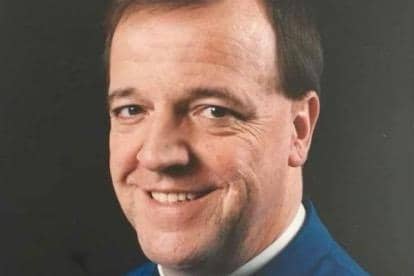
Stephen House, chief constable of Strathclyde Police, said a pilot scheme – which every year sees a dedicated sheriff deal swiftly with more than 700 violent partners who are "fast-tracked" through the system by prosecutors in Glasgow – was proving "hugely successful".
He said the pilot, set up in October 2004, should be replicated in other cities and towns across the country, describing the absence of public money for the move as a "frustration".
Mr House's call puts him at odds with the Scottish Government, which has ruled out a national roll-out of domestic- violence courts, agreeing only to fund an expansion of the Glasgow service.
The SNP-led administration has also halted a planned national roll-out of youth courts.
Latest figures show violence against women in the home is at an all-time high. A 7 per cent rise in recorded incidents of abuse took the number of cases to more than 48,000 in Scotland last year, but a victim survey has revealed that many incidents go unreported, and the true number could be as high as 250,000.
The figures led Morag Alexander, head of the Commission for Equality and Human Rights in Scotland, to describe domestic violence as "a hidden epidemic of unimaginable proportions".
Mr House said the pilot court had been "very successful".
He added: "We've had experience of this elsewhere in the country and the world. The great thing is the judge becomes an expert on the issue and immune to the excuses from offenders. The court becomes less tolerant of domestic violence and more understanding to the victim's situation. That helps them come up with a more appropriate sentence.
"If those appearing before the court are repeat offenders, then clearly they need a custodial sentence. That is especially true as, for it even to get to court, it means it's a serious report.
"I would like to see the pilot spread across Strathclyde. In fact, we need to spread it out across the whole of Scotland.
"The frustration is the lack of public finances. If you could take the money police and health services spend on dealing with violence, particularly drink-related, and spend it on something else, such as these courts, it would make a real difference. The problem is we have to keep spending it on dealing with the consequences of domestic violence."
Under the pilot scheme, victims are also given specialist support to help them overcome their fear of going to court.
Last night, Kenny MacAskill, the justice secretary, insisted domestic abuse was "right up there" in the Scottish Government's priorities, but said the pressure on court buildings made it impractical to extend the scheme across Scotland.
Edinburgh's courtrooms, for example, face a massive increase in workload when relatively minor district court cases are moved to the sheriff court in Chambers Street next year.
Jacq Kelly, a spokeswoman for Scottish Women's Aid, said the lessons from the pilot scheme must be applied across the country, so victims of domestic abuse could benefit from quicker and more rigorous prosecutions.
She added: "We are keen to see the lessons learned during the pilot applied elsewhere."
'HE WOULD LOCK ME IN'IF THERE could be any consolation for Catherine, it was that her husband never actually hit her.
But the scars inflicted by more than four years of psychological torture were every bit as damaging as any physical attack.
Verbal abuse, including physical threats, spiralled into even more terrifying episodes involving attempts to snatch her daughter, setting fire to the family home and serial stalking.
"For five years, everything was fine. But he became really nasty when I told him I wanted to go to university and get a degree," says the 26-year-old, who is from the south side of Glasgow.
"He wanted me to work, saying we didn't have enough money. He wanted me to have (another] baby, but I wasn't ready for that.
"It went downhill from there. He would lock me in the house and lock my shoes in a cupboard so I couldn't go out. I had to sneak out and go round to my neighbour's so I could borrow a pair of shoes that were too small so I could go to university. It was unbelievable. I'd miss the last lecture so I could get back home before he returned from work."
One violent outburst in the middle of the night, however, when her husband smashed up the living room, left her with no option but to leave home.
Catherine's husband was arrested and, within six weeks, appeared at Glasgow's domestic-abuse court. Under the normal court system, she would have had to wait for closer to six months before the case would be dealt with.
He pleaded guilty to three charges, including two breaches of the peace, and was sentenced to 240 hours of community service.
The name of the victim in this case has been changed.
The full article contains 858 words and appears in The Scotsman newspaper.
-
Last Updated:
21 January 2008 12:02 AM
-
Source:
The Scotsman
-
Location:
Edinburgh