






IT WAS meant to be the day when everything finally went right: the opening of the Athletes' Village in Beijing, just 12 days before China's Olympic Games finally started.

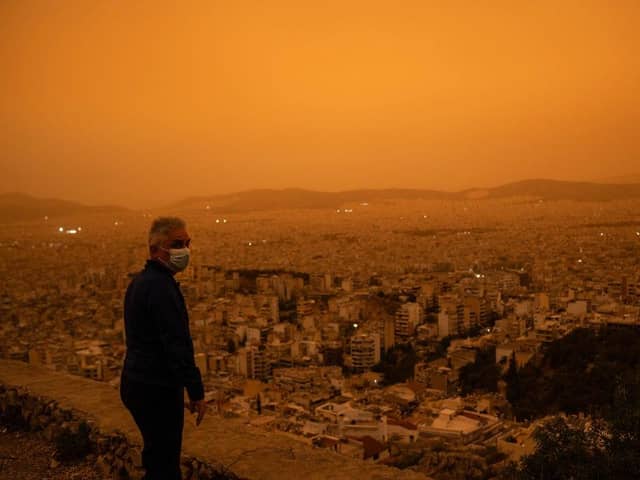
But instead of being launched in a blaze of glory, the event yesterday was obscured by a thick grey haze of pollution as Beijing experienced the worst smog it had seen in month.
Such was its severity that during the village's opening ceremony, the housing complex was invisible from the nearby main Olympic Green.
The Chinese government has already attempted to tackle the issue by placing severe restrictions on the level of traffic entering the city, while local industry is being wound down for the duration of the Games.
But it seems to have had little effect.
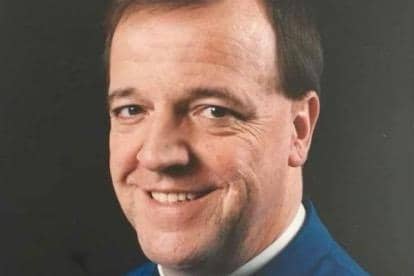
Gunilla Lindberg, an International Olympic Committee vice-president from Sweden who is staying in the Athletes' Village, admitted the situation was dire. "No, it doesn't really look so good. Yesterday was better. The day I arrived, Tuesday, was awful."
"We try to be hopeful. Hopefully, we are lucky during the Games as we were with Atlanta, Athens and Barcelona."
Dr John Crowther, an expert in pollution at Glasgow Caledonian University, said that he believed it was still possible to clear the air in time for the start of the Games in 11 days' time from today, but it was dependent on the weather.
"The calmer the conditions, the more the air pollution builds up. Winds tend to carry it away.
"It would take a little while to disperse, but not if there's a little wind speed, which is the crucial thing. If there's not much then pollution levels can build up.
"Athletes are right to be concerned about this. Pollution levels are well known to affect people, particularly those who are undertaking strenuous exercise. That is why cycling in a city is dangerous, breathing pollutants deep into the lungs, reducing their effectiveness."
The Beijing Municipal Environmental Protection Bureau admitted the air was "unhealthy for sensitive groups". But Du Shaozhong, deputy director for the body, maintained that "the air quality in August will be good".
The issue of Beijing's notoriously polluted air has been a key issue in the run-up to the Games, which begin on 8 August.
The world's greatest distance runner, Haile Gebrselassie of Ethiopia, pulled out of the marathon because the city's pollution would irritate his airways.
Meanwhile, the International Olympic Committee has reportedly been inundated with applications from athletes to use asthma medication during the Games.
Those most likely to be affected are long-distance runners and cyclists, but even middle-distance athletes and those taking part in team games such as hockey will be at risk from the effects.
The full article contains 460 words and appears in The Scotsman newspaper.