







Help Sitemap Home Skip Navigation Contact Us Disability Statement

The hunt is On.

Sponsored by
Can you track down Scotland's wildest beastie?
 
 
Friday, 5th December 2008

Haggis Hunt is now on!

Premium Article !

Your account has been frozen. For your available options click the below button.

Options

Premium Article !

To read this article in full you must have registered and have a Premium Content Subscription with the The Scotsman site.

Subscribe

Registered Article !

To read this article in full you must be registered with the site.

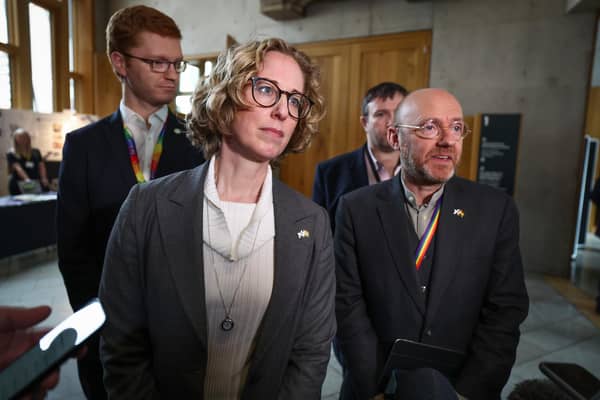
More answers than questions as Scottish Cabinet drops in on Inverness


Click on thumbnail to view image

Published Date: 06 August 2008
"THIS is the most important city in Scotland," Alex Salmond told his audience in Inverness yesterday.
Even though everybody there knew the First Minister was just flirting with them, they were willing to indulge him simply because he had taken the time to come to talk to them.

The 120 or so members of the audience had been invited along to enjoy t
he latest stage of the National Conversation on independence, staged after the First Minister convened his Cabinet in the city's townhouse.

But in the event it was more of a monologue, with Mr Salmond taking to the stage for an hour of the allotted 75-minute meeting to hold forth on Scotland's constitutional status.

And when the public were given their 15 minutes, no-one mentioned the "I" word.

Mr Salmond's itinerant Cabinet was designed to dovetail with his National Conversation on independence, taking the debate about Scotland's constitutional future to areas outside the political beltway.

While it was clear from yesterday's event that there is considerable support for a more accessible Cabinet, there was no evidence of this translating into Mr Salmond's wider goal of independence.

Mr Salmond was questioned about the lack of affordable housing in the Highlands and the gender pay gap he was asked to take a stand on the oppression of Tibet and to provide more hydro-electric generation, he was told to bring the troops home from Afghanistan and to provide a proper age of majority for young people.

Not once, though, was he asked about independence or the constitution – supposedly the reasons for the question and answer session in the first place.

Part of this was because of the make-up of the audience. Two thirds of those present were invited by the Scottish Government. These people tended to be councillors, quangocrats, people with public roles and functions, but all of whom had an issue to push or a point to make – none of which involved independence.

They were there to question ministers on their own agendas, which they duly did. The other 40 tickets had gone out to the general populace, some of which – the ones not snapped up by party activists – had actually found their way into the hands of members of the public, but they were considerably in the minority.

If anybody did actually want to ask about the economics of independence or the constitution, they did not get a chance.

There was a general sense that the First Minister had gone on too long – taking up an hour of yesterday's hour-and-a-quarter session all on his own – and there had not been enough input either from the rest of the Cabinet or from the audience.

Yet, despite these grumbles, the First Minister and his cabinet were greeted with genuine enthusiasm, not because they came bearing a message of independence, but simply because they had bothered to draw the Highlands into the business of government.

Grace McDonald, from Inverness, had managed to get one of the small number of public tickets for the event and she left delighted.

"I liked the openness of it. It was a refreshing change," she said.

Jonathan McColl, from the Dingwall Museum, described the event as "wonderful," saying he had come along because he thought it was going to be "important," not because of independence, and he had not been disappointed.

In 2000, when he was the Convener of Highland Council, David Green wrote to Henry McLeish, asking the then first minister to bring the Scottish Cabinet to Inverness.

As he walked down the steps of the Inverness Townhouse at the end of yesterday's meeting, Mr Green, who now chairs the Cairngorms National Park authority, was delighted to have witnessed his original suggestion come to fruition.

"I'm a patient man," he said.

And he added: "The important thing is that they are here. It's not just the question and answer session, which of course is limited, it's the coffee afterwards and the chance to meet and talk to ministers, a lot can get done at that time too."

ANALYSIS

FOR Alex Salmond and his ministers, yesterday's Cabinet Meeting was a fairly routine, if demanding, event – it just happened to be taking place 160 miles from Edinburgh.

For the Scottish Government officials it was much more difficult, involving the transfer of Cabinet papers, secretaries and even Sir John Elvidge, the Permanent Secretary up the A9 to Inverness.

There were numerous questions about security and diary events, all of which had to be thrashed out before this week's series of events in the Highland capital could take place. The Cabinet met in the old Victorian chamber room in the Inverness Townhouse, the same room used by David Lloyd George when he convened his Cabinet there in 1921.

On the wall was a piece of paper, signed by Mr Lloyd George, Winston Churchill, Stanley Baldwin and all the other Cabinet members who attended that meeting 87 years ago. But despite the history, there was no doubt that, as far as the First Minister was concerned yesterday's event was a real Cabinet meeting.

As one minister put it afterwards: "It gives him a chance to clarify his ideas and to find out exactly where we are on all the current issues. You have to be prepared."

A spokesman for the First Minister said the Cabinet process had been "slimmed down" for its travels outside Edinburgh, with the minimum number of civil servants.


The full article contains 918 words and appears in The Scotsman newspaper.
Page 1 of 1


Featured Advertising


Sister Newspapers:
Press Complaints Commission

This website and its associated newspaper adheres to the Press Complaints Commission’s Code of Practice. If you have a complaint about editorial content which relates to inaccuracy or intrusion, then contact the Editor by clicking here.

If you remain dissatisfied with the response provided then you can contact the PCC by clicking here.