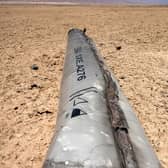




INDIA yesterday handed Pakistan detailed evidence on the Mumbai attacks, including information on interrogations, weapons, and data gleaned from satellite phones that officials claimed proved Pakistani "elements" were behind the deadly siege.
Indian authorities said the evidence shows Pakistan-based militants plotted and executed the attacks, but a top diplomat said the gunmen may also have had ties to Pakistani authorities.
Shivshankar Menon, India's foreign secretary, said: "I'ts h
ard to believe that something of this scale… could occur without anybody, anywhere in the establishment knowing that this was happening."
He dismissed Pakistan's repeated claims that the attacks were carried out by "non-state actors," adding: "Even the so-called non-state actors function within a state, are citizens of a state ... We don't think there's such a thing as non-state actors."

Mr Menon also called for Pakistan to extradite the suspects so they could be brought "to Indian justice".

Pakistan has said any trials will take place in its own courts.
India has blamed the November attacks that killed 164 people on Lashkar-e-Taiba, a Pakistani-based militant group. However, Islamabad has resisted the claims and requested evidence showing the attacks were launched from across the border.
Indian officials said the dossier handed to Pakistan – as well as to officials from the foreign countries whose citizens were killed – will make their case, and it is now up to Pakistan to act.
"The material is linked to elements in Pakistan," Mr Menon said. "We are no longer interested in words. We want actual action against the perpetrators."
A spokesman for Pakistan's foreign ministry said the authorities were reviewing the evidence and declined to comment further.
Pakistan has arrested at least two Lashkar leaders accused of planning the attacks and launched a nationwide crackdown on a charity believed to be a front for the militant group.
However, Mr Menon dismissed those moves as insufficient and said the charity was still operating and Pakistan authorities have not informed India about the status of the two men they said they arrested.
Meanwhile, in Islamabad yesterday. Richard Boucher, the US assistant secretary of state, met with Pakistani leaders and called for India and Pakistan to work together in the investigation. "It's clear...that the attackers had links that lead to Pakistani soil," he said.
Mr Menon declined to say whether the evidence showed links to Pakistan's powerful spy agency, which has allegedly been tied to attacks against India in the past.
Indian leaders have stepped up the rhetoric about the possible involvement of Pakistani officials in the plot. But despite this tough talk the Indian government has made it clear it does not want war.
Tensions have been high between the nuclear-armed rivals ever since the attacks. Pakistan has redeployed troops toward India and away from the Afghan border, where authorities are battling militants.
Pakistan's leaders have veered back and forth from confrontational statements to conciliatory ones and on Sunday Shah Mahmood Qureshi, the foreign minister, said the country wanted "good relations with its neighbours".
Much of India's evidence against the militants comes from interrogations of Mohammed Ajmal Kasab, the only gunman to survive the attacks.
He has reportedly told authorities that he and his nine other attackers were Pakistani, he was trained in Pakistan, and his handlers are still there. Pakistan has said it has no record of Kasab as a citizen.
Pakistan's interior ministry chief Rehman Malik said authorities were still examining his claims.
BACKGROUNDA WEALTHY British businessman who was among those killed in the attacks on Mumbai could have survived if he had used his native passport, his brother claimed.
Andreas Liveras, 73, who was ranked 265 in the Sunday Times Rich List with a fortune of £315 million from wholesale food and yachts, was said to have suffered several gunshot wounds and was dead on arrival at St George's Hospital.
Theophanis Liveras claimed he could have escaped death if he had been carrying his Cypriot passport. "But he never took it with him," his brother said.
The terrorists had picked out British and American passport holders and chose six to shoot, he said.
Mr Liveras's British assistant, who has not been named, was one of the hostages singled out for execution, but he managed to escape despite suffering two gunshot wounds.
The full article contains 722 words and appears in The Scotsman newspaper.