








Help Sitemap Home Skip Navigation Contact Us Disability Statement


Thursday, 20th November 2008

Premium Article !

Your account has been frozen. For your available options click the below button.

Options

Premium Article !

To read this article in full you must have registered and have a Premium Content Subscription with the The Scotsman site.

Subscribe

Registered Article !

To read this article in full you must be registered with the site.

Europe's leaders agree on rescue plan and pledge no financial institutions will fail


Click on thumbnail to view image

Published Date: 13 October 2008
EUROPEAN leaders pledged at an economic crisis summit in Paris last night that no major financial institution will be allowed to collapse.
After a week of chaos on the markets, the eurozone countries endorsed radical plans to guarantee interbank lending and inject capital into major institutions at risk of failure.

News of the rescue plan came from the French President, Nicolas Sarkozy – the current head of the European Union – after hours of talks between leaders of the 15 countries in the euro single currency zone. The Prime Minister, Gordon Brown, who is not a member of the eurozone club, also attended parts of the talks.

Mr Sarkozy said leaders had agreed a framework in which individual countries would be able to inject capital into their own banks by means of preference shares.

He said governments in Germany, France and Italy among others would be presenting their individual plans today, within the agreed framework.

"The crisis has over the past few days entered into a phase that makes it intolerable to opt for procrastination and a go-it-alone approach," he said.

Mr Sarkozy said the guarantees would be at commercial rates, and he stressed that what he called defective managers would be removed – and rash shareholders would not benefit from the public intervention.

He said the plan addressed all aspects of the financial crisis. However, he did not say how much it would cost.

Mr Brown, said the measures – which are based on a £500 billion UK bank rescue package that he announced last week – were the best way of restoring "confidence" to the shattered international system.

He said: "I believe that we will see over the coming few days worldwide action that will make people see that confidence in the banking system can be restored."

Analysts said Europe's plan could help check the slump and markets initially responded well. The New Zealand dollar opened stronger and German stocks rose 5 per cent in weekend off-exchange trading with big jumps in bank stocks.

"It's got to be a bit of a confidence-builder, said John McCarthy, vice president of foreign exchange at ING Capital Markets in New York. But he said it remained to be seen whether the initial reaction would hold.

The plan includes state guarantees for new medium-term bank debt, state injections of capital into banks and help from the European Central Bank to unfreeze commercial paper markets, which would provide companies with vital access to funding and help stave off an economic slump.

The International Monetary Fund also expressed hope that the situation would be stabilised by the EU move, which comes after the US signed up to a similar approach.

However, City traders are braced for more turbulence today when banks reveal how much cash they need to stay afloat. Altogether institutions are expected to ask for up to £50 billion in fresh capital in return for shares – with the taxpayer making up whatever cannot be raised from private investors.

Meanwhile in Washington, the US was working on ways to buy stakes in struggling banks and other financial firms, an idea that until recently would have been anathema to the world's largest economy.

Finance officials around the world were racing to clinch a rescue strategy for banks, battered by the worst financial crisis since the 1930s, before markets reopen on Monday.

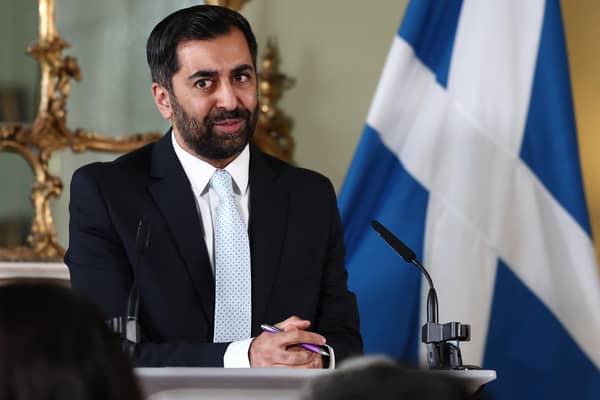
At the centre of the storm

Gordon Brown, the Prime Minister, has seen his currency rise both at home and on the world stage as the crisis bites.

Nicolas Sarkozy, the president of France, wanted the 15 Eurozone countries to "speak with one voice" ahead of a summit this week.

José Manuel Barroso, the president of the European Commission, called for an "unprecedented level of co-operation" to deal with the financial crisis.

Jean-Claude Juncker heads the Euro group of Eurozone finance ministers. He wants to ensure that no major banking institution fails.

Jean-Claude Trichet is president of the European Central Bank. Last week he called for bankers and markets to be given time to digest the changes.


UK impounds £1bn extra from Iceland

BRITISH hopes of recovering money held in Icelandic banks have increased after it emerged that UK authorities had frozen more than £4 billion of assets under anti-terror legislation.

Sums well in excess of the £3 billion owed to UK savers, councils and other public bodies had been impounded by the Westminster government, it was confirmed yesterday.

However, Yvette Cooper, the Treasury minister, said that proper processes had to be followed and it would not be the case that the impounded reserves could be used to pay off the sums owed to British investors by the newly nationalised Icelandic banks.

More than 200,000 UK savers found themselves at the centre of the international banking crisis last week when the Icelandic internet bank Icesave collapsed. Alistair Darling, the Chancellor, stepped in to safeguard all private deposits. But the same protection has not been offered to more than 100 UK local authorities with almost £1 billion invested in three Icelandic banks, including Landsbanki.

Negotiations will resume this week, in the hope of the funds being released.

Eight Scottish councils are caught up in the Icelandic collapse, with sums at risk totalling £45.5 million.

The full article contains 889 words and appears in The Scotsman newspaper.
Page 1 of 1

  • Last Updated: 12 October 2008 11:52 PM
  • Source: The Scotsman
  • Location: Edinburgh
  • Related Topics: Credit Crunch
 
1

Jock Tamson,

Scotland, Caledonia, Alba 13/10/2008 00:12:12
See, Gordon, the big boys and girls make the decisions for you. Isn't that what you tell wee Scotland?

"The Prime Minister, Gordon Brown, who is not a member of the eurozone club, also attended parts of the talks." Perhaps he now knows how we feel.


2

Jock Tamson,

Scotland, Caledonia, Alba 13/10/2008 00:14:37
Had it been Salmond, this paper would have probably written, "The First Minister, Alex Salmond was only permitted to attend a small percentage of the talks".
3

Jock MacSprog,

13/10/2008 01:30:02
I think all you Nats are a bit dazed and confused by the events of last week. If Scotland was independent, we would be insolvent right now, much like Iceland, begging for a bailout from Russia or somewhere. As it is, only being part of Britain has saved us. Westminster has bailed us out and kept us afloat. Oh and oil prices are plummeting, so there goes your fantasy economic plan SNP, where in the dreamland you lve in we all bask in the profits of North Sea oil. Say goodbye to Independence for this Century. Welcome to North Britain !
4

Regulator,

Edinburgh 13/10/2008 06:46:18
"Gordon Brown, the Prime Minister, has seen his currency rise both at home and on the world stage as the crisis bites." As one earning my money overseas, I have not noticed Gordon Browns currency, i.e. the GB Pound rising, on the contrary it's lost at least 20% of it's value. Had it been a UK problem this would be nderstandable, however whilst all other countries are suffering the same financial difficulties.

As for the grand fix, there are people in the financial markets out there to make a killing and I can't help wondering what they are thinking about when the British Government are pumping another GBP50 Billion and the US Government are pumping US$700 Billion into these same markets. It's just a lot more money for them to play with.
5

Kipling,

13/10/2008 07:17:52
Why didn't the local authorities invest in premium bonds? In that way they'd have got their money back, and they might have also won a prize or two.
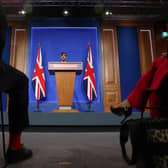
6

Pender Paul,

Pender Island 13/10/2008 07:22:58
Jock (#4)--I think it's you that's a bit dazed. The events of last weekend have nothing to do with Scottish independence and more to do with the complete and utter failure of capitalism. To paraphrase the old Peter, Paul and Mary tune, "where has all the money gone....?" The bailout by Westminster is not to save Scotland but rather to save the sorry back sides of corrupt bankers and their assorted hangers-on. As long as they can continue to eat steak and lobster, drive bimmers and live the good life, who really cares about the plight of Scots, Icelanders, whatever? I say let the "invisible hand of the marketplace" save capitalism, not the hard-earned money of the working class. As a matter of fact, if the working class had their heads screwed on right they would be taking this opportunity to overthrow the very fat men that water the worker's beer. But then we've all been so conditioned by 60 years of propaganda we'll probably give the capitalists all they want and then some.
7

Evan Owen,

Snowdonia 13/10/2008 07:28:39
"No institutions will fail" What a statement for our elected executives to make, it won't cost them one groat will it?

Which country will be the first to default?
8

Cauchy Riemann,

Wales 13/10/2008 08:44:46
If you breathe in, you have to then breathe out.

If you have a boom - you must also have a bust.

If you have too much debt and expansion in the system, you must also have a contraction.

In 2003 there should have been a slowing down, a contraction, a natural recession. Probably because of the Iraq war, the US under Greenspan manufactured very low interest rates for too long leading to a spending euphoria.

Did this solve the problem? No it delayed it. By 'solving' the recession of 2003 it just ratched up the debt to make a sharper downturn in 2008/9. Not only did this fuel personal debt, but also inter bank debt.

In his Budget speech 1997 Brown said: “I will not allow house prices to get out of control and put at risk the sustainability of the future”. He went on to say that he did not want a return to ”instability, speculation and negative equity” of the 1980’s and 1990’s.

Brown knew what would happen if you allowed to much debt and ridiculous rises in house prices. He was warned repeatedly about too high house prices and spiralling personal debt in the UK under Labour. He deflected such questions in the House saying all was fine in spite of personal debt being the worst in Europe. He also removed proper regulation of the banking system which would not have allowed such high exposure. (But all this debt and risky exposure built up his ego for economic 'competence'. Prosperity built on debt is dumb)

It is this idiot that is now 'leading the way' out of the present crisis. This should cause everyone to be hesistant given his track record (and don't mention Gold reserves...).

Brown's plan attempts to restore confidence, & encourage liquidity. He, and apparently other equally uninformed politicos, believe you can keep pumping money in and avoid a downturn. That is like someone believing you can breathe in - and keep on breathing in without breathing out.

We need a contraction. Avoiding a downturn in 2003 resulted in bigger problems.
9

Richard Lionheart,

13/10/2008 09:30:50
Gordon, the man with the plan!

It is a shame that his plan for reforming Banking regulation and supervision was so badly flawed that he has had to Borrow billions more on our tab to bail UK plc out of the international chaos he has caused.

He should not be rewarded for the risk he has placed on the British and indeed the World economy.

An independent enquiry should be launched into the full effects his badly formed and flawed policies over 11 years have had on our future, and that of our children and children’s children.
10

Calum10,

13/10/2008 09:46:51
Gordon Brown deserves our thanks for:

1. High Food Prices.

2. High Fuel Costs.

3. High Energy Costs.

and we can look forward to;

4. High Unemployment.

5. High Taxes.

6. High Levels Of Poverty

7. The Economy Trashed.

8. Pensions Trashed.

9. Massive Cuts In Public Spending

10. Massive Increase In Government Borrowing.

Were can I sign a petition to thank Gordon Brown?
11

Argyll Eagle,

Argyll 13/10/2008 09:55:13
Absolutely correct number 9. There has to be a downward adjustment in the assets behind all this debt and until we know how much our houses and businesses are really worth no amount of additional debt being created by governments is going to stop the recession.
12

SimonHurrll,

England 13/10/2008 10:04:29
Around two years ago the Press announced that ''certain bankers and wealthy individuals'' in Iceland had been manipulating their businesses and accounting practices to the extent that there was a chase around the financial circles where there was no substance to their banking and backing! This was also reported upon recently by the broadcast media [radio and television] around three or so months ago!

Why is it then that the Chief Financial Officers in the Local Authorities - including those in Scotland - continued to invest in these Icelandic banks contrary to Financial Jurisprudence as reported on Radio 4 Today Programme earlier this morning? They all knew about these rules and ignored them!

If this is not negligence comparable to that of the CEOs of the banks like RBS and HBOS then what is?

Surely the heads of these Local Authorities must now roll because they ignored the guidelines for investment given out by Central Government!
13

famous 15,

Edinburgh 13/10/2008 10:34:20
Is Norway in as deep trouble as Scotland? No!. But hey they are Independent and have similar natural resources. More than ever I am determined to support independence especially now that I see how dithering Darling has brought two major Scottish institutions to their knees. Is it not strange that only Hbos and RBS are still falling?
14

pehman,

sussex 13/10/2008 10:42:06

4 Jock MacSprog,13/10/2008 01:30:02
I think all you Nats are a bit dazed and confused by the events of last week. If Scotland was independent, we would be insolvent right now, much like Iceland, begging for a bailout from Russia or somewhere. As it is, only being part of Britain has saved us. Westminster has bailed us out and kept us afloat.


Dear Jock, using phrases like "Iceland begging for a bail out" and "only being part of britain has saved us" proves beyond any doubt that you are either blind or stupid.

Blind to the fact that browns "bailout" will be financed by BORROWING and that that level of borrowing now makes your precious britain the most indebted nation on this planet, with debts in order of over one hundered + times that of Iceland
15

Border Scot,

13/10/2008 10:50:49
Pehman - just out of interest, how would an independent Scotand have helped prevent catastrophe in two major banks floated on the stock exchange of a foreign country?

The British government actually stands to make a profit out of what was announced this morning. When the banking system has stabilised and banking sares have risen, then the government will sell and the taxpayer will be quids in.

You may also notice that all major European countries are now going to follow the plan developed by the UK government's Scottish PM and Chancellor.
16

pehman,

sussex 13/10/2008 10:52:16

Dear Jock, PS, I left out stupid. As you stupidly fail to grasp the extent to which browns failure to build a financial reserve from oil cash, as Norway has done, and the fact that brown sold the gold reserves at a knock down rate some years ago.

So here we are with NO reserves and more debt than the rest of the EU combined
17

Border Scot,

13/10/2008 10:52:25
#14 - HBOS and RBS have ben saved from going under b the British government. An independent Scotland couldnot have done what the British government has done today. That is a simple fact.
18

Border Scot,

13/10/2008 10:54:56
#17 - The Germans have today announced a £400 million bank rescue plan based on the British example. Other European countries will follow suit.

Norway is far more insulated because its banks are nowhere near the size of ours. They went through their pain in the early 1990s.

I understand that yo are a supporter of an oil fund in an independent Scotland. Clearly, therefore, you are also a supporter of Norwegian levels of taxation in Scotland. Why do you never say this?
19

pehman,

sussex 13/10/2008 11:04:00
16 Border Scot,

Would an Idependent Scotland have to go cap in hand to the Chinnese - EU (IMF)to borrow money, or do you think that Scotland like Norway would have created an oil fund reserve
20

Border Scot,

13/10/2008 11:08:54
#20 - An independent Scotland could only have created an oil fund with levels of taxation far higher than those in Norway because the post-industrial problems an independent Scotlad would have been dealing with, at a time when oil prices were very low, would not have come close to covering the spending an indpendent Scottish government would have had to have undertaken.

So, my answer is: yes, we could have an oil fund, but we would also have to have very high levels of taxation if one were instituted. The SNP, of course, is promising to lower taxes. I am puzzled as to how that will work.
21

pehman,

sussex 13/10/2008 11:08:57

18 Border Scot,13/10/2008 10:52:25
#14 - HBOS and RBS have ben saved from going under b the British government. An independent Scotland couldnot have done what the British government has done today. That is a simple fact.


Maggie brown is BORROWING money for his bailout from China ------- RBS OWNS around 20% of the bank of China


From where do you think the "rummors" against HBOS/RBS came from ?
22

Border Scot,

13/10/2008 11:21:20
#22 - Are you sayin that the British government deliberately provoked a run on both HBOS and RBS so that it could bringthem into public ownership because it wanted to sabotage potential Scottish independence?

I'll add that question to the one about how the government of an independent Scotland could have rescued two banks listed on the stock exchange of a foreign country. It would be helpfulif you could explain that one, and also let me know your views on tax rates in an independent Scotland with an oil fund.
23

pehman,

sussex 13/10/2008 11:21:41

21 BS,

I'm not aware of any SNP commitment to lowering tax's other that council tax. But leaving that aside for the moment. The UK is THE highest taxed place in the EU, basic rate tax looks good in comparision with other states, but with the hundred other "stealth tax's" taken into account then the lie of low taxation in the UK is exposed. Now WHAT HAS THAT GOT US ?

No one has said Independece will be easy, but we would not be paying for trident, nuclear clear up costs, illegal wars, or trying to grand stand on the world stage

24

Alan B,

13/10/2008 11:22:23
#Border Scot

The chances are an independent scotland would not have gone down the utlra laisse laiffe economic route than means the UK difficulties are worse than most.

Note how Australia does not have the same banking crisis and Germanies exposure is significantly less than the uk becuase of Browns poor regulation of the financial industry.

The Germans have been calling the UK and US approach economically irresponsible.

As for big countries not needing the help of others to bail them out in a crisis do you not remember how bad the UK was in the 70s when we had to go to the imf for bannana republic type emergency loans as we were virtually bankrupt.
25

Border Scot,

13/10/2008 11:24:11
#24 - Corporation Tax.

The UK is not the most taxed country in Europe. All rates of taxation, with the exception of some Corporaiton Tax, are higher in Norway. They also have VAT on items such as food, which we do not.
26

Alan B,

13/10/2008 11:26:31
#Border Scot

Your views seem to be that while Scotland has done very poorly relative to north western european countries within the union (fact not subjective) we should remain within this failed union as we are so pathetic we could not expect to do as well as all these other countries.

Question: why have the small european countries of

Luxembourg, Norway, Ireland, Switzerland, Iceland, Netherlands,Austria, Denmark, Sweden, Finland , Belgium

outperformed the big ones of uk, italy, france and germany. ie why are they richer.

Also remember this global crisis was caused by the big economies primarily the US but also the Uk which has followed the same failed economic strategy that Germany are now complaining about.
27

Border Scot,

13/10/2008 11:27:34
#25 - Scotland voted for the Labour Party in the last three general elections. Are you saying that Scotland would not have voted Labour if we had been independent?

You may also have noticed that Germany has today announced a package of measures that are almost identical to those announced by Brown and Darling. Geran banking shares and the German stock exchange have collapsed in exactly the same way as British banking shares and the LSE.
28

pehman,

sussex 13/10/2008 11:28:12

23 Border Scot,13/10/2008 11:21:20
#22 - Are you sayin that the British government deliberately provoked a run on both HBOS and RBS so that it could bringthem into public ownership because it wanted to sabotage potential Scottish independence?

How is it that two rock solid banks with no funding problems and mega amounts of capital at their disposal just happened to plunge after a treasurey briefing to an FT blogger ?
29

Alan B,

13/10/2008 11:28:52
#Border Scot,

If you actually read what poster #24 said he said EU not europe. Norway is not part of the EU.

If you do not even know that how can you expect anyone to respect your views. Or could you not refute the posters comments based on what he actually said.
30

Border Scot,

13/10/2008 11:29:52
#27 - The current banking crisis has demonstrated that many of the smaller European countries are not richer than the UK, something that most of us understood anyway.
31

Border Scot,

13/10/2008 11:32:19
#29 - Because it turns out that they were very badly run and were exposed to high levels of toxic debt.

#30 - OK. We are not as highly taxed as Sweden, where VAT rates, personal taxation rates and most CT rates are higher than in the UK. Ditto Finland and Denmark.
32

pehman,

sussex 13/10/2008 11:35:13

28 BS,

Indeed an Independent Scotland may well have voted labour just as an independent Australia has done in the past
33

Alan B,

13/10/2008 11:37:24
#Border Scot

Do not know who scotland would have voted for. It would really depend when we would go independent. If say we had gone independent in 79 then things would have been very different. As labour would have been returned then they would as all governemtn have lost the confidence of the people at some point. As such it is a pointless and irrevelent question.

Labour also sold alot of its values and policies to attrack the southern vote. ie Blair. As such a lobour scottish govenrment would/could be significantly different from a UK one.

What government we get depends on the public and who we vote for.

I think but no one can say that an independent scotland would have banks like RBS and BOS minus the mergers of Halifax and Netwest. But again that depends on the economic policies of the government.

We would not have a labour government so in awe of thatcherism and then mismanaging its implementation so badly.

Yes Germany and all others are suffering becuase of the global issues caused largely by the US. The point you seemed to ignored in your slightly bizzare reply was that Australia and Germany to an extend do not have the problems the UK does becuase we have run the same failing economic model as the US. ie daft morgages.

Did you hear the German ambassator on slating the US and UK for the global mess.
34

Border Scot,

13/10/2008 11:41:57
#34 - It was you who said Scotland would not have followed the laissez-faire policies of the last few years. Now you are saying we could not possibly know what would have happened. Please make up your mind.

If everything is so much better in Germany, why is it that the German government has had to take exactly the same measures as the British government?

35

Alan B,

13/10/2008 11:43:31
#Border Scot

How high you are taxed depends on how good public services you want to a large degree. It also depends on if you want what we call public services etc to be public services.

The US spends far more on health than we do. And have a far better health service if you have cover. (problem is if you do not have health insurance). So they have lower head line tax but including health are not so low.

Norway might have higher taxation but they say have a publically financed pension system. Our pensions are largely private. So they end up with good public sector pensions we end up with poor private sector pensions.

Think if they pay 10% extra tax for pensions. We pay our 10% into a private pension. We are both paying the same at the end of the day.

As such the whole argument on levels of tax tend really to be hidden behind who supplies a service. Government or the private sector.
36

pehman,

sussex 13/10/2008 11:46:11
32 BS, Toxic debt, your talking BS, Halifax is britains biggest morgage lender, with 28% of uk market which according to one mr brown one of the strongest ecconomy's in the world.

As for the exposure to the US mogage market I think it has around 9% of its business there

The toxic debt arises as fear of recession causes acctual panic and actual redunencies
37

Alan B,

13/10/2008 11:54:50
#Border Scot

"Scotland would not have followed the laissez-faire policies of the last few years. Now you are saying we could not possibly know what would have happened. Please make up your mind."

Do you just try to be silly. No one will know for sure what would have gone before if different decisions had been made.

Yes with all that oil that was coming to the fore in the 70s we would in all probability been far better of today if we had gone independent. However their are no guarantees as we could have squandered it. all we do know for certain is we did not do very well in over that period the last 30yrs.

We also know that the idea was pushed over the last 30yrs that scotland was too small to do well alone. However 2 things have come to light that challenge that.
1)the small countries in europe have outperformed the big ones. And the best performing of the big ones until reunifiation ran a very decentralised model.
2)labour from its own McCrone report did not believe the lies it was telling us about scotland not being able to do well independently.

The chances are scotland would things would have been different in the economic model you run if you are independent. We would probably have a more protectionist take over policy. We would not have had the same housing market issues. We would not have had thatcher. We would not have had a labour party transforming itself to get elected. For good or bad that they have been.

As for Germany. All stock exchanges and shares are being effected. The point about Germany is that its companies are not so exposed. That does not mean they are not exposed but it is relative. Alot of that is due to the much more conservative view towards debt and mortages in particular. In the uk as the us the problems are due to silly mortage debt. And the fact that banks do not trust each other to lend to each other due to the potential of bad debt cuased by this toxic lending practices.

38

Border Scot,

13/10/2008 11:57:31
#36 - I agree. But the basic point is still the same.In Norway they pay much higher taxes than we do. That may be a good or a bad thing, but it is something that nationalists who constantly praise Norway never, ever point out. Can you find me any example of Alex Salmond talking about following Norway's high tax/oil fund policies?
39

Alan B,

13/10/2008 11:58:18
#pehman

Much of the toxic debt is the fear that house prices are massively overvalued and hence the mortages not worth the paper they are written on.

The fear that in a recession people will not be able to keep up payments. Look at the big increase in repocessions.

Brown failed to regulate to provide stability in the banking system. And fail to control the amount of mortage debt and the affordability of these mortages meaning that the whole economy is built on sand.
40

Border Scot,

13/10/2008 12:03:31
#38 - You said at #25 "The chances are an independent scotland would not have gone down the utlra laisse laiffe economic route than means the UK difficulties are worse than most." Yo then said that we cannot possibly know what would have happened in the past. Now you are again saying that we would have been better off independent. As I said before, please make up your mind.

If German banks and German stoc prices arelosing value as fast at those in the UK, then both countries will have the same problems.

Countries suc as Ireland and Iceland grew faster than Scotland in the past 30 years because they were beginning at a much lower base and were not industrialised as we were. We will see how things develop over the next 30 years.
41

Alan B,

13/10/2008 12:05:11
#39 Border Scot

Norways high taxes are not due to the oil fund. That is the point. Norways highish taxes (they have been coming down over the past decade) are due to the publics support for the social model. ie better welfare state and public services.

Ireland has gone the opposite route without oil and has lower taxes. (alhtough not as low as some think as it is corporation tax that is the low tax).

So an oil fund is irrelevent to high or low taxes. As you can see if you look at Norway and Ireland. 2 completely different economic models.

If Norway had chosen to just spend the oil fund money it would obviously have had lower taxes with its highly funded social model. But they chose rightly or wrongly that was short termist and decided to invest that money to become a wealthier nation.

In a way it was similar to why Germany and France did so much bettere economically than the uk from the end of ww2 till the early 90s than the uk. We chose to spend our wealth and did not invest in increasing our underlying wealth. And as such over period of decades that short termism which did deliver things like the nhs meant that we had to endure the 70s and cleaning up the mess in the 80s.
42

Border Scot,

13/10/2008 12:05:23
#40 - The toxic debt is in the US not in the UK. The issue is UK banks' exposure to that US debt, which has ben bundled up and sold to banks all over the world.
43

pehman,

sussex 13/10/2008 12:07:19

40 Alan B,

Agreed Alan, all of which could have been avoided by the simple expedient of A- putting the house price back into the RPI.
B- not taking the housing prices out of the index in the first place
44

Border Scot,

13/10/2008 12:07:50
#42 - I agree with you.

But the SNP are telling us that we will get better services and lower taxes in an independent Scotland. The only way you can deliver that is by spending the oil money. And if you spend the oil money you cannot have an oil fund.
45

pehman,

sussex 13/10/2008 12:14:19

43 BS, Thankyou I'm well aware of that, now maybe you can tell me why other other than a treasury briefing a 9% exposure to US mortgage debt, not all of which will be toxic should lead to a share collapse.

And while your at it maybe you can also back up your strong uk with the slide of the £
46

Alan B,

13/10/2008 12:14:43
#Border Scot

"If German banks and German stoc prices arelosing value as fast at those in the UK, then both countries will have the same problems"

That is not true. There is a global issue cause largely by the US which all countries will struggle with as we are now in a global world and economy.

However while they do share some of the problems they do not share all of them.

1)we have had massive house price inflation with huge and unsustainable mortage debt. They do not. Their lending practices mean they only lend to about 60% of the property value we have lending up to 130% apparently. We all know the uk house market has been ridiculous over the last 10yrs. House price inflation ridiculous. What we have now looks massively worse than the negative equity of the early 90s.

As such we are in a much worse position. The Germans have a completely different housing market.

"Countries suc as Ireland and Iceland grew faster than Scotland in the past 30 years because they were beginning at a much lower base and were not industrialised as we were. "

That is largely rubbish. think about it

Luxembourg, Norway, Ireland, Switzerland, Iceland, Netherlands,Austria, Denmark, Sweden, Finland , Belgium

Are all richer than the UK with higher gdp per capita ppp than the Uk and also france, germany and italy.

Ireland grew faster than scotland for alot of reason. As did the whole group of small nations known as the arc of prosperity which grew at 3.6% while scotland grew at 2.2% over the last decade (uk 2.8%).

Ireland is in a mess now becuase it ran the same irresponsible mortage lending as the uk did as its government got carried away with its amazing success.

I notice you have ignored my question about why in economic terms the small countries have done better than the bigger ones in europe.
47

Alan B,

13/10/2008 12:24:50
#Border Scot

"But the SNP are telling us that we will get better services and lower taxes in an independent Scotland"

I have not heard any specifics like that.

1)their only tax commitment is to lower corporation taxes to try improve investment.

They have lowered business rates already within the union as they have the power to do so.

All the parties bar labour seem to want to lower taxes as it has gone from one extreme in thatcher to the other with labour. the libs dems surpising are most commited to lower taxes now although they want income tax.

To me that is the difference the lib dems want lower income tax, while the snp are wanting lower corporation taxes. One will boost consumption and the other is aimed to improve investment and jobs.

Ireland has (or had not looked for a while) higher vat but much lower corporation taxes. As a result they got alot of high end investment that Scotland did not.

2)I have never seen any snp commitment to increasing funds for public services since the huge increase given by labour. It is now much more about spending it better as their seems to be a consensus that lack of money is not the problem but government inability to get value for the money spent. They will like all parties have slightly different spending priorities than other parties.

The reason for independence is not really public services. Particularly since devolution to does devolve the running of much of that anyway. Although devolution was done in a cack handed manner. see transport/trains.

The reason for independence would be to address our economic failures. To have the tools at our disposal to make a difference. So that scotland can make decisions for scotland for the benefit of scotland.

By dint of size the uk will always be run in England interests and is only beneficial to scotland if these interests coinside. As we can see the union has failed us economically.
48

Border Scot,

13/10/2008 12:29:09
#47 - Just because a country has grown quicker than the UK does not make it richer than the UK. None of the small countries you list is richer than the UK. Their faster growth rates can be put down to many things, but I suggest the two most significant are that they are very different economically and industrilly from the UK (and Scotland, more specifically) and because they were starting from a much lower base.
49

Alan B,

13/10/2008 12:29:55
#Border Scot

Another question for you while i am waiting for an answer to the last one.

Labour devolved power to scotland over much of the public services. As such it believes that it is better for scotland to run these public services itself and chosing scottish solutions for scottish problems. ie health spending will have different priorities. Polcing and transport are best run by a separate parliament etc.

Howeve labour have not devolved powers over the economy. It is the economy where scotland have failed relative to others. What is the logic of devolving the managemnt of these public services and not the one area we have spectularly failed at : the economy.


50

Border Scot,

13/10/2008 12:31:39
#48 - Saying you will lower Corporation Tax is a pledge to lower tax. Have you seen any SNP commitment to raise any tax? Have you seen any SNP commitment to lower current levels of spending in Scotland? Why is that the SNP is demanding more money from the UK government if it does not believe in higher public spening?
51

Alan B,

13/10/2008 12:33:10
#49 Border Scot

"Just because a country has grown quicker than the UK does not make it richer than the UK."

Correct it just means that their wealth is growing faster. As such Norway with similar wealth to scotland in the 70s is now much richer.

"None of the small countries you list is richer than the UK. "

That is rubbish. The countries i listed

Luxembourg, Norway, Ireland, Switzerland, Iceland, Netherlands,Austria, Denmark, Sweden, Finland , Belgium

are all richer than the uk per person. ie they all have higher gdp per capita ppp based on the imf figures.

http://en.wikipedia.org/wiki/List_of_countries_by_GDP_(PPP)_per_capita
52

Border Scot,

13/10/2008 12:34:10
#50- the UK is an integrated economy. Scotland exports more goods to Englad than to anywhere else in the world. As recent events have demonstrated, integrated and co-ordinated control works best. Devolved economic control means competition between Scotland and England, not co-operation. That is not in Scotland's interests.
53

Border Scot,

13/10/2008 12:37:02
They are not richer per person, that is simply wrong. They are on average richer, but in most cases - certainly with regard to Iceland and Ireland - this means that a relatively low number of individuals is skewing the figures. The median figures would be much more informative than the average. Do you have these?
54

Alan B,

13/10/2008 12:42:27
#Border Scot

It would help if you would actually try to answer my questions when i try to answer yours.

"Saying you will lower Corporation Tax is a pledge to lower tax. "

Yes it does. But lower tax is what happens to the basket of taxation. Sometimes you lower one tax and raise another. Brown has lowered income tax but has overall raised taxes massively.

I was just pointing out the snp have one specific tax they are talking about lower. Lowering corporation tas from 28% to 20% is what i understand the current proposal.

They are a lower tax party than labour as we can see by the council tax freeze.

"Why is that the SNP is demanding more money from the UK government if it does not believe in higher public spening?"

It would help if your questions were more specific. The 2 areas they have specifically complained about
1)is the threat to withhold council tax rebate
2)the withholding money from Barnett consequentials when Brown threw money at prisons in england.

The only other complaint was round the lower ever increase in the block grant to the scottish parliament when the snp took power.

Anyway your questions are just diverting from the real issue. Of why scotland has done so badly relative to the other small countries and the uk as a whole over the last 30yrs.
55

pehman,

sussex 13/10/2008 12:42:29

51 BS, In a recession it is of vital importance that Gov spending does not deminish.

Any reduction of gov spending will contribute to an economic collapse, by pulling more money out of the economy and thereby increasing unemployment.

In this case the money requested by the Scottish is specificly ear marked for Scotland - but also the REPAYMENT fines that have been imposed on SCOTTISH TAXPAYERS for having the gall not to vote labour
56

pehman,

sussex 13/10/2008 12:47:53

53 Border Scot,13/10/2008 12:34:10
#50- the UK is an integrated economy. Scotland exports more goods to Englad than to anywhere else in the world. As recent events have demonstrated, integrated and co-ordinated control works best. Devolved economic control means competition between Scotland and England, not co-operation. That is not in Scotland's interests.


Useing your arguement - the sale of ? to the French EDF so that they can build new nuclear power stations strenthens England how exactly
57

Border Scot,

13/10/2008 12:48:19
#55 - Because Scotland was heavily reliant on heavy manufacturing industry and paid the price when this industry collapsed in all western countries. The countries that you list were never comparable to Scotland economically and are not so now.
58

Border Scot,

13/10/2008 12:49:02
#57 - Cheaper and cleaner power I would guess.
59

Alan B,

13/10/2008 12:50:38
#54 Border Scot

When you are doing international comparisions of the relative wealth of countries the statistic used is the gpd per capita ppp (ie per person).

As you seem to want that explained you take the whole gpd and divide it by the number of people.

The reason you divide per person is that total gdp will obviously be higher in a big country. ie china might have a bigger gdp than the uk but the uk is much richer per person. (and that does not not mean every individual but by dividing the total by the numver of people).

As such if you take the total gdp (total output of these economies ie goods and services) and divide by the number of people that live in these countries then they have a higher gpd per person.

think of it like a family of 10 all earning £10,000 with a total combined wealth of £100,000 and compare that to a family of 2 each earning £40,000. While the family of 10 have a greater total wealth the wealth per person is much greater in the family of 2.

Your argument that average is not accurate is silly. The uk is hardly a country of even wealth distribution.
60

Alan B,

13/10/2008 12:55:29
#58 Border Scot

That is desparate. Scotland has not had heavy industry since the early 80s. Ireland started at a lower level in 90s and has far surpassed us now in growth and GDP terms.

Scotland must be the only country to have discovered oil and wasted it so spectaluarly.

If other countries could have swapped with scotland given oil and many other attributes in the 70s/80s they would have done. Scotland was in a far strong position than many of them. Scotland just squander it.

The idea scotland has failed to achieve what they did given what we had and that was soley becuase of heavy industry is economic naivity.

You are just trying to make excuses for our failing as it does not suit your political view. Whereas my polical view has been shaped by our economic failings.
61

Alan B,

13/10/2008 12:56:25
#58 Border Scot

How many more decades do we give it underperforming within the union before we either say

- it is the union that is failing
- or we simply are useless?
62

Alan B,

13/10/2008 13:02:05
#58 Border Scot

You understanding of the problems of our industry haevy of otherwise is a bit.

The Netherlands for instance took over British Steel.
The problems we had was industry was propped up by dreadful economic management by the uk government since the end of ww2.

UK industry was dreadfully inefficient.

The uk had one of the worst monetary policies of any european country.

Coal was destroyed due to inefficiency and the government buying cheaper imported coal and massively funding nuclear.

The reason British industry was so inefficent in the 70s was poor economic managment by the british governments. A union dividend. lol
63

Alan B,

13/10/2008 13:04:37
#63 Border Scot

Meant to say the problem with steel was the uk govenment put an unsustainable steal plant in scotland.

For political reasons they gave half a plant to Wales, half a plant to Scotland and a big plant to England. A political decision that was the root of many of the economi failings.
64

pehman,

sussex 13/10/2008 13:09:39
62 Alan B,

That the question no brain dead, tunnel vision unionist can or will answer, for all they see is the union good bad or indifferent nothing else, no vision/no dreams of the future, just more of the same like bees in a hive or ants in a hill
65

Alan B,

13/10/2008 13:09:58
#57 pehman

Do not understand your point. Nor see how it answers my question.

A capitalist economy is built on companies competing against each other. The government job is the try to create an environment so that we have successful companies operating in scotland. Both start ups and international investment.
66

pehman,

sussex 13/10/2008 13:16:11
64 Alan B,

Yeah good point re steel industry, and just to make it even more unproductive they then closed the rolling mill and finishing plant forcing an extra 76p per tonne transport costs which in turn made it financialy uneconomic
67

pehman,

sussex 13/10/2008 13:22:21
66 Alan B,

I take your point and have no quams about it, I was merely using BS's arguement that to be successful we had to be part of the union, which clearly we don't
68

57vintage,

Keith 13/10/2008 14:22:44
34 "If say we had gone independent in 79".

I am tempted to point out the gender difference between my aunt and uncle, the usual retort to such a "what if" scenario.

However, a reminder of the actual history is more in order.

The Scotland Act of 1978 did not mention independence. The Act did not even make provision for the variation of tax rates as was offered to us all in the 1997 referendum. In 1979 Scotland voted 51.8%, on a pretty poor turnout by the then standards, in favour of devolution. The Bill when passed through Parliament had had an amendment inserted at the behest of an Islington Scot, George Cunningham, a Labour anti-devolutionist which stated that unless 40% OF THE ELECTORATE ie not those who turned out to vote, but all of those entitled to vote voted in favout, the Act would be repealed. That was de facto, the death knell for the Act. If I dug deep enough into the detritus in my attic, I would be able to find corresondence I received from Mr Cunningham, who chose not to conduct the debate with me via this fine organ's Letters Page, but responded to my letter in The Scotsman by sending fairly intimidating correspondence to my home address. That is by the by.

As required by the Act, the Act itself was repealed by Parliament. That's democracy. I was angry about it then, but at least we were made a better offer in '97 despite the SNP's aversion to the Constitutional Convention whose pressure on the embryo "project" of New Labour was a large factor in the pledge to include a referendum in that party's 1997 manifesto.

In short order following the 1978 Act's repeal, the Leader of the Opposition, one MH Thatcher, privy Councillor moved a vote of 'no confidence' in the Callaghan-led Labour government. With the support of 11 SNP MPs, the motion was carried. The only Nationalist who came out of this with any credit was Whip Hamish Watt who pleaded with his colleagues not to deliver the UK, and by extension, Scotland into the hands of the monetaris
69

57vintage,

13/10/2008 14:24:48
Continued...
The only Nationalist who came out of this with any credit was Whip Hamish Watt who pleaded with his colleagues not to deliver the UK, and by extension, Scotland into the hands of the monetarist free marketeers whose experiment laid the solid foundations for the end game in which unfettered market capitalism now finds itself.

It also delivered the Scotland beloved of Welsh, Bain, Henderson et al into the hands of a party whose politically dogmatic creed destroyed the infrastructure of all parts of the UK.

That is why many of us who lived through that find it hard to trust anyone bearing the yellow and black.

I may be in favour of independence, but I think there are currently more pressing welfare and social priorities.
70

Iain2,

France 13/10/2008 14:45:56
What a lot of havers. That's because you all only read the Hootsman. #1 if you had listened to the French news this mornong you would have heard that Gordon Brown was invited to the Euro conference to tell them how to get out of the mess. They all accepted his plan. So please gice GB (or Gordon B) some credit
71

Richard Lionheart,

13/10/2008 16:34:15
Interesting picture above. Should the caption read, YOU got us into this damn mess with your, end to boom and bust plan Gordon; now get us out of bust!
72

Border Scot,

13/10/2008 16:36:21
Alan B - you accept that British industry - presumably including Scotland's - was completely inefficient. Yet you fail to accept that because of this, British 9ndustry - including Scotland's - collapsed as better alternatives emerged in the east. At least you are consistent in yur inconsistency I suppose.

Ireland has had a higher GDP growth than Scotland precisely because it did not have the problem sfaced and also because, unlike Scotland, it has not had a cradle to grave system of welfare, and still does not. Are you in favour of an Irish-style welfare state? If so, why not say so. You should know, however that the SNP is opposed to such a system.

How can GDP be an accurate measure of prosperity when you can have 9 people earning £10,000 a year and one person earning £1 million a year producing a higher GDP measure than 10 people earning £100,000 a year? That is why the median (you do understand what that is, don't you?) is a much more reliable measure of overall wealth. It tells you what income most people have.
73

Alan B,

13/10/2008 18:22:15
#Border Scot

What are you babbling about? Yes much of British industry was inefficient by the 70s. And yes the included Scotland. Why becuase of poor economic management from the uk government.

My point which you seem to want to skip round is the fact that the small european countries have outperformed the big ones on terms of gpd per capita ppp. Scotland has not performed well within the union.

So if we know the small countries do better. And we know scotland has done poorly in comparison. Even you can follow that logic.

My point is not Ireland or Norway but all of them.

Luxembourg, Norway, Ireland, Switzerland, Iceland, Netherlands,Austria, Denmark, Sweden, Finland , Belgium

have all done better than the big countries. All with different models. Some like Norway are outside the EU. Some like Ireland are lower tax. Some others with higher taxes. But what they have in common is hihger gdp per capital ppp than the bigger countries.

And yet scotland does poorly.

Your argument for scotland poor economic performance is what? The UK government badly managed scotland 40yrs ago.

Again you will ignore the relevent question of how long do we wait within the union before we say it is not working.

"How can GDP be an accurate measure of prosperity "
GPD per capita ppp is the measure most economists use. It is one of the best statistics to see a nations wealth. Obviously distribution of wealth is important too.

GDP does not determine salary as you seem to indicate. (yes a country with higher gdp per head will tend to have higher salaries) It is the total output of the economy ie goods and services. As such median is not relevent. Average is. We are looking at the wealth of the country which is viewed as the amuont of goods and services produced.

Even putting that aside as you do not seem to understand economic growth and gpd. Median for income would be important and as such living standards. However to pretent average is not important
74

Alan B,

13/10/2008 18:23:55
cont..

... you are trying to make out that the average is due to say Norway being a more uneven society that scotland. That simply is not true. The UK does have increase disparities between rich and poor. Largely because the rich are getting richer than the poor are getting richer.

75

Alan B,

13/10/2008 18:33:07
#Border Scot

"Yet you fail to accept that because of this, British 9ndustry - including Scotland's - collapsed as better alternatives emerged in the east."

Britain desindustrialised much faster than most other european countries.

My example about steel was Holland not the east. Coal was about politics and support for nuclear. The car industry did not go east either as EU rules meant 80% of inputs had to be from the EU.

The only industry that really went east was ship building.

You again have ignored that we were in a much better position than most of the other european countries becuase of oil. We had alot of potential for industry. We just sqandered it.

As you will know if you have any understanding of that period in our economic history many industries when bust due to the economic policies where the pound was massively over valued in the early 80s. Due to excessively higher interest rates. While trying to get rid of the inflation the tories inherited from labour, the tories over did it and killed industry that could and should have survived.

We also struggled in the 80s with Thatchers mad mirus policy. By subsidising credit for housing and then imposing a monetarist view of the economy where by the cost of credit was set to limit credit (barmy i know), we ended up over valuing the pound and that made industry uncompetitive which should not have been. A policy of thatchers for the south east to encourage home ownership that was very detrimental to the north of britain.


76

Alan B,

13/10/2008 18:41:40
#Border Scot


One final point. British economic management in general has been poor from the end of ww2 till the 80s. the 80s was a very painful period. We can debate whether it had better economic management but was difficult becuase of what it inherited. Or whether it was a contination of poor economic mgt.

Uk monetary policy has been a joke until Brown made the bank independent. As such using sterling has also been a joke of an economic policy.

And now we have suffered a decade of short termist Brown incompetentence. Throwing away any painful gains the tories made. Although they with their own incomp