













Help Sitemap Home Skip Navigation Contact Us Disability Statement


Collectors coin it as waning economy takes the shine off risky stocks and shares

Premium Article !

Your account has been frozen. For your available options click the below button.

Options

Premium Article !

To read this article in full you must have registered and have a Premium Content Subscription with the The Scotsman site.

Subscribe

Registered Article !

To read this article in full you must be registered with the site.

Click on thumbnail to view image

Published Date: 15 March 2008
INVESTORS are turning their backs on stocks and shares and buying gold, jewellery, paintings and stamps in a way to beat economic uncertainty, according to auction and collectibles firm Stanley Gibbons.
The company, which sells goods ranging from Penny Blacks to autographs by Marilyn Monroe, said pre-tax profits for the year were a record £4.5 million, a rise of 20 per cent.

Mike Hall, chief executive of Stanley Gibbons, said: "Collectibles as an
asset class are growing and tighter economic conditions are resulting in an increasing number of investors turning to our products as a means of protecting their wealth by diversifying their asset holdings."

But expert auctioneers and art dealers warned that buying collectibles can be a risky business as it depends on fashion and tastes, which can change over time, meaning that your money might not be as safe as if it were in a bank.

Neil Frogatt, head of valuation at Bonhams auction house in Edinburgh, said the market for such items could be volatile.

He commented: "You only have to look at someone like the contemporary artist Banksy, who is very much the flavour of the month."

A Banksy spray painting of a girl holding a balloon, one of a series of 11, is expected to fetch up to £30,000 at auction this summer. Mr Frogatt said: "Whether he will last the test of time for something like 30 or 50 years is very difficult to predict. What we have found is that anything which is really good quality will not lose its value."

He added that the increase in buyers from China and Russia had brought about a boom in items such as Russian paintings, raising prices accordingly.

Edinburgh stamp dealer Robert Murray said the increase of interest in China had meant a boom in the prices of Chinese stamps since the 1970s. But he warned buyers to beware of investing in stamp portfolios: "If you buy a portfolio it is because you are not knowledgeable – and without knowledge it is very difficult to make a profit."

A spokeswoman for auctioneers Christie's in London said buyers were always encouraged to buy primarily for pleasure.

"We always advise people that if they are buying anything they must like it. If you buy a picture you don't really like and the market drops you have not only lost money, you are left with something you don't like."

1 STAMPS: Investors who bought Chinese stamps in the 1960s and 1970s have seen their collections soar in value since then. Collecting stamps was frowned upon in China during the cultural revolution and importing Chinese stamps to the US was outlawed.

During the 1990s demand from Chinese collectors saw stamps increase their value enormously.

2 CONTEMPORARY ART: Work by the Bristol-born graffiti artist Banksy is now fetching a premium price at auction. A spray-painted canvas by him entitled Girl Letting Go of Balloon, which is one of 11 copies, will go on sale at the Post-War Contemporary Art Sale at Christie's auction house in London on 2 April and is expected to raise between £20,000 and £30,000.

3 ROCK AND POP MEMORABILIA: A full set of Beatles signatures, worth about £500 in 1992, would sell for £2,500 today. Christies in London sold a set of Richard Avedon photos given out free with the Daily Express for £4,000 in 2006. Items from the Rolling Stones and Jimi Hendrix also fetch high prices at auction.

4 GOLD KRUGERRANDS: The South African coin, which is 99.9 per cent gold, is one of the easiest ways to turn money into gold. A 1oz coin costs about £428 – but the price fluctuates constantly due to the changing price of gold.

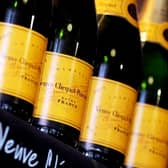
5 WINE: The most expensive wine ever sold was a 1787 bottle of Chateau Lafite, which fetched £105,000 at auction in London in 1985. The bottle had belonged to Thomas Jefferson and had his initials carved on the glass. Specialist wine merchants offer to create a cellar for customers wishing to invest in wine.

6 SCOTTISH GOLD AND SCOTTISH WATER PEARLS: Pearl fishing is now banned in Scotland and Scottish gold is among the rarest in the world – which is why it fetches such high prices. Antique jewellery made of Scottish gold and Scottish water pearls can be a good investment.

7 A STRETCH OF SALMON RIVER: Rivers are valued on the number of salmon available, which is why stretches of the river Tweed have soared in value. Investors can buy a "beat" – of between half a mile and two miles – and can enjoy them without reducing the value.

8 SCOTTISH COLOURISTS: Paintings by these artists keep rising in value. A Peploe sold at Bonhams in Edinburgh for £100,000 in 2007. An exhibition on links between Cadell, Peploe, Fergusson and Hunter and the French impressionists this summer will add to their popularity.

9 GOLF MEMORABILIA: Rare featherie balls are avidly sought by collectors. Made by stuffing a ball with feathers, they were hugely expensive to make and very rare. But early rubber balls, or gutties, introduced around 1848, also fetch big sums at auction, as do early golf clubs.

10 JACOBITE ANTIQUITIES: Scottish glassware dating from theJacobite rebellion – or made to commemorate the uprising later – are massively popular with buyers from Scotland and abroad. A single glass dating from mid-18th century can fetch £3,000 at auction.


The full article contains 920 words and appears in The Scotsman newspaper.
Page 1 of 1

  • Last Updated: 14 March 2008 10:23 PM
  • Source: The Scotsman
  • Location: Edinburgh
 
1

Rozz Fyffe,

Scotland 15/03/2008 04:36:13
If you invest in gold make sure you get the gold and not a piece of paper saying you own it!!!!
2

donald,

glasgow 15/03/2008 07:53:34
Yes. Tommy and other Republican Socialists would be better in the SNP till Independence. Too many Brit Nats in Solidarity and the residual SSP to make any difference. Out of touch and out of sight.
3

Reckless,

Get out of paper money 15/03/2008 08:57:09
I love gold. Don't trust money grabbing banks. I feel a lot safer holding gold than having paper money in a bank that can colapse. Don't trust the government to honour their pledge to protect first £32,000 of people's savings. This is the same government that promised us a referendum. New Labour's promises are like fiat money: not worth the paper it's written on.
4

Reckless,

911 was an inside job 15/03/2008 08:58:07
spilt breakfast cereal on my key board
5

Gothic Rose,

15/03/2008 09:42:41
In this feature,6&8 are the best romantic read of the day.
6

Slioch,

Scottish Highlands 15/03/2008 10:56:36
# 4 Reckless

The native North American Indians referred to gold as "The yellow metal that drives the white man crazy."

Seems like it has you in its thrall. Remember: it has little intrinsic value (unlike, for example, a barrel of oil or a ton of nickel or a load of timber that can be used to make something useful). When it all comes down to dust is only worth what someone else will pay you for it.
7

Reckless,

Gold lover 15/03/2008 12:48:55
#7

"it has little intrinsic value (unlike, for example, a barrel of oil or a ton of nickel or a load of timber that can be used to make something useful)."

As an engineer, I can tell you that gold is essential for the electronics industry. It's used for bonding silicon chips to the chip carrier (wire bonding). Gold is used on anything that needs a good electrical contact (low R).

Gold is used in the nanotech industry too. Gold nano particles...

Could go on.

Still love gold. I like all precious metals because they have intrinsic value. Gold has been the most stable form of currency for 6,000 years.

Are you saying that the £20 Bank of England/Scotland note in your pocket has any intrinsic value? It's only worth something for as long as people have faith in it. There is only a finite amount of gold in the world.
8

Evan Owen,

Snowdonia 15/03/2008 15:47:07
Fool's gold...

The price can, and does, go down as well as up. It is a commodity like anything else, only worth what someone is willing to pay for it. The 30 year chart shows a wide variation in volatility in price depending on the currency.

The Scottish person known as Gordon Brown thought it was OK to sell most of OUR gold for a fraction of what people will pay for it today. He did this as soon as he was crowned Chancellor.
9

Reckless,

RonPaul2008 15/03/2008 18:18:54
What the Price of Gold Is Telling Us

Ron Paul
Saturday, March 15, 2008
http://www.prisonplanet.com/articles/march2008/150308Price.htm
10

Slioch,

Scottish Highlands 15/03/2008 20:19:13
#8 Reckless

Yes, gold has a number of practical uses, but the point is that the price of gold is not related to its usefulness.
11

Tris,

15/03/2008 21:38:39
I tried to get some gold, but they only had second hand stuff.....

Well, I ask you.......
12

,

16/03/2008 02:24:22
Comment Removed By Administrator
Reason:
13

Slioch,

Scottish Highlands 16/03/2008 08:28:44
#13 Tris

It was probably old rolled gold with the gold rolled off.
14

weeshooie1,

Wollongong 16/03/2008 21:55:01
Reckless #8,

Have you had a look at the legend printed on a Bank of England these days? Instead of 'We promise to pay the bearer on demand', it now says 'We will try to pay the bearer on demand'. The Scottish notes are even worse, they simply say 'Nae Refunds' :0)
15

weeshooie1,

Wollongong 16/03/2008 21:58:51
Above should read 'Bank of England' banknote. (sorry)


Comment on this Story


In order to post comments you must Register or Sign In


Sister Newspapers:
Press Complaints Commission

This website and its associated newspaper adheres to the Press Complaints Commission’s Code of Practice. If you have a complaint about editorial content which relates to inaccuracy or intrusion, then contact the Editor by clicking here.

If you remain dissatisfied with the response provided then you can contact the PCC by clicking here.