










Help Sitemap Home Skip Navigation Contact Us Disability Statement


Saturday, 30th August 2008

RBS Ambassador, Luke Donald

Premium Article !

Your account has been frozen. For your available options click the below button.

Options

Premium Article !

To read this article in full you must have registered and have a Premium Content Subscription with the The Scotsman site.

Subscribe

Registered Article !

To read this article in full you must be registered with the site.

Hare today: The bunnies are back in Scotland


Click on thumbnail to view image

Published Date: 22 March 2008
The nation's chocolate lovers can breathe a sigh of relief. A decade ago the Easter Bunny, furry footed deliverer of colourfully wrapped eggs, was in danger of vanishing from our countryside, but Scottish farmers are now reporting sightings of the elusive creature once more.
The problem was that – while Scottish rabbits were happily breeding with the enthusiasm for which they are renowned – the "bunny" we have historically associated with Easter is actually the hare, a creature whose prospects were for a while far more p
recarious.

Long before the rather mixed-up imagery we now see on Easter cards of cute bunnies bearing baskets of eggs, the hare had a far more potent symbolism. In pagan mythology the creature represented love, growth and fertility and the hare and egg were also symbols of spring and the lunar goddess Eostre, from whose name it is generally believed that the world Easter derived.

Hares thrived throughout Scotland for thousands of years, despite the efforts of their two most constant predators, fox and man. But as modern farming methods destroyed the hedgerows and traditional crop planting which provided them with cover, hare numbers in Scotland went into serious decline.

While the mountain hare (lepus timidus) or blue hare, whose blue-grey summer coat turns to a stunning white in winter, is rarer (with 349,000 at the last published count in 1996) environmentalists were seriously concerned about the rapid decline of its cousin the brown hare (lepus europaeus).

A report in 2004 by The Scottish Biodiversity List of species and habitats of principal importance found the number of brown hares had fallen by a quarter over the previous 25 years to just 750,000 across the whole of the UK, from an estimated high in 1880 of 6.25 million. There is no breakdown of figures available for Scotland alone, though the Lothians and Fife are currently believed to have the highest brown hare population in this country.

Thankfully, a project that encouraged farmers to reinstate some of the natural features necessary for brown hares to thrive appears to be succeeding and the astounding sight of the classic "mad March hare" standing tall on their hind legs, boxing lumps out of each other as they leap around in a mating frenzy is becoming more common again.

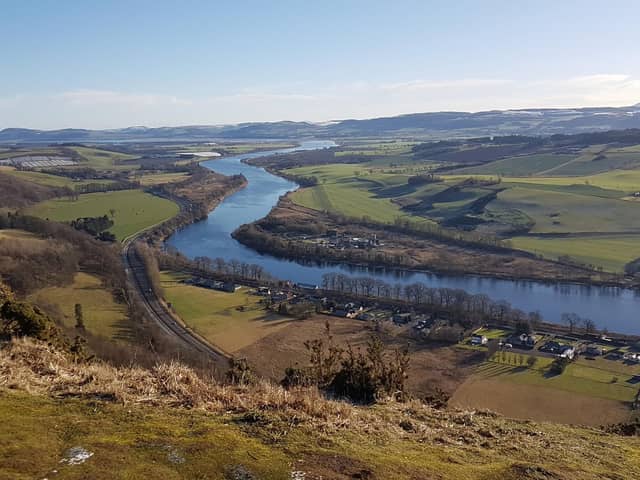
Graeme Forbes has become more used to this sight over the last few years, as hares have increased on Grahamstone, his farm in Kinross.

"At this time of year they're starting to group together in the dark and sometimes you'll see them exhibiting all that classic behaviour," he says. "There can be a dozen, even two dozen all together, jumping up on their hind legs and leaping around and they're such beautiful creatures – I'm so glad to see them coming back to the Grahamstone."

He speaks of them fondly, which is a typical reaction, to the mix of bravado, speed and eccentric spring energy displayed by these animals. Yet their endearing qualities have never stopped them being a staple for the pot in days gone by, nor indeed an object for undoubtedly vicious entertainment, in the shape of hare coursing.

Although that is now illegal, it still continues to the extent that Grampian Police are in the third year of their Operation Lepus initiative, which aims to target and reduce this practice which has such a detrimental effect on the hare population.

Times have certainly changed since Forbes bought the farm in 1996. "At that time there were virtually no hares here," he says, "However, I know that in the past there were great numbers and I actually met an old chap in his early nineties who could remember coming here in his twenties to work as a beater, driving hares to the guns. Three years ago we got involved with a Rural Stewartship Scheme and that has had great results."

The scheme which began in 2001 was the Scottish Government's agri-environment scheme, helping to ensure that farming was a lead player in the protection and enhancement of the environment. The aim with brown hares is to double their numbers by 2010.

Putting it into action for Forbes has meant a number of measures, including creating ponds, reinstating hedgerows, coppicing overgrown hedges and interplanting so crops are ready at different times meaning there is always cover, thus providing an environment which is infinitely safer for hares.

As a turf farmer – he is executive chairman of family firm Stewartsturf, Scotland's principal turf grower – Forbes knows that many assume that hares cause the same sort of damage generated by rabbits, but as he points out, this is emphatically not the case. "We're not keen on rabbits," he admits, "They don't just overgraze and burrow, but there tends to be huge numbers of them, which exacerbates the damage they can cause. Hares tend to nibble away at a small circle of turf, so they don't damage vast tracts of the field.

"They are much more solitary beasts and live individually apart from during the breeding season. They also live in nests, rather than digging up the ground."

These "nests" may have contributed to the connection between the Easter bunny and eggs.

Young hares – leverets – are born in the open in shallow depressions in long grass, known as forms, and the mothers return to them just once a day, in the evening, to suckle them. They sometimes place their young in a number of nests, apparently to ensure they are not all in danger from the same predator, and plovers often use these depressions in which to lay their eggs, resulting in young hares and eggs sharing the same space.

"Sometimes we'll come across signs of where they've been and you can just imagine them coorieing down peacefully," says Forbes. "In the last three years their numbers have increased enormously and we're delighted – we love seeing them. Farming is more than making a living – it's about enhancing the countryside and helping wildlife."

Yes despite endearing images of Easter bunnies, whatever else the hare is, it's not cute. Whereas rabbits have the small, helpless, fluffy appeal down to a fine art, hares are powerful, strong and very fertile, with females able to have three litters a year, giving birth to up to four young at a time. Their original place at the heart of Easter celebrations carried a very strong message, according to pagan beliefs in regeneration and fecundity. The arrival of Christianity did away with the sexual excesses which were part of the rites of spring, and the imagery was adjusted accordingly.

There might still be some element of non-stop procreation associated with fluffy bunnies, but for the true meaning of the original celebrations surrounding the vernal equinox, only the hare will do. Wild, abandoned and universally appealing, these beautiful creatures are at long last reclaiming their rightful place.


The full article contains 1147 words and appears in The Scotsman newspaper.
Page 1 of 1

  • Last Updated: 21 March 2008 10:24 PM
  • Source: The Scotsman
  • Location: Edinburgh
 
1

Charles Linskaill,

Edinburgh 22/03/2008 01:47:17
Does this include my bedroom,?

Where My DYW has it all dressed in 'Playboy' and Pink,?

Before I met her My bedroom was Blue!, a Dolphin or two :-((

Do you all think I have melted to my Woman in Pink,?
2

overton,

overton 22/03/2008 07:24:57
There should be an immediate ban on shooting and snaring hares , brown and mountain, for five years until the hare population recovers to its normal levels.
I recall some areas of the Moorfoots a number of years ago when the high peat hags were absolutely covered in white dots - those being white hares sitting happily in their forms.
It may be of interest to some that hares are classed as game where as rabbits are classed as vermin although both are very nice to eat - so for five years we can live quite happily on rabbit.
3

Max Born,

22/03/2008 07:30:28
How old is your DYW Chuck?
4

dido-bendigo,

Argyll 22/03/2008 14:56:22
For sheer numbers to the acre, Tiree has more brown hares than any other place that I have ever visited. Green plover numbers are pretty good too. Rabbits are numerous on Coll, but not on Tiree. If I remember correctly, rabbits were killed off on Tiree because they badly damaged the turf, causing erosion of the sandy soil. Adult rabbits kick leverets to death, they are not as fluffy/cuddly as you might think!
5

Charles Linskaill,

Edinburgh 22/03/2008 16:33:34
Max Born @#3,

Comming on 29.
6

unbiased,

Nairn 22/03/2008 17:13:26
We have lived in this farmhouse in the middle of nowhere since 1977 - over the years there were no hares to be seen in several hundred acres (if they were, they were shot by the tenant farmer), but since about 1990 when the farmland has been given over to sheep,we now have at least 3 (maybe more) hares frolicking in the fields. To us this is a wonderful and magical experience.


Comment on this Story


In order to post comments you must Register or Sign In


Sister Newspapers:
Press Complaints Commission

This website and its associated newspaper adheres to the Press Complaints Commission’s Code of Practice. If you have a complaint about editorial content which relates to inaccuracy or intrusion, then contact the Editor by clicking here.

If you remain dissatisfied with the response provided then you can contact the PCC by clicking here.