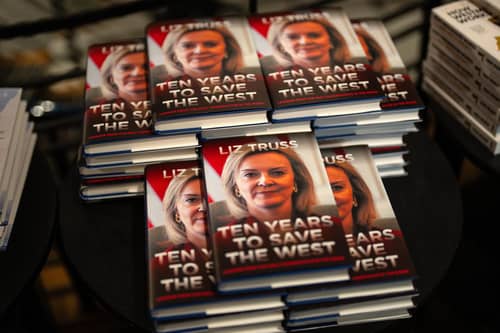














PUBLISHERS’ plans to make all children’s books carry age guidance were in tatters last night as JK Rowling came out in opposition to the move.
The support of the Edinburgh-based Harry Potter creator was welcomed by authors determined to sabotage moves to introduce age-banding on all children’s titles by the autumn.
“I am absolutely delighted that JK Rowling has added her support to
the campaign,” said the novelist Anne Fine. “But I’m not surprised, because we all know that the reading age for her novels is extremely wide.”
The writers’ rebellion against age-banding is spearheaded by Philip Pullman, the best-selling author of the His Dark Materials trilogy. “Declaring that a book is for any group in particular means excluding every other group, and I don’t want to exclude anybody,” he said.
Pullman has set up a website,
notoagebanding.org, which so far has attracted more than 2,500 signatures.
Rowling signed the petition yesterday. Her name appears alongside a host of other well-known children’s writers, including Anthony Horowitz, Terry Pratchett and Alan Garner. All four of the writers who have been appointed Children’s Laureate – Quentin Blake, Anne Fine, Jacqueline Wilson and Michael Rosen – have also signed up.
The petition argues that imposing an age-guidance figure on children’s books is “ill- conceived, damaging to the interests of young readers and highly unlikely to make the slightest difference to sales.”
The petition’s supporters also contend that printing age ranges on books would threaten literacy levels. Reluctant readers or those with dyslexia, for example, might easily be embarrassed if caught with books clearly labelled as being aimed at much younger readers.
The controversy arose in April at a meeting between the Publishers’ Association and the Society of Authors, when publishers, led by Random House, insisted that marketing of children’s books needed to be standardised. Labelling them by age range would help parents wondering what to buy for their children, it was argued.
However, the authors’ revolt has shattered what publishers hoped would be a united front.
Children’s publishers now fall into three camps. Walker Books, which was opposed to the move from the outset, has been joined by JK Rowling’s publisher, Bloomsbury, and about eight other major publishers. Against them are Random House, Scholastic and Egmont.
The rest of the children’s publishing industry – Puffin, Orion and Macmillan among them – are in favour of age-banding unless authors object.
Many writers are appalled by the notion of someone else deciding how old the people reading their books should be. And the world’s best-selling author agrees with them.
BACKGROUNDTODAY, award-winning Edinburgh-based writer Keith Gray launches his latest novel, Ostrich Boys. Like any writer, he is aiming for as wide a readership as possible, from children aged around 11 or 12 to adults.
To his dismay, his publishers have insisted that the cover exclude most of these readers with just one word. “Teens”, it proclaims in print – not even on a removable sticker.
“Would those queues for Harry Potter have been so long if the books had had a ‘Teens’ sticker?” he asks. “Younger readers wouldn’t have bothered with it and neither would most of the grown-ups.
“The whole age-banding thing is a nonsense, and I’m very pleased JK Rowling is supporting the campaign against it.”
The full article contains 575 words and appears in The Scotsman newspaper.