


Down to the Intercontinental Hotel in London for the Costa Awards. They're funny things, literary shindigs.

Wake up and smell the pages For a start, there are very few authors at them. Having met up with some other literary editors (all of whom were rooting for AL Kennedy), I began to wonder if we were actually at the auditions for Str
ictly Come Reading. As well as a smattering of politicians (Lord Hattersley, former Culture Secretary Chris Smith and this year's Booker chairman, Michael Portillo), poet laureate Andrew Motion and Floella Benjamin (whom I'd not seen since Play School), every newsreader in Britain seemed to be there. Michael Buerk,Penny Smith, Julia Somerville – and taking the Kaplinsky Award for the dress-less dress, News 24's Emily Maitlis. Then we had the sponsor's speech, which went something like "Writing a great book's a bit like making a great cup of coffee."
I began panicking, thinking that the meal might be a round of extra-skinny lattes and a tuna melt panini. For the prize-giving, Mariella Frostrup, right, was as savvy as ever – although we had to sit through mini-films about each of the authors. It does seem peculiar that at a literary award we barely get to hear any of the actual words what they wrote. Finally, the usual scrum outside, as everyone rummaged their goody bags and started trading. Discretion prevents me from naming which book the punters were most eager to swap.
Bordering on stupidityInevitably, I felt a little nationalist pang when AL Kennedy won the Costa Award. But on reflection, it reminded me of a recent blog by Alan Bissett on how the gap between Scottish and English literature is narrowing. Although I agree with most of it, nevertheless there's that worrisome Scottish anti-cringe. When Kelman won the Booker, Bissett writes, "never has Scottish literature looked so far ahead of a stale, conservative literary London". As I remember it, "stale, conservative literary London" was at the time publishing Martin Amis, WG Sebald, Angela Carter, AS Byatt, Iain Sinclair and er… James Kelman – as experimental and intriguing a bunch of avant-gardistes as one could hope
for. Of course we should be proud of Scotland's track record in literature: but not if the cost is blindness to the excellence of English writing.
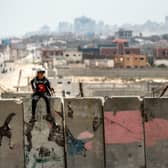
Versed in fighting talkThe StAnza festival in St Andrews has announced its 2008 themes – one of which is 'Poetry and Conflict'. Now, I may be going out on a limb here, but I reckon most of the poets won't be 'pro-conflict'. Yet the history of poetry gives plenty examples of less hand-wringing bards: Tyrtaeus the Spartan specialised in inspiring troops before battle; Dryden glorified military victories; Louis Aragon and Filippo Marinetti wrote paeans to combat. Mao, right, was a good poet; so too was Stalin. There's still time for some programme changes – how about Eminem? Or poet, playwright and polymath Hugo Chávez? Or, if they really want some controversy, the Lyrical Terrorist?
Usual suspects line upIt had to happen. A new TV series will give books 'The Apprentice' treatment, with Minette Walters snapping the pencils of aspiring crime writers and C-list stars Brendan Cole, Sherrie Hewson, Angela Griffin, Matt Allwright, Diarmuid Gavin and Kelvin MacKenzie. (At least Kelvin has a head start, since his writing is pretty criminal anyway.) For those who'd rather try their own hands, then Write Here Right Now is back, with the chance to write a crime novel of your own in a month. Interested readers can sign up at www.bbc.co.uk/scotland/radioscotland/programmes/writehererightnow.
Review RecommendsBRIDGE READING: KEVIN WILLIAMSON
The author, political activist and founder of the underground Rebel Inc publishing house reads from his new poetry collection, In A Room Darkened, and talks about his life in the public eye. Chaired by Emer Martin.
National Library of Scotland, Edinburgh (0131-623 4675, Friday, 7pm
HI-EX! HIGHLAND INTERNATIONAL COMIC EXPO
Two-day comic festival packed with talks from artists and workshops. This year Alan Grant, Cam Kennedy and David Lloyd are among those making an appearance. For more information visit www.hi-ex.co.uk
Eden Court Theatre, Inverness (01463 234 234), Saturday and February 3
ROUND-UP: POETRYFEAR OF THUNDER
Andrew Forster
Flarestack, £7.50
Forster's first collection comes after a writing career that he has outlasted many of the magazines that published him. Like many other first volumes by contemporary poets, this collection is really a 'Selected Poems', stretching back at least 10 years. Although the book is too long, it manages to achieve some coherence, especially when Forster drops the personal pronoun in favour of inhabiting a landscape or character. Poems such as 'Raindance' and 'Power Failure' display a talent for observation and image that suggest promise.
Try also: Making The Most Of The Light, Matt Merritt
BODYWORK
Dilys Rose
Luath, £8.99
Rose's skill in bringing characters to life and imbuing circumstances with background stories marks her out as a writer who is as comfortable with the short story as she is with poetry. Technically, Rose is adept at moving words around the page and rhyming, though it's questionable whether shape, sound and meaning ever enjoy more than a marriage of convenience in her verse. At their best, these poems lead the reader into unexpected territory; elsewhere, they are a little too comfortable with their own achievement to be more than mildly diverting.
Try also: Jizzen, Kathleen Jamie
SCALES DOG
Alexander Hutchinson
Salt, £12.99
This is the first time Hutchinson's work has been collected at length, and while Salt does well to print where others fear to read, it's hard to find any coherence in a book that skips through a career of four decades in 120 pages. There are things to enjoy in short, pithy poems such as 'Receipt' and 'Epitaph For A Butcher', but this should have been three different books to capture Hutchinson's breadth as a writer. Still, it is a useful compendium for those interested in one of Scotland's most international and offbeat contemporary voices.
Try also: Edwin Morgan, Selected Poems
The full article contains 1026 words and appears in Scotland On Sunday newspaper.