


OVER the coming weeks you're going to hear a lot of remarkable things about NVA's The Storr.
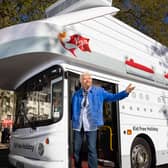
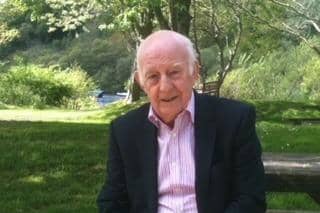
But of all the remarkable things about this remarkable event on the high cliffs above Coire Faion - one part ramble, one part art installation, one part ecological regeneration - the most remarkable of all is the presence of David Bryant.
In the
past two years, the 44-year-old lighting designer has been diagnosed with two different cancers: a tumour behind his left eye and a lymphoma. NVA artistic director Angus Farquhar, who has worked with Bryant for 12 years on projects such as The Path, a similar moonlight walk in Glen Lyon in 2000, says he had to face up to the grim possibility of finding a replacement designer. He didn't quite have the measure of his old friend's resolve.
Bryant, who was given a Pioneer of the Nation award by the Queen in 2003, was determined to get back to the mountain. After months of gruelling treatment and rattling with 20 pills a day, he achieved his aim in January of this year, climbing back to the Old Man of Storr, that awesome pinnacle of volcanic rock dominating an equally dramatic landscape, in six inches of snow.
If ever a man embodied the idea that patients do not suffer from an illness but live with it, it is Bryant. To say he's been living with HIV for the past 12 years is an understatement. Partying with HIV would be nearer the mark.
Small things like being a stone underweight and having an immunity level of 50/ul (compared with a normal level in excess of 800/ul) are not enough to stop Bryant lugging his lighting equipment up the 1,500ft ascent on a two-mile hike as many as three times a day. When he's not doing that, he's lighting high-profile commercial events such as the recent London premiere of Batman Begins or working on community projects in his native Devon. Garrulous, outgoing and completely without self-pity, he is a miraculous force of nature.
"I am a very determined, dogged person," he says in the Skeabost Country House hotel, a 20-minute drive from the Old Man of Storr. "I've had cancer three times and nearly died twice. The treatment for cancer - chemotherapy and radiotherapy - absolutely wipes your immune system. I was starting off with an immune system that was fairly wiped from HIV anyway. It got to the point when the hospital said I had to stay in isolation."
He lives in the country, so keeping away from people isn't as hard as it might be, but if you approach him with so much as a sniffle, he'll ask you to cross the room. "But life goes on," he says. "When you've been living with something like this for 12 years, you just get used to dealing with it and being sensible."
Sensible, however, is not the first word you'd think of in relation to Bryant. He's one of life's risk-takers. Why should he give up smoking and drinking when he has more than once been given only weeks to live? He might as well enjoy his pleasures while he can and he's under no illusions that one or other of his cancers will do for him in the end.
"A lot of people, including my doctors, are amazed I'm still here," he says. "I do defy the odds. I'm totally focused on life not death. I don't let the illnesses dominate my life. I have an absolute passion for wanting to live. I don't do illness. I'm not very good at it."
Somehow, he's managed to regain control of his eye and overcome the severe migraines, though his hearing is not great in one ear. "I've been quite lucky," he says. "I've been through it and got a little bit better: a lot of people never get a little bit better. All these things help you understand why you're on this planet."
Bryant says he can't bear to sit round being ill and, even at his physically weakest, his creativity has never dried up. During a six-week isolation period in hospital, he even wrote a book about the history of his community events in Devon. A publisher is currently looking at it.
"There are a whole load of things that I still want to do," Bryant says. "Lighting has fuelled my life for the past 25 years and, actually, I'm still only scratching the surface."
BRYANT'S ILLUMINATION of the Old Man of Storr and its surrounding area is likely to be as remarkable as his survival. Each night throughout August and into September, two parties of 100 will make the ascent through the relatively gentle slopes of the forest to the more sheer climb of the exposed mountain. Each will wear a head lamp to pick out the reflective path markers - the most energy-efficient way of guiding the audience on the sometimes strenuous two-hour walk - and, on their way, they will come across subtle "animations" of the trees and rocky outcrops.
They will also hear Gaelic singing by Anne Martin from nearby Kilmuir, eerie electronic music by Norway's Geir Jenssen and recordings of the Gaelic poetry of Rassay's late great Sorley MacLean.
The piece de resistance will come at the end when Bryant will audaciously compete with the night sky itself. Spread across 30 square miles will be 300 "point source" independent light systems, remotely operated to flicker like the stars. Bryant was testing the first one on the night I was up there: it was placed three miles away on a neighbouring island and shone brilliantly through the mist. He was delighted with the effect. It's hard to imagine how stunning 300 will be.
Despite Bryant's extensive experience, the challenge of The Storr has been a major one. "The project has thrown up a multitude of issues," he says. "You think you've got it cracked when you do something like Glen Lyon, and we learnt a lot with that. But every time you move into one of these environments there are different things. With this one, there are severe restrictions on what we are allowed to do because it is a very fragile environment; it's a site of special scientific interest, full of mosses and lichen, and we have to respect that."
The Path took place on a working farm in Glen Lyon, which meant equipment could be driven into place as required. Here, if you want something you have to carry it, which can damage the environment through increased footfall. The solution is 18 bespoke platforms, designed for low impact on the ground, dropped in by helicopter. To avoid big cables, the low-voltage lights will be powered by rechargeable batteries.
"The idea is to unfold the landscape," says Bryant. "One of the themes is that the landscapes, while they may appear static, are constantly changing. This landscape is the result of hundreds of thousands of years of erosion and so on. We wanted to create something that started off in a focused way and then bit by bit you unfold it and you reveal how it's collapsed and the beauty of the collapsed bits."
The other aim, he says, is to draw attention to the scale of the landscape, something that will always be more awe inspiring than anything his lights can do. "What we're doing is insignificant compared with the magnitude and magnificence of Scotland. What makes it different is the fact that you're sharing an experience, for that night, with 200 people."
The Storr, Trotternish, Isle of Skye (01478-613 750) August 1-September 17