











Help Sitemap Home Skip Navigation Contact Us Disability Statement


Every day's a battle for sick troops

Click on thumbnail to view image

Published Date: 23 November 2004
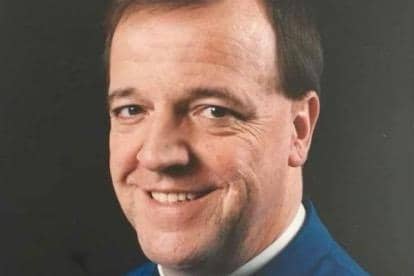
AT first glance David Beaton’s home looks much like any other in a Lothian village. A few ornaments - two dogs and a horse - are arranged above the fireplace in the lounge. There is a stereo playing near the door with an old heavy metal record propped up against it.
But while the room feels homely enough, one thing is missing.

There are no family photographs. In fact there are no photographs at all. On the kitchen table, among some fruit and a packet of cigarettes, lies the only obvious - and unintended - cl
ue to their absence. It is a printout of an article about Gulf War Syndrome.

Father-of-three Beaton has been forced to move into the house in Easthouses outside Dalkeith following the breakdown of his marriage. He blames the split solely on the fact that he developed the crippling illness after serving in the RAF in the first Gulf War.

Last week, an independent inquiry ruled that the controversial syndrome is real - following years of fighting by the 6000 Gulf War veterans in Britain, including Beaton, who say they developed GWS after being exposed to a multitude of toxins designed to protect them from biological and chemical attack.

The landmark ruling comes too late to save Beaton’s marriage. But the 35-year-old hopes that it will save countless other military men and women from going through the same hell - or even worse torments - which he and so many of his former colleagues in the armed forces have suffered.

Speaking about his estranged wife, May, who lives in what was the family home in Edinburgh, Beaton, says: "Due to my illness, me and the missus did separate, about a year ago. The marriage started going downhill because I was suffering from sleepless nights, agonising joint pains, mood swings, because of my illness.

"I didn’t always know what was happening, because of the mental and physical effects of the syndrome. My marriage just disintegrated."

Breaking off and looking around his new home, he explains: "I only moved here in August, I haven’t unpacked everything yet, a lot of my photographs are still in the garage."

Commenting on last week’s ruling from Lord Lloyd of Berwick’s inquiry, he adds: "It [the ruling] is helping us [veterans with GWS] because at the end of the day what we want is recognition of our illness.

"I would say that was more important [than compensation]. The main thing for all the veterans is to get that recognition, because the longer it goes on the longer people are suffering and dying and the longer their lives are being ruined like mine was."

Understandably, he is angered by the way the syndrome destroyed his own life, adding: "I do feel angry and there are more in my situation who are probably a lot worse off.

"When you join up you accept that you are going to have to go to war, and you might get injured or shot or blown up.

"What you don’t accept is that you will be injected with a lot of different viruses which you know nothing about, working with explosives which are tipped with depleted uranium in an atmosphere where they [commanders] say you should ignore alarms [warnings of dangerous levels of chemical and biological agents] because they are faulty, and you don’t have the correct protective equipment."

Beaton’s eldest daughter, Angela, who lives with him, is now 19 - about the same age as her father was when he joined the RAF as a weapons technician.

Asked if he thought the military would offer him a glamorous, exciting career he agrees, saying: "I suppose I did. Wearing the uniform, being proud to serve my country. I wanted a military life.

"As a weapons technician I worked with everything from small weapons like rifles to large explosives like sidewinders and missiles in bomb dumps. My job included loading up aircraft with weapons, refuelling them, strapping the pilots in [before they went off on bombing missions], and decontaminating the aircraft when they came back."

That was around 1988, when Beaton was assigned to RAF Lossiemouth. When the call came to fight in the first Gulf War he was based at RAF Bruggen in Germany. The bombing squadron was the first to be sent out to the Gulf, serving there from around August 1990 to May 1991.

Beaton remembers being given a host of injections which he says he took without objecting: "You did not argue, you just did what you were told. You had your apprehensions, but going to war was your purpose, that was why you were there."

Beaton and his squadron were stationed in Saudi Arabia and Bahrain during the fighting. He recalls being ordered to ignore basic safety precautions while being exposed to deadly toxins as he loaded and cleaned planes.

"The tents were sprayed with pesticides, we were using unlabelled decontaminants [to clean the planes] and we were not wearing full individual protective equipment.

"There were detectors the size of jerry cans at the perimeter of the airbase to monitor for chemical and biological agents. But when the alarms went off we were told to ignore them because they were faulty.

"The first few times you masked up, but after that you stopped bothering because you were being told not to because they were not working properly.

"We would be cleaning aircraft without full protective gear, without masks, and offloading shells which were tipped with depleted uranium. We should have been wearing all of the protective equipment. But you did not really worry at the time. You just did your job."

After serving in the Gulf, Beaton was posted back to Germany for a few weeks. During his time off he visited his then-girlfriend, May, whom he proposed to soon afterwards.

The couple married in August 1991 on the Isle of Skye, where Beaton grew up. But over the following months he began to suffer from problems sleeping, moodiness and painful joints.

It was his wife who first realised something was seriously wrong, but for years Beaton tried to ignore his symptoms, such was his determination to continue his RAF career.

However, his condition got worse and worse. Visits to RAF medics failed to bring any clear diagnosis, but when he applied to extend his service with the RAF he was refused.

"They put me down as ‘non-applicable’. That did not explain anything.

"I still did not know much about Gulf War Syndrome then because we were not allowed to talk to groups like the war veterans’ associations. They [the RAF] must have known something more."

Beaton was left with no choice but to leave the forces in 1997, after which he moved from job to job, including a spell at a bakers. But his working life was marred by "the stigma that goes with the illness".

He returned with his family to Edinburgh in 1999 to be nearer his wife’s parents. But Beaton’s condition continued to deteriorate and eventually he separated from his wife.

Because of the effects of GWS, which include chronic fatigue, he finds it hard to recall exactly when he was diagnosed or where. He was also diagnosed with ME and depression.

Now he volunteers as area co-ordinator for Scotland at the National Gulf Veterans and Families Association, as well as doing voluntary work helping re-home dogs with behavioural problems.

Of the 6000 veterans like Beaton thought to have GWS in Britain, around 2000 are believed to live in Scotland, some 1400 of whom are estimated to live in the Lothians.

Their problems have included cancers, motor neurone disease, chronic fatigue, skin rashes, post-traumatic stress and aching joints.

WHILE last week’s ruling is welcome news, the MoD is still refusing to concede that the syndrome is real. Veterans believe its reluctance is linked to the likely multi-million-pound compensation claims which would follow such an admission.

A spokesman for the National Gulf Veterans and Families Association says: "Compensation? An official admission by the MoD that GWS exists? An apology? We need all those things... [but] the MoD don’t want to pay out what they know is going to cost them a lot of money."

Asked whether the ministry would finally recognise GWS, an MoD spokesman stands firm, saying: "At the moment we are still going over Lord Lloyd’s report. So in that respect, we cannot pass an answer - a balanced answer - until we get through this extensive report.

"After all, it has only been three working days [November 17] since the inquiry came out. We will, though, reply in due course."

Which leaves veterans like Beaton little choice but to fight on.

Legacy of illness for war veterans

GULF War Syndrome is the collective name given to a range of health problems blamed by veterans on their exposure to toxins during the first Gulf War.

The problems include cancers, motor neurone disease, chronic fatigue, skin rashes, traumatic stress, depression and aching joints.

They have been put down to a combination of causes, ironically including multiple injections of vaccines given to servicemen and women to protect them from harm.

The syndrome has also been linked to the use of organophosphate pesticides to spray tents, low-level exposure to nerve gas and the inhalation of depleted uranium dust.

The Ministry of Defence has consistently refused to recognise that the syndrome even exists.

But last week an independent inquiry into Gulf War illnesses ruled that the syndrome was real.

The inquiry, headed by Lord Lloyd of Berwick, called on the MoD to accept that thousands of veterans had suffered ill health as a result of the 1991 conflict. In a report he said there was "every reason" to accept the existence of a "Gulf War syndrome", and said the MoD should now set up a special fund to pay compensation.

Gulf war veterans believe that the findings of the Lloyd Inquiry were better than they had hoped for and have called on the MoD to accept its findings. The inquiry was set up at the request of Labour peer Lord Morris of Manchester, parliamentary adviser to the Royal British Legion, after the MoD refused an official inquiry. About 6000 veterans, including around 1400 from the Lothians, are believed to be suffering from the syndrome.


Page 1 of 1

  • Last Updated: 23 November 2004 3:41 PM
  • Source: Edinburgh Evening News
  • Location: Edinburgh
  • Related Topics: Gulf War Syndrome


Error displaying web links: Value cannot be null. Parameter name: String

Featured Advertising


Sister Newspapers:
Press Complaints Commission

This website and its associated newspaper adheres to the Press Complaints Commission’s Code of Practice. If you have a complaint about editorial content which relates to inaccuracy or intrusion, then contact the Editor by clicking here.

If you remain dissatisfied with the response provided then you can contact the PCC by clicking here.


Error displaying section details: Value cannot be null. Parameter name: String